Labigne-Roussel A, Falkow S
Institut National de la Santé et de la Recherche Médicale, Institut Pasteur, Paris, France.
Infect Immun. 1988 Mar;56(3):640-8. doi: 10.1128/iai.56.3.640-648.1988.
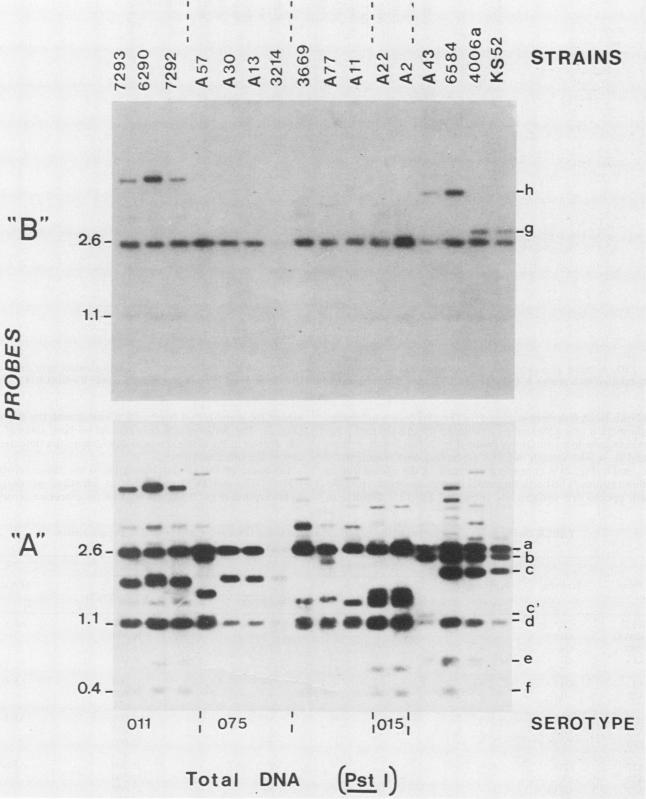
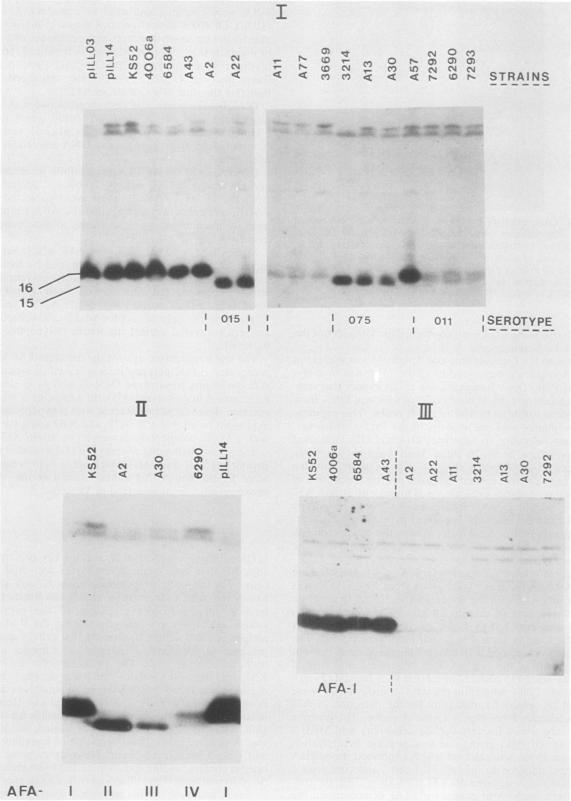
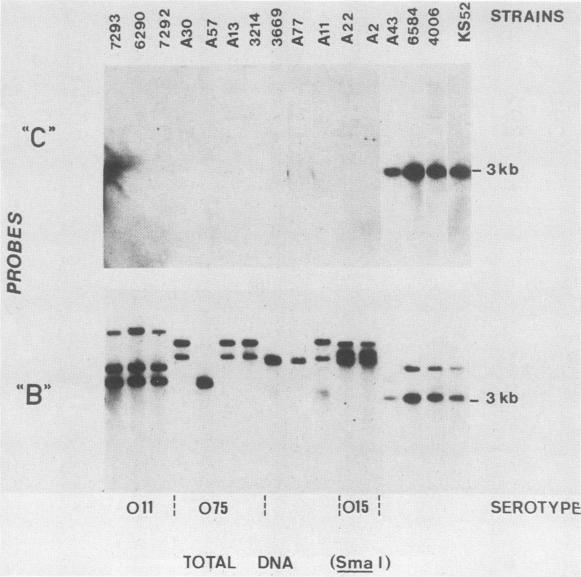
The afimbrial adhesin (AFA-I) from a pyelonephritic Escherichia coli isolate (KS52) is a mannose-resistant, P-independent, X-binding adhesin, expressed by the afa-1 operon. It is distinct from the E. coli X-binding adhesins with M and S specificity. A total of 138 E. coli isolates belonging to various serotypes, mostly from urinary tract infections, were screened for the presence of DNA sequences related to the afa operon and for the expression of an X-adhesin able to mediate mannose-resistant hemagglutination (MRHA) and adhesion to uroepithelial cells. Fifteen strains were shown to harbor DNA sequences related to the AFA-I-encoding operon, and 13 of them expressed an X-adhesin. Using as probes different DNA segments of the AFA-I-encoding operon in Southern experiments, we demonstrated that only three of these clinical isolates contained genetic determinants closely related to those identified in the original afa prototype strain (KS52): presence of the afaA, afaB, afaC, afaD, and afaE genes associated with the expression of a 16,000-dalton hemagglutinin-adhesin which strongly cross-reacted with AFA-I-specific antibodies. The other E. coli isolates harbored DNA sequences homologous to the afaA, afaB, afaC, and afaD genes, but lacked the sequence corresponding to the adhesin-producing gene afaE; Western blots allowed the detection of polypeptides (15,000, 15,500, or 16,000 daltons) in these strains which cross-reacted with variable intensity with antibodies raised against the denatured AFA-I protein, but did not cross-react with native AFA-I-specific antibodies. Following DNA cloning experiments from chromosomal DNA of two of those strains (A22 and A30), we demonstrated that although the AFA-related operon in A22 and A30 strains lacked the AFA-I adhesin-encoding gene, they synthesized a functional X-adhesin. Thus, strains A22 and A30 encode adhesins designated AFA-II and AFA-III, which were cloned on recombinant plasmids pILL72 and pILL61, respectively. Southern hybridization experiments and Western blot analyses of the 15 AFA-related strains demonstrate the heterogeneity of the genetic sequences encoding the structural adhesin and suggest the bases for the serological diversity of the AFA adhesins.
从一株肾盂肾炎大肠杆菌分离株(KS52)中提取的无伞毛黏附素(AFA-I)是一种抗甘露糖、不依赖P、结合X的黏附素,由afa-1操纵子表达。它与具有M和S特异性的大肠杆菌结合X的黏附素不同。对总共138株属于不同血清型的大肠杆菌分离株进行了筛查,这些分离株大多来自尿路感染,检测其是否存在与afa操纵子相关的DNA序列,以及是否表达能够介导抗甘露糖血凝反应(MRHA)并黏附于尿道上皮细胞的X黏附素。结果显示有15株携带与编码AFA-I的操纵子相关的DNA序列,其中13株表达X黏附素。在Southern实验中,使用编码AFA-I的操纵子的不同DNA片段作为探针,我们证明这些临床分离株中只有三株含有与原始afa原型菌株(KS52)中鉴定的基因决定簇密切相关的基因:存在与表达一种16,000道尔顿的血凝素-黏附素相关的afaA、afaB、afaC、afaD和afaE基因,该血凝素-黏附素与AFA-I特异性抗体发生强烈交叉反应。其他大肠杆菌分离株携带与afaA、afaB、afaC和afaD基因同源的DNA序列,但缺少与产生黏附素的基因afaE相对应的序列;Western印迹法检测到这些菌株中的多肽(15,000、15,500或16,000道尔顿),它们与针对变性AFA-I蛋白产生的抗体发生不同强度的交叉反应,但不与天然AFA-I特异性抗体发生交叉反应。在对其中两株菌株(A22和A30)的染色体DNA进行DNA克隆实验后,我们证明尽管A22和A30菌株中与AFA相关的操纵子缺乏编码AFA-I黏附素的基因,但它们合成了一种功能性X黏附素。因此,菌株A22和A30编码分别命名为AFA-II和AFA-III的黏附素,它们分别克隆在重组质粒pILL72和pILL61上。对这15株与AFA相关的菌株进行Southern杂交实验和Western印迹分析,证明了编码结构黏附素的基因序列的异质性,并提示了AFA黏附素血清学多样性产生的基础。