Department of Biotechnology and Society, Delft University of Technology, Van der Maasweg 9, 2629 HZ, Delft, The Netherlands.
Department of Multi-Actor Systems, Delft University of Technology, Jaffalaan 5, 2628 BX, Delft, The Netherlands.
Sci Eng Ethics. 2018 Dec;24(6):1673-1696. doi: 10.1007/s11948-017-9969-0. Epub 2017 Sep 26.
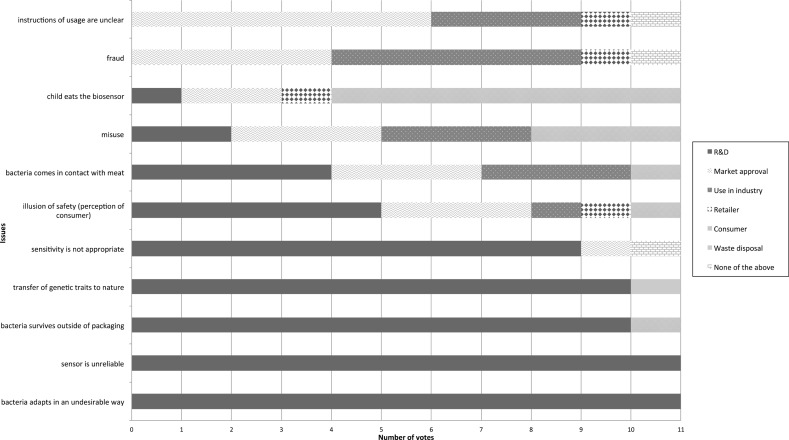
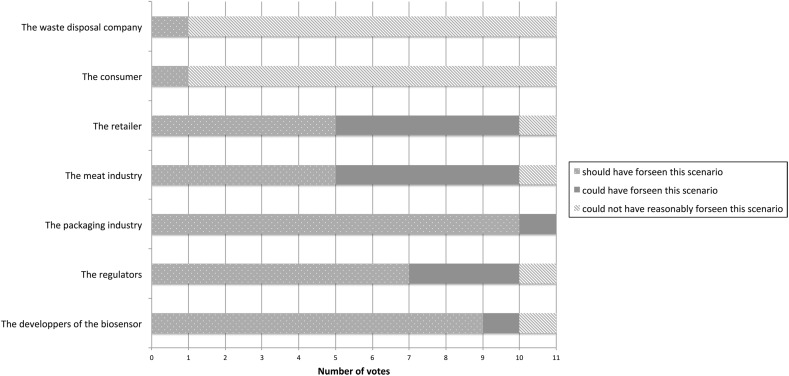
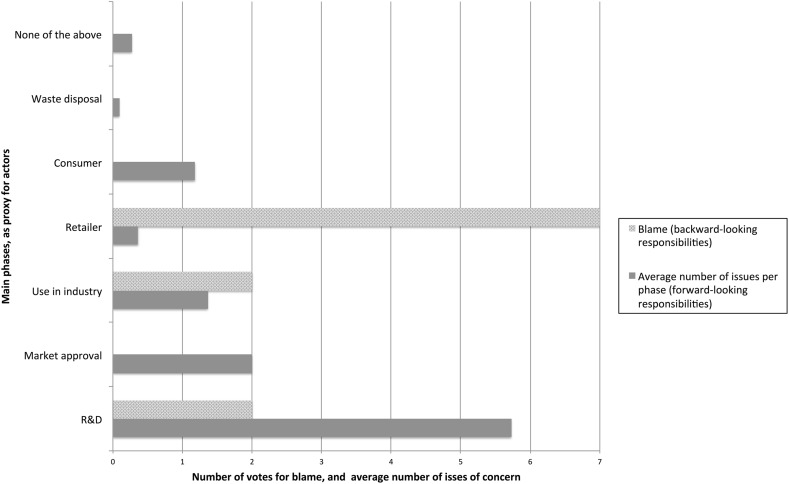
The Safe-by-Design approach in synthetic biology holds the promise of designing the building blocks of life in an organism guided by the value of safety. This paves a new way for using biotechnologies safely. However, the Safe-by-Design approach moves the bulk of the responsibility for safety to the actors in the research and development phase. Also, it assumes that safety can be defined and understood by all stakeholders in the same way. These assumptions are problematic and might actually undermine safety. This research explores these assumptions through the use of a Group Decision Room. In this set up, anonymous and non-anonymous deliberation methods are used for different stakeholders to exchange views. During the session, a potential synthetic biology application is used as a case for investigation: the Food Warden, a biosensor contained in meat packaging for indicating the freshness of meat. Participants discuss what potential issues might arise, how responsibilities should be distributed in a forward-looking way, who is to blame if something would go wrong. They are also asked what safety and responsibility mean at different phases, and for different stakeholders. The results of the session are not generalizable, but provide valuable insights. Issues of safety cannot all be taken care of in the R&D phase. Also, when things go wrong, there are proximal and distal causes to consider. In addition, capacities of actors play an important role in defining their responsibilities. Last but not least, this research provides a new perspective on the role of instruction manuals in achieving safety.
合成生物学中的“安全设计”方法有望在以安全价值为指导的生物体中设计生命构建模块。这为安全使用生物技术开辟了新途径。然而,“安全设计”方法将安全性的大部分责任转移到了研究和开发阶段的参与者身上。此外,它假设所有利益相关者都可以以相同的方式定义和理解安全性。这些假设存在问题,实际上可能会破坏安全性。本研究通过使用群体决策室来探索这些假设。在这种设置中,匿名和非匿名的审议方法用于不同的利益相关者之间进行意见交流。在会议期间,使用潜在的合成生物学应用作为调查案例:Food Warden,一种用于指示肉类新鲜度的肉类包装中的生物传感器。参与者讨论可能出现的潜在问题、如何前瞻性地分配责任、如果出现问题谁应该负责。他们还被问到在不同阶段和不同利益相关者中安全和责任意味着什么。会议的结果不可推广,但提供了有价值的见解。安全问题不能全部在研发阶段得到解决。此外,当事情出错时,需要考虑近端和远端原因。此外,参与者的能力在定义其责任方面发挥着重要作用。最后但同样重要的是,这项研究为实现安全的操作手册的作用提供了一个新视角。