Chen Ruey-Jien, Shun Chia-Tung, Yen Men-Luh, Chou Chia-Hung, Lin Ming-Chieh
Department of Obstetrics and Gynecology, National Taiwan University, Taipei 100, Taiwan.
Department of Pathology, National Taiwan University, Taipei 100, Taiwan.
Oncotarget. 2017 Jul 7;8(37):62081-62098. doi: 10.18632/oncotarget.19060. eCollection 2017 Sep 22.
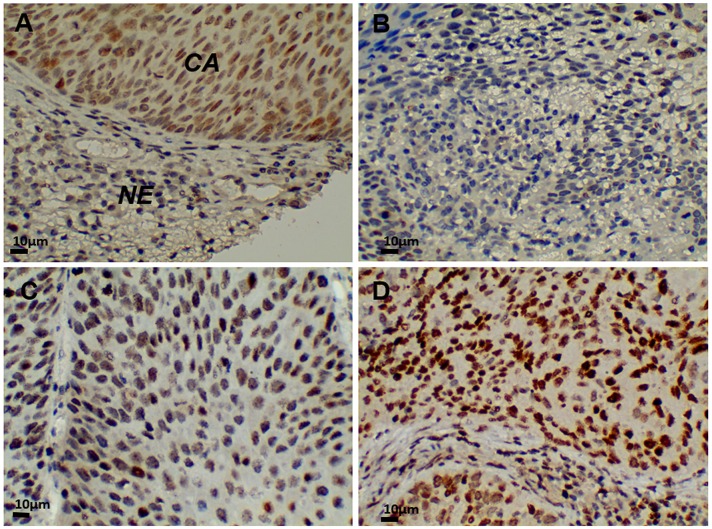
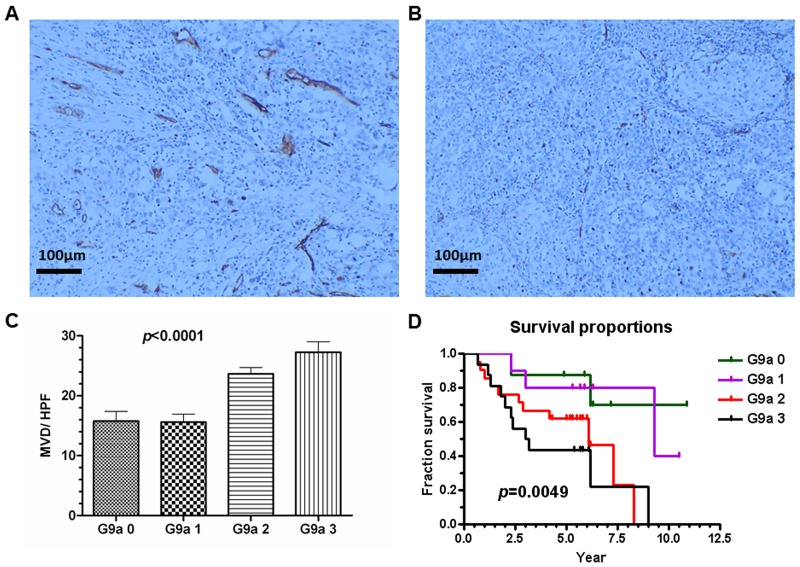
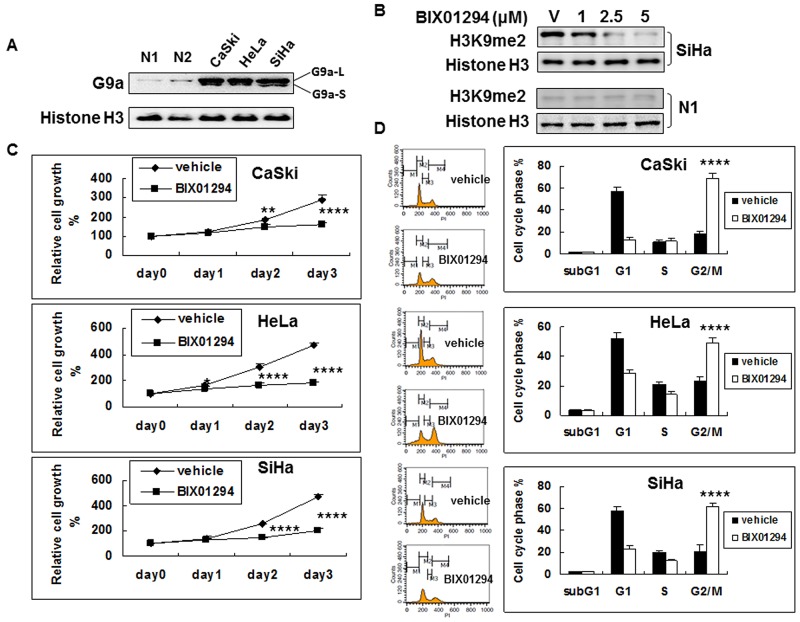
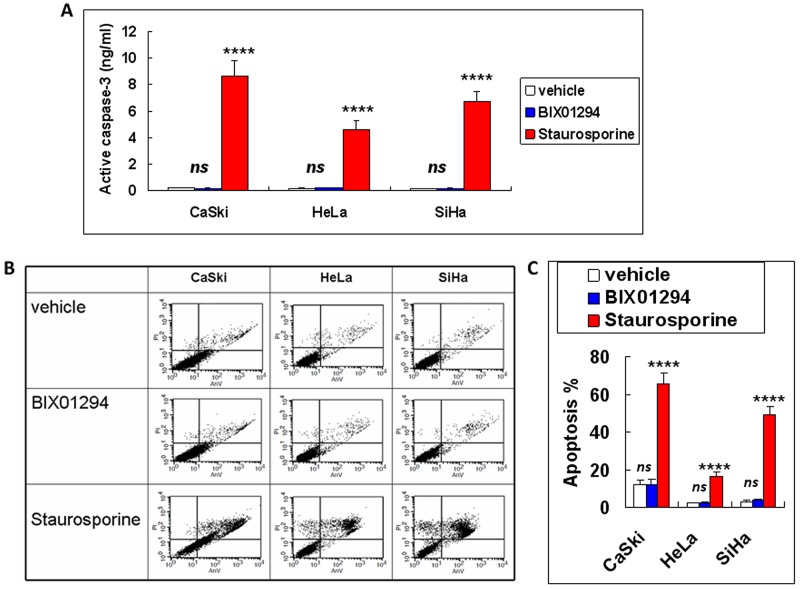
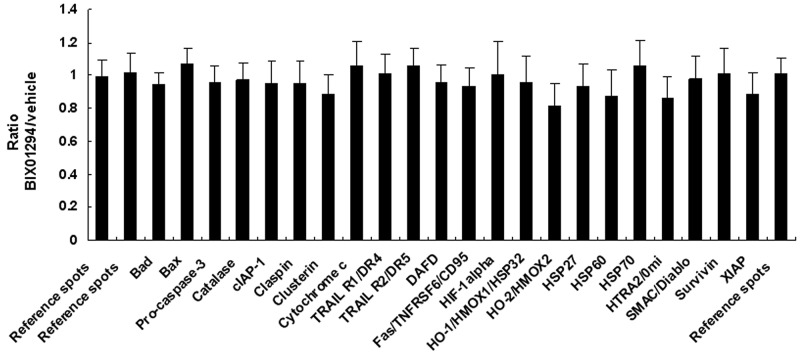
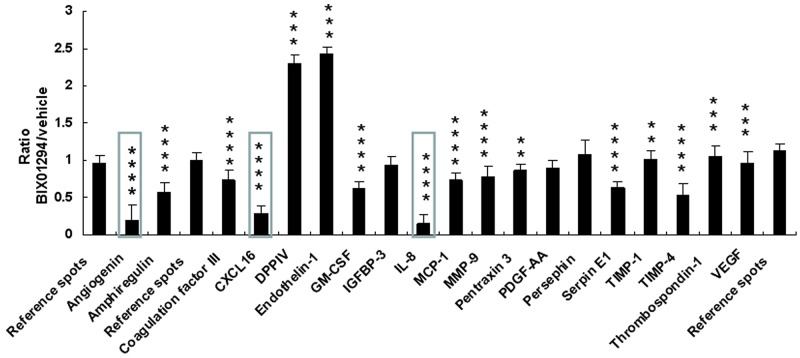
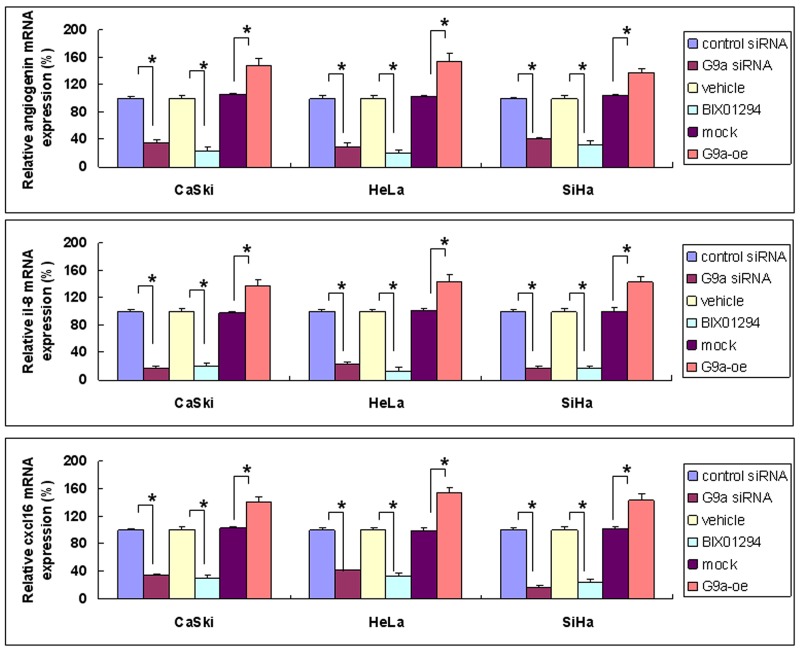
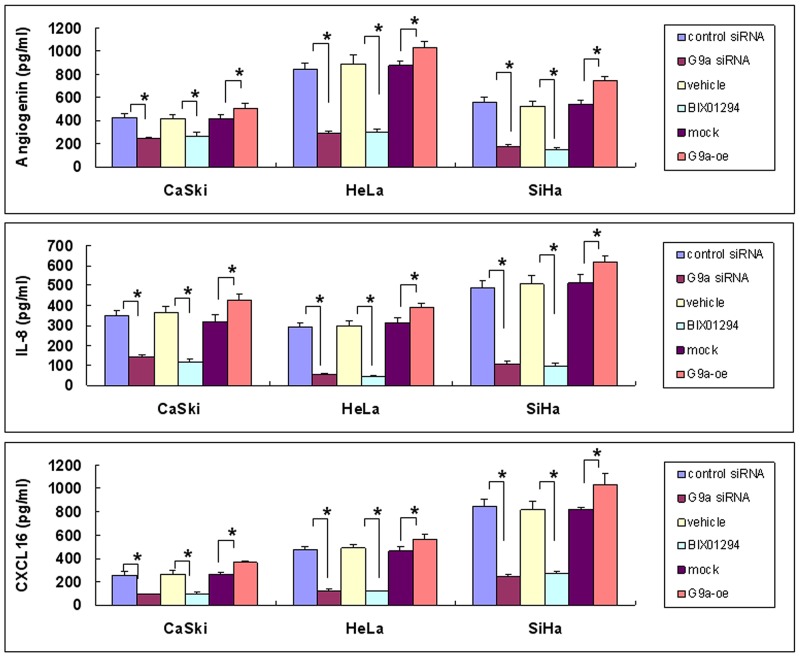
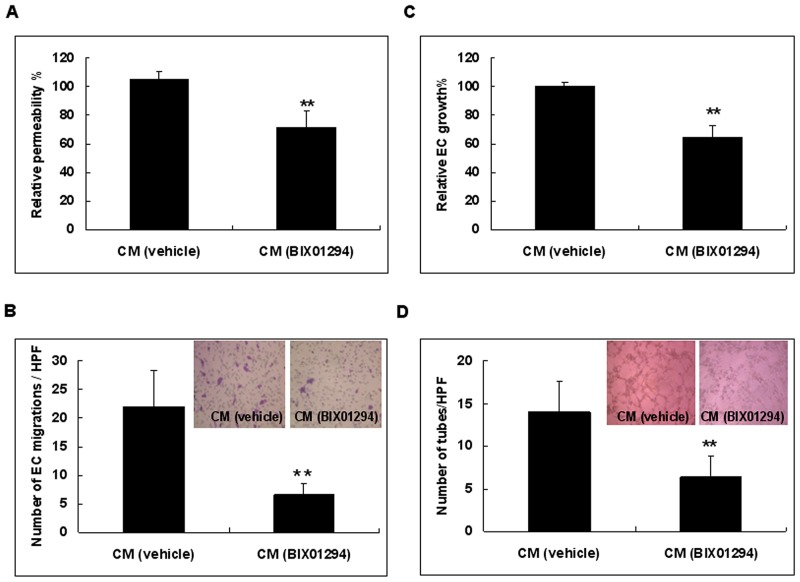
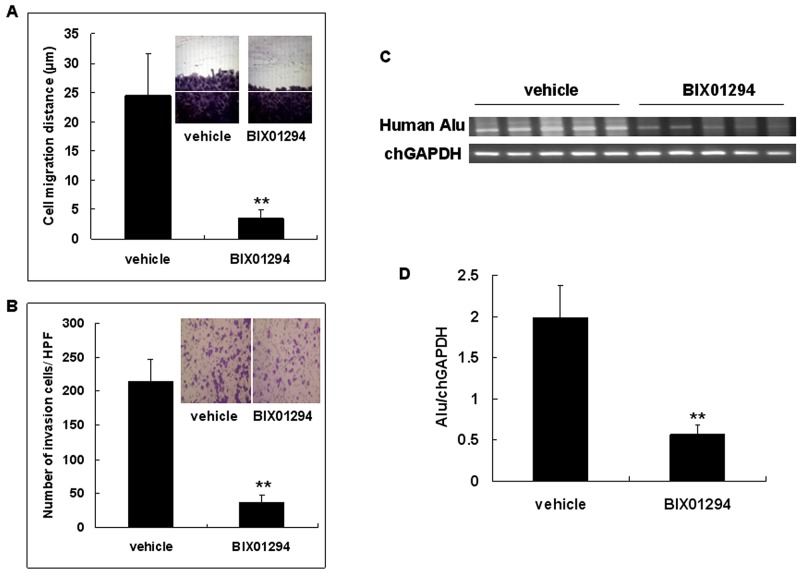
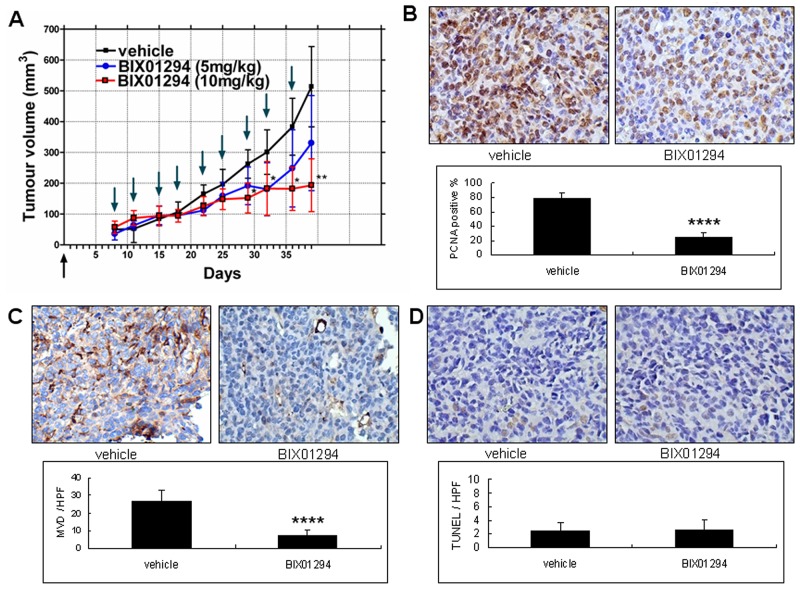
Research suggests that the epigenetic regulator G9a, a H3K9 histone methyltransferase, is involved in cancer invasion and metastasis. Here we show that G9a is linked to cancer angiogenesis and poor patient survival. Invasive cervical cancer has a higher G9a expression than cancer precursors or normal epithelium. Pharmacological inhibition and genetic silencing of G9a suppresses H3K9 methylation, cancer cell proliferation, angiogenesis, and cancer cell invasion/migration, but not apoptosis. Microarray and quantitative reverse transcription polymerase chain reaction analyses reveal that G9a induces a cohort of angiogenic factors that include angiogenin, interleukin-8, and C-X-C motif chemokine ligand 16. Depressing G9a by either pharmacological inhibitor or gene knock down significantly reduces angiogenic factor expression. Moreover, promoting G9a gene expression augments transcription and angiogenic function. A luciferase reporter assay suggests that knockdown of G9a inhibits transcriptional activation of interleukin-8. G9a depletion suppresses xenograft tumor growth in mouse model, which is linked to a decrease in microvessel density and proliferating cell nuclear antigen expression. Clinically, higher G9a expression correlates with poorer survival for cancer patients. For patients' primary tumors a positive correlation between G9a expression and microvessel density also exists. In addition to increasing tumor cell proliferation, G9a promotes tumor angiogenesis and reduces the patient survival rate. G9a may possess great value for targeted therapies.
研究表明,表观遗传调节因子G9a(一种H3K9组蛋白甲基转移酶)参与癌症的侵袭和转移。在此我们表明,G9a与癌症血管生成及患者的不良预后相关。侵袭性宫颈癌中G9a的表达高于癌前病变或正常上皮组织。对G9a进行药理抑制和基因沉默可抑制H3K9甲基化、癌细胞增殖、血管生成以及癌细胞的侵袭/迁移,但不影响细胞凋亡。微阵列和定量逆转录聚合酶链反应分析显示,G9a可诱导包括血管生成素、白细胞介素-8和C-X-C基序趋化因子配体16在内的一组血管生成因子。使用药理抑制剂或基因敲低来抑制G9a可显著降低血管生成因子的表达。此外,促进G9a基因表达可增强转录和血管生成功能。荧光素酶报告基因检测表明,敲低G9a可抑制白细胞介素-8的转录激活。在小鼠模型中,G9a缺失可抑制异种移植瘤的生长,这与微血管密度和增殖细胞核抗原表达的降低有关。在临床上,较高的G9a表达与癌症患者较差的生存率相关。对于患者的原发性肿瘤,G9a表达与微血管密度之间也存在正相关。除了增加肿瘤细胞增殖外,G9a还促进肿瘤血管生成并降低患者生存率。G9a可能具有很大的靶向治疗价值。