Duellman Tyler, Doll Andrea, Chen Xi, Wakamiya Rie, Yang Jay
Department of Anesthesiology, University of Wisconsin SMPH, Madison, WI, USA.
Metalloproteinases Med. 2017;4:63-73. doi: 10.2147/MNM.S146752. Epub 2017 Sep 19.
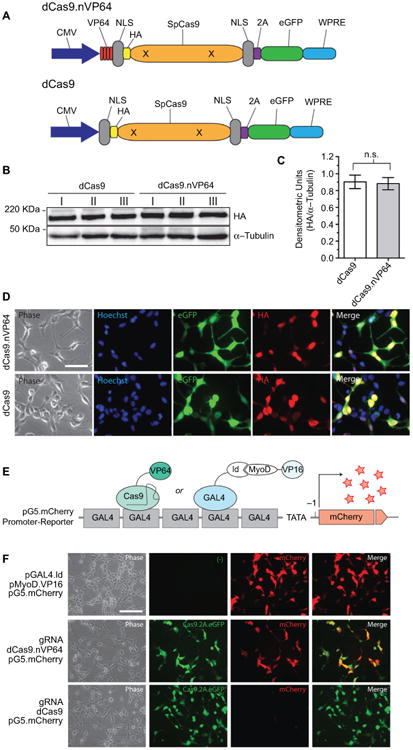
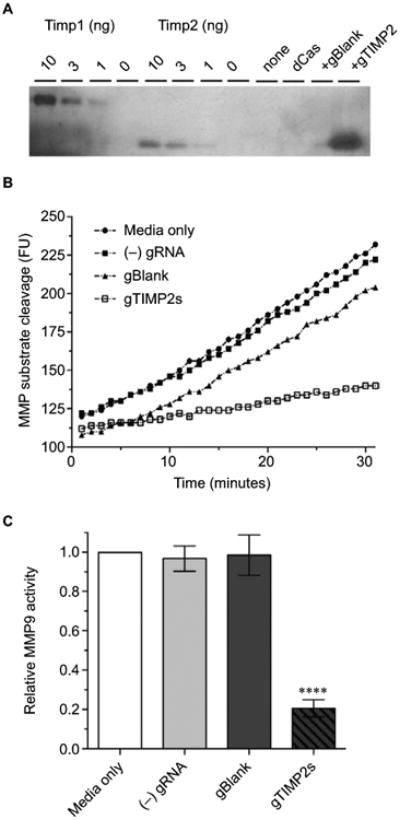
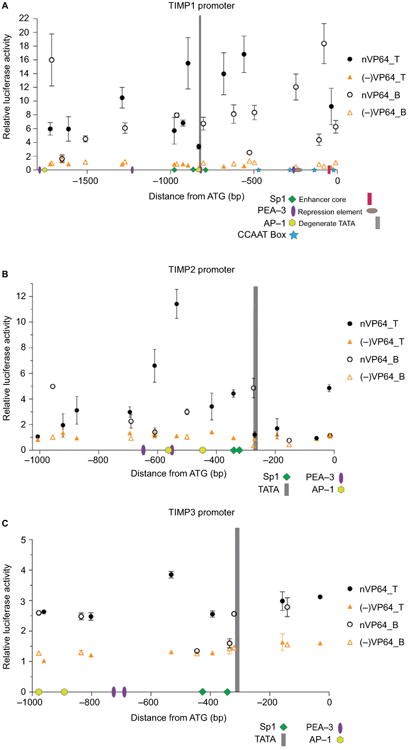
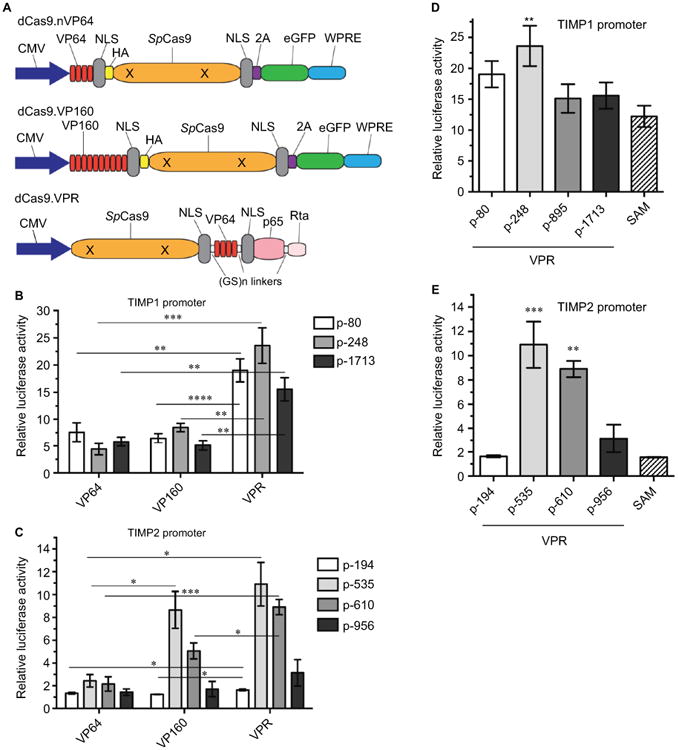
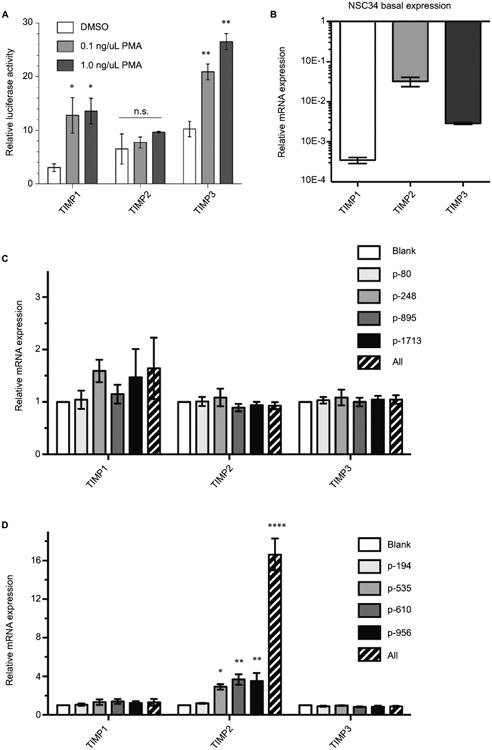
Selective gene activation with the dCas9 (deactivated clustered regularly interspaced short palindromic repeats [CRISPR] associated protein 9)/CRISPR targeting of a transcriptional activator effector is now well established. However, the optimal targeting of guide RNA (gRNA) for a given gene is largely a matter of trial and error. We explored the optimal targeting site for tissue inhibitor of metalloproteinases (TIMPs) by first screening multiple gRNA target sites using a luciferase-based promoter-reporter system and next confirmed the effective TIMP induction in the mouse motor neuron-like neuron-enriched spinal cord 34 (NSC34) cells. Screening of many gRNAs targeting the 1-1.9 kB promoter regions of TIMP1-3 identified several hot-spots for optimal gene induction, however, no general pattern defining the optimal target site with respect to the proximity of known transcription factor binding sites or distance from the start ATG was apparent. TIMP2 with a larger basal transcriptional activity showed a greater fold-induction with gRNA compared with TIMP1 or 3 supporting the importance of an open-chromatin for best gRNA-mediated transcriptional induction. The rank order of induction potency for different gRNA identified in the promoter-reporter screening held true for the NSC34 cells. Co-activation with multiple gRNAs greatly increased the gene induction.
利用失活的Cas9(dCas9,即失活的成簇规律间隔短回文重复序列[CRISPR]相关蛋白9)/CRISPR靶向转录激活效应物进行选择性基因激活现已得到充分证实。然而,对于给定基因而言,引导RNA(gRNA)的最佳靶向很大程度上要靠反复试验。我们通过首先使用基于荧光素酶的启动子报告系统筛选多个gRNA靶位点,然后在富含小鼠运动神经元样神经元的脊髓34(NSC34)细胞中证实金属蛋白酶组织抑制剂(TIMP)的有效诱导,探索了TIMP的最佳靶向位点。对靶向TIMP1-3的1-1.9 kB启动子区域的许多gRNA进行筛选,确定了几个最佳基因诱导的热点区域,然而,关于已知转录因子结合位点的接近程度或与起始ATG的距离,并未发现定义最佳靶位点的一般模式。与TIMP1或3相比,具有较大基础转录活性的TIMP2与gRNA一起显示出更大的倍数诱导,这支持了开放染色质对于最佳gRNA介导的转录诱导的重要性。在启动子报告筛选中确定的不同gRNA的诱导效力排名顺序在NSC34细胞中也成立。多个gRNA共同激活大大增加了基因诱导。