Venkatachalam Gireedhar, Surana Uttam, Clément Marie-Véronique
Department of Biochemistry, Yong Loo Lin School of Medicine, National University of Singapore, Singapore 117596, Singapore.
National University of Singapore Graduate School for Integrative Sciences and Engineering, Singapore 117456, Singapore.
Nucleic Acids Res. 2017 Oct 13;45(18):10564-10582. doi: 10.1093/nar/gkx684.
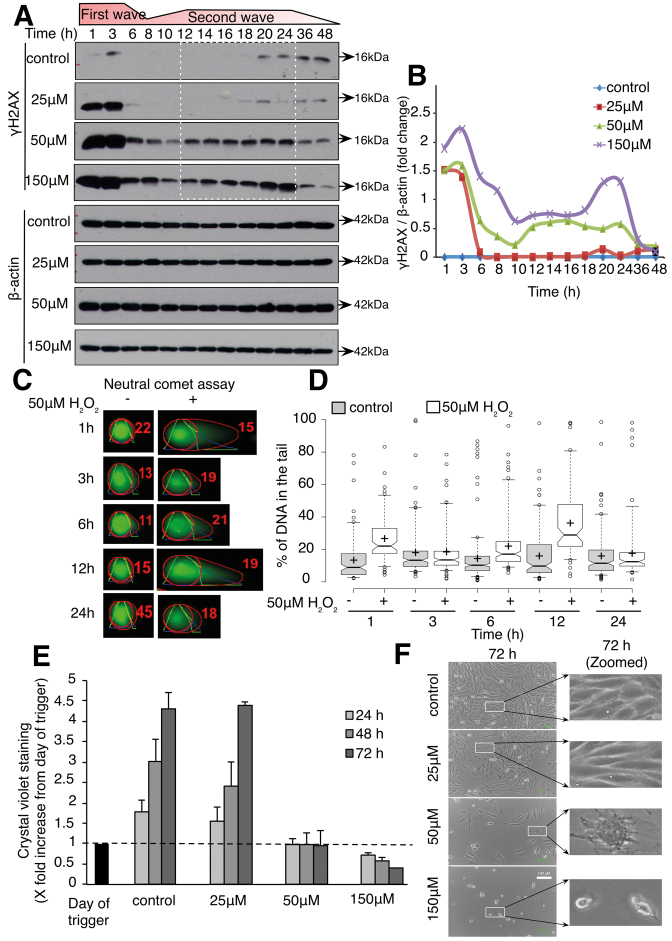
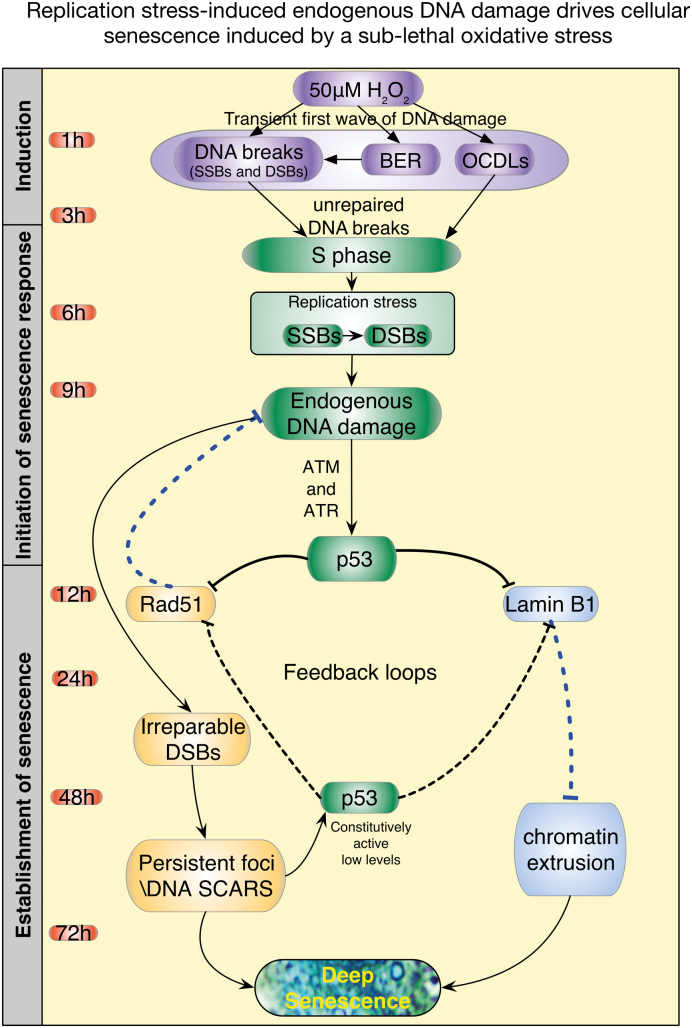
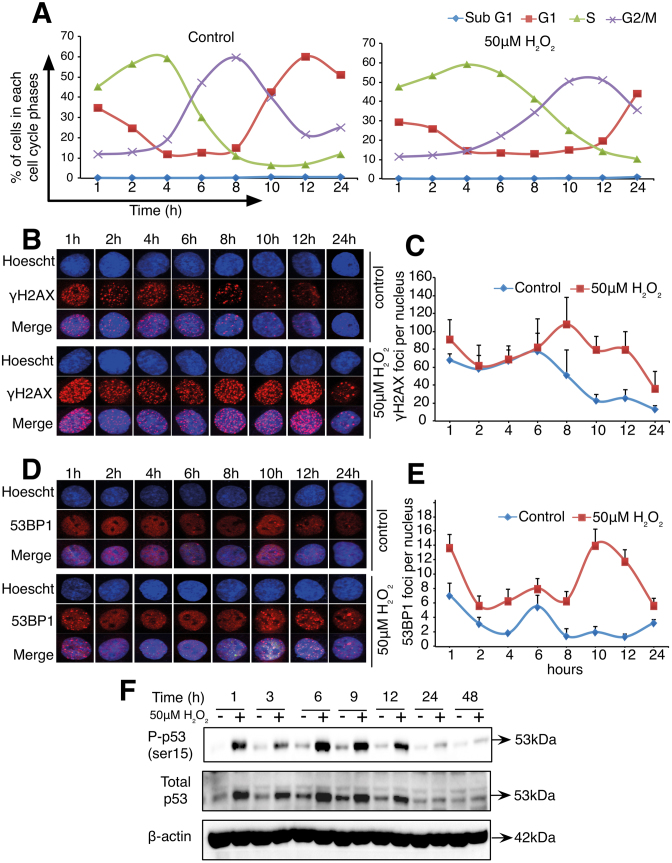
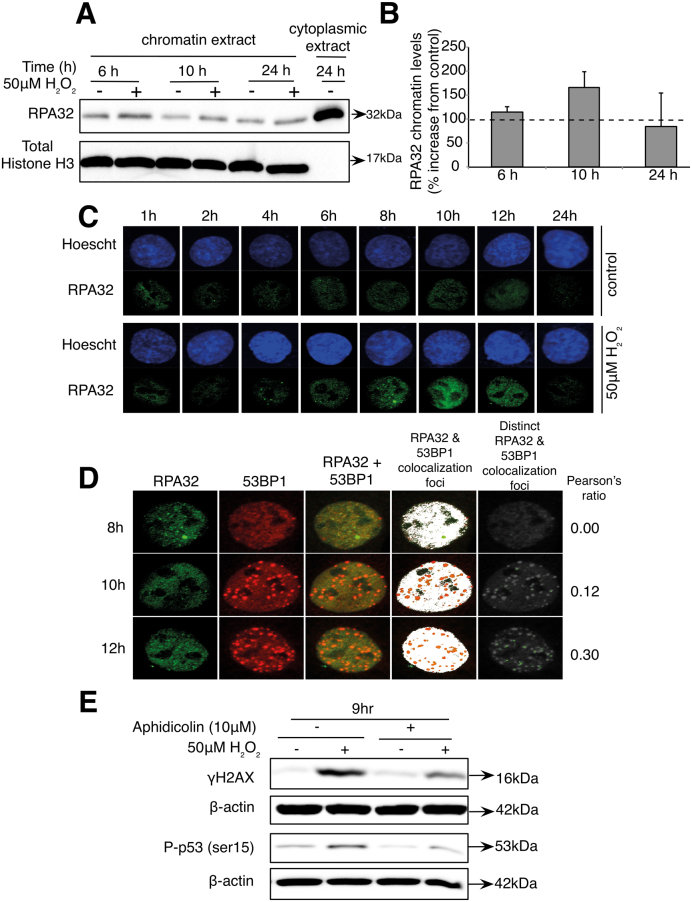
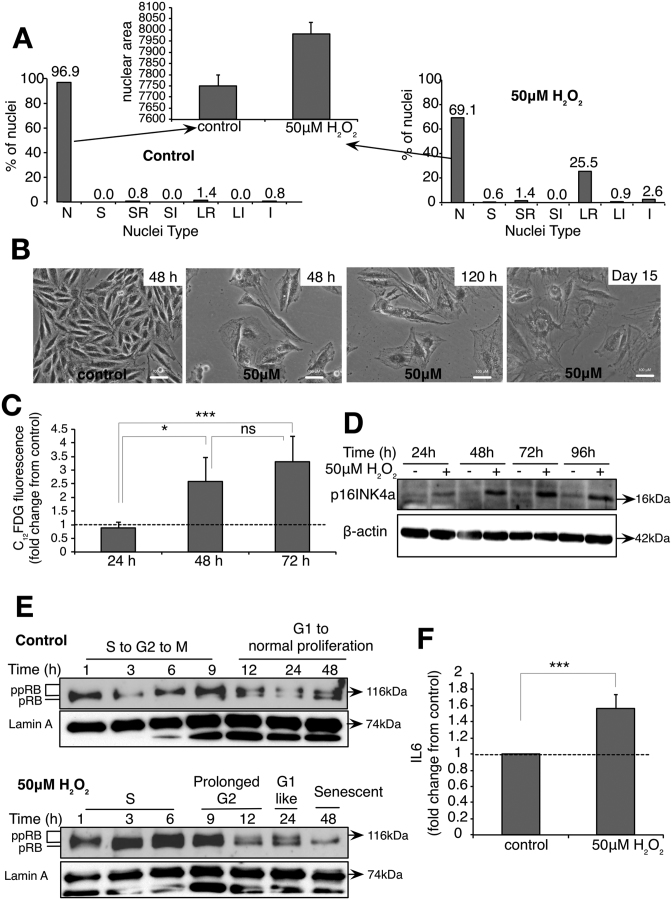
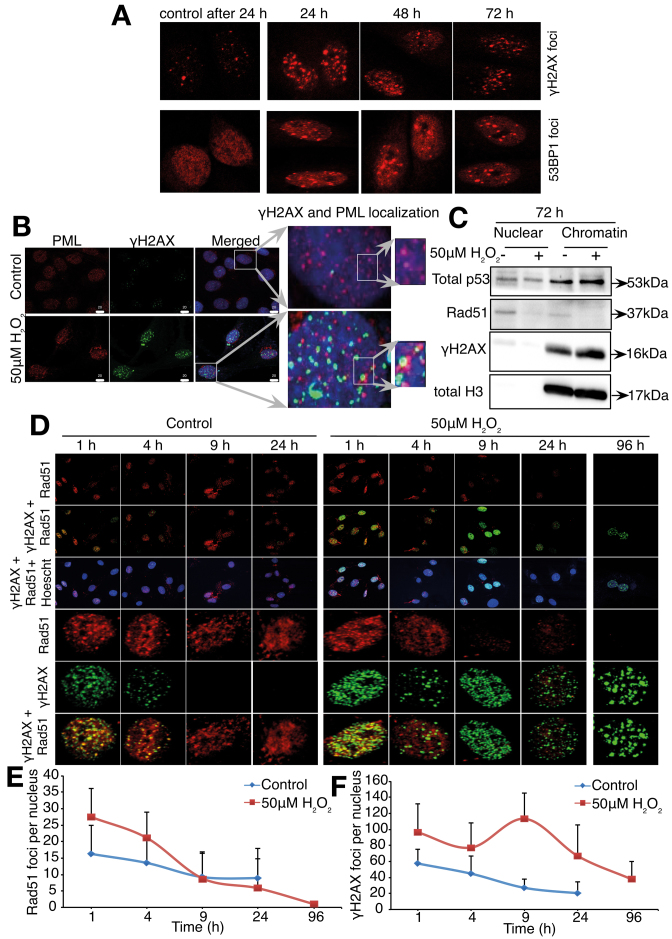
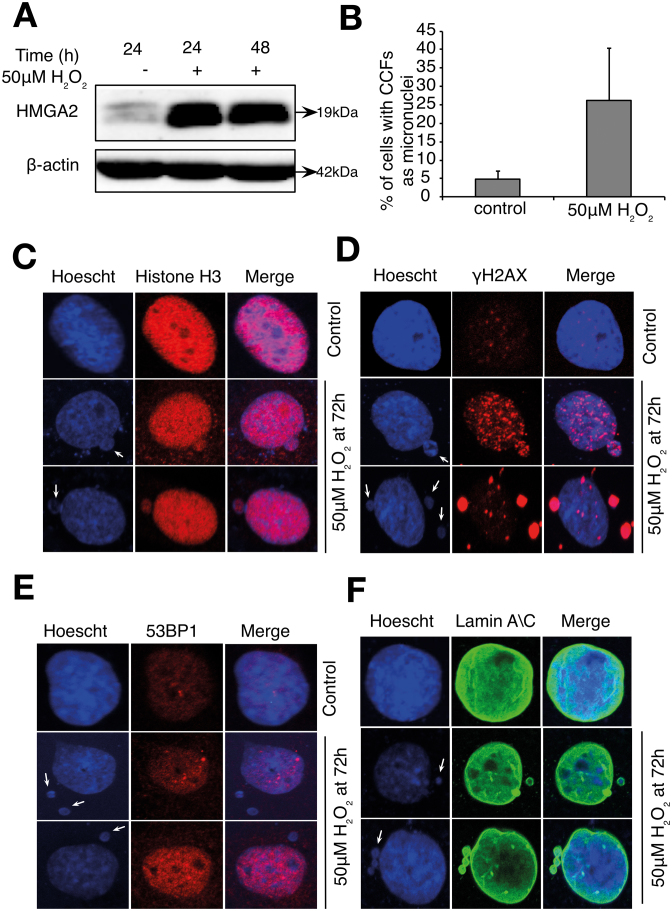
Although oxidative stress has been shown to induce senescence and replication stress independently, no study has implicated unresolved replication stress as the driver for cellular senescence in response to oxidative stress. Using cells exposed to increasing concentrations of hydrogen peroxide, we show that sub-lethal amount of exogenous hydrogen peroxide induces two waves of DNA damage. The first wave is rapid and transient while the second wave coincides with the cells transition from the S to the G2/M phases of cell cycle. Subsequently, cells enter growth arrest accompanied by the acquisition of senescence-associated characteristics. Furthermore, a p53-dependent decrease in Rad51, which is associated with the formation of DNA segments with chromatin alterations reinforcing senescence, and Lamin B1 that is involved in chromatin remodeling, is observed during the establishment of the senescent phenotype. On the other hand, increase in senescence associated-β-Gal activity, a classical marker of senescence and HMGA2, a marker of the senescence-associated heterochromatin foci, is shown to be independent of p53. Together, our findings implicate replication stress-induced endogenous DNA damage as the driver for the establishment of cellular senescence upon sub-lethal oxidative stress, and implicate the role of p53 in some but not all hallmarks of the senescent phenotype.
尽管氧化应激已被证明可独立诱导衰老和复制应激,但尚无研究表明未解决的复制应激是细胞对氧化应激反应中细胞衰老的驱动因素。使用暴露于浓度不断增加的过氧化氢的细胞,我们发现亚致死量的外源性过氧化氢会引发两波DNA损伤。第一波迅速且短暂,而第二波与细胞从细胞周期的S期过渡到G2/M期同时发生。随后,细胞进入生长停滞状态,并伴有衰老相关特征的获得。此外,在衰老表型建立过程中,观察到Rad51(与具有增强衰老作用的染色质改变的DNA片段形成相关)和参与染色质重塑的核纤层蛋白B1的表达在p53依赖下降低。另一方面,衰老相关的β-半乳糖苷酶活性(衰老的经典标志物)和衰老相关异染色质聚集体的标志物HMGA2的增加显示与p53无关。总之,我们的研究结果表明,复制应激诱导的内源性DNA损伤是亚致死性氧化应激后细胞衰老建立的驱动因素,并表明p53在衰老表型的某些但不是所有特征中发挥作用。