do Amaral Ronaldo J F C, Almeida Henrique V, Kelly Daniel J, O'Brien Fergal J, Kearney Cathal J
Tissue Engineering Research Group, Department of Anatomy, Royal College of Surgeons in Ireland, Dublin, Ireland.
CNC, Center for Neuroscience and Cell Biology, University of Coimbra, 3004-517 Coimbra, Portugal.
Stem Cells Int. 2017;2017:6843727. doi: 10.1155/2017/6843727. Epub 2017 Sep 6.
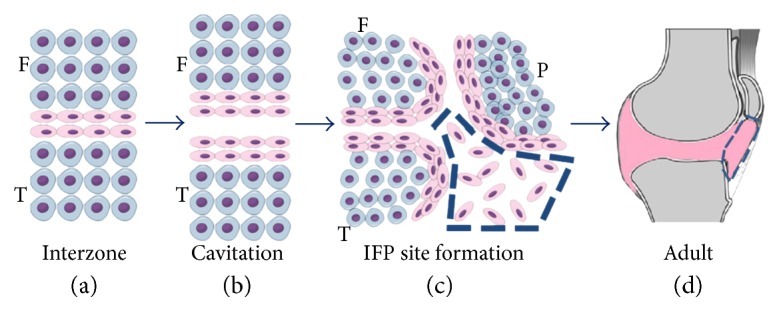
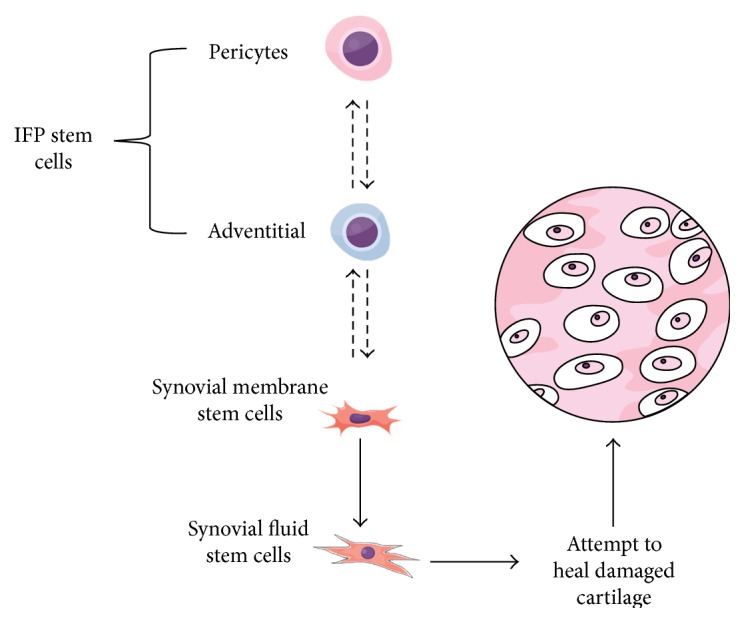
The ideal cell type to be used for cartilage therapy should possess a proven chondrogenic capacity, not cause donor-site morbidity, and should be readily expandable in culture without losing their phenotype. There are several cell sources being investigated to promote cartilage regeneration: mature articular chondrocytes, chondrocyte progenitors, and various stem cells. Most recently, stem cells isolated from joint tissue, such as chondrogenic stem/progenitors from cartilage itself, synovial fluid, synovial membrane, and infrapatellar fat pad (IFP) have gained great attention due to their increased chondrogenic capacity over the bone marrow and subcutaneous adipose-derived stem cells. In this review, we first describe the IFP anatomy and compare and contrast it with other adipose tissues, with a particular focus on the embryological and developmental aspects of the tissue. We then discuss the recent advances in IFP stem cells for regenerative medicine. We compare their properties with other stem cell types and discuss an ontogeny relationship with other joint cells and their role on cartilage repair. We conclude with a perspective for future clinical trials using IFP stem cells.
用于软骨治疗的理想细胞类型应具有已被证实的软骨生成能力,不会导致供体部位发病,并且应能在培养中易于扩增而不丧失其表型。目前正在研究多种细胞来源以促进软骨再生:成熟的关节软骨细胞、软骨细胞祖细胞和各种干细胞。最近,从关节组织分离出的干细胞,如来自软骨本身、滑液、滑膜和髌下脂肪垫(IFP)的软骨生成干细胞/祖细胞,因其软骨生成能力高于骨髓和皮下脂肪来源的干细胞而备受关注。在这篇综述中,我们首先描述IFP的解剖结构,并将其与其他脂肪组织进行比较和对比,特别关注该组织的胚胎学和发育方面。然后,我们讨论IFP干细胞在再生医学方面的最新进展。我们将它们的特性与其他干细胞类型进行比较,并讨论它们与其他关节细胞的个体发生关系以及它们在软骨修复中的作用。最后,我们展望了使用IFP干细胞进行未来临床试验的前景。