Quintas Ana, Pérez-Núñez Daniel, Sánchez Elena G, Nogal Maria L, Hentze Matthias W, Castelló Alfredo, Revilla Yolanda
Centro de Biología Molecular Severo Ochoa, CSIC-UAM, Universidad Autónoma de Madrid, Madrid, Spain.
European Molecular Biology Laboratory (EMBL), Heidelberg, Germany.
J Virol. 2017 Nov 30;91(24). doi: 10.1128/JVI.00990-17. Print 2017 Dec 15.
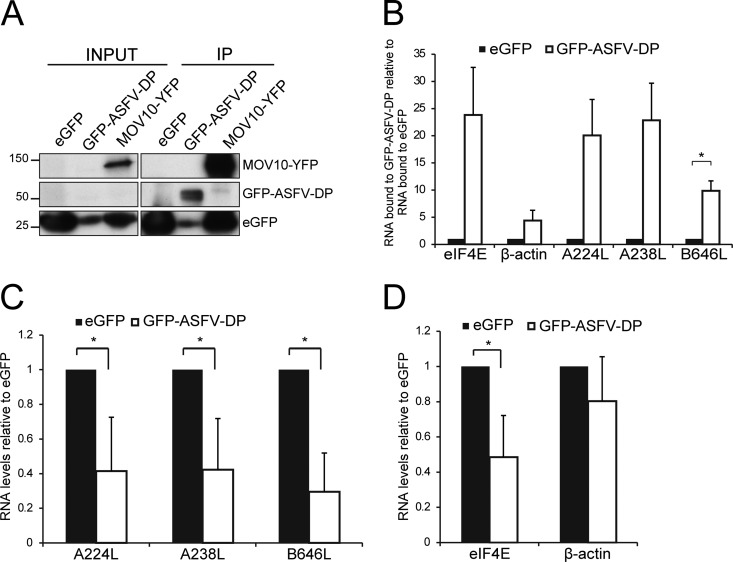
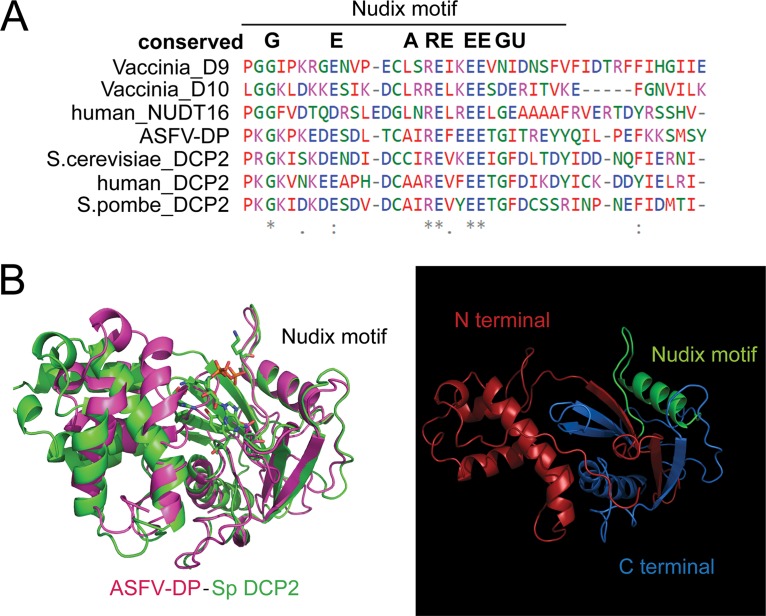
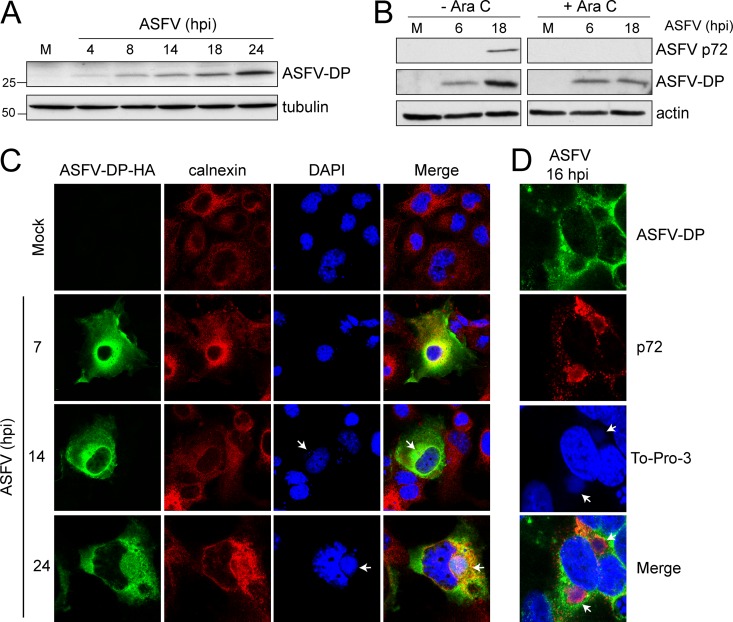
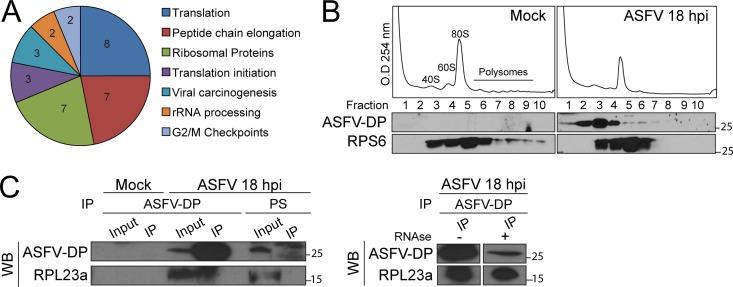
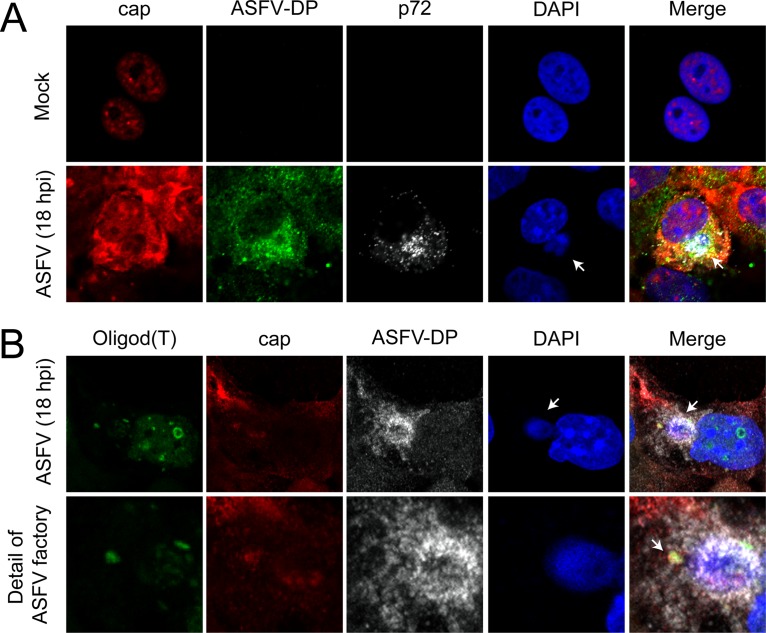
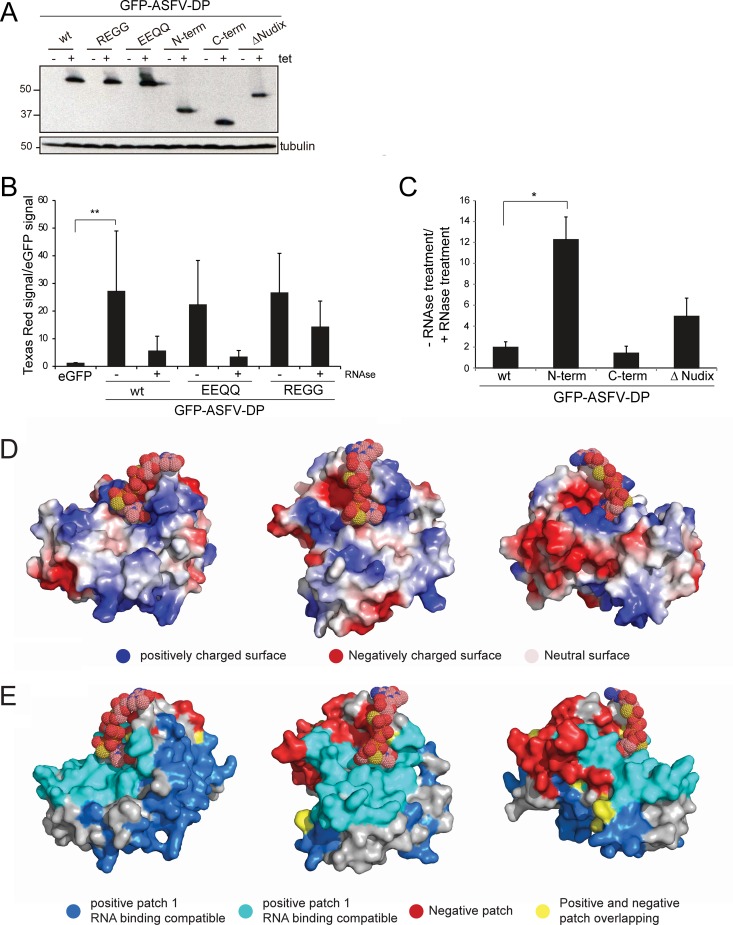
African swine fever virus (ASFV) infection is characterized by a progressive decrease in cellular protein synthesis with a concomitant increase in viral protein synthesis, though the mechanism by which the virus achieves this is still unknown. Decrease of cellular mRNA is observed during ASFV infection, suggesting that inhibition of cellular proteins is due to an active mRNA degradation process. ASFV carries a gene (Ba71V D250R/Malawi g5R) that encodes a decapping protein (ASFV-DP) that has a Nudix hydrolase motif and decapping activity Here, we show that ASFV-DP was expressed from early times and accumulated throughout the infection with a subcellular localization typical of the endoplasmic reticulum, colocalizing with the cap structure and interacting with the ribosomal protein L23a. ASFV-DP was capable of interaction with poly(A) RNA in cultured cells, primarily mediated by the N-terminal region of the protein. ASFV-DP also interacted with viral and cellular RNAs in the context of infection, and its overexpression in infected cells resulted in decreased levels of both types of transcripts. This study points to ASFV-DP as a viral decapping enzyme involved in both the degradation of cellular mRNA and the regulation of viral transcripts. Virulent ASFV strains cause a highly infectious and lethal disease in domestic pigs for which there is no vaccine. Since 2007, an outbreak in the Caucasus region has spread to Russia, jeopardizing the European pig population and making it essential to deepen knowledge about the virus. Here, we demonstrate that ASFV-DP is a novel RNA-binding protein implicated in the regulation of mRNA metabolism during infection, making it a good target for vaccine development.
非洲猪瘟病毒(ASFV)感染的特征是细胞蛋白质合成逐渐减少,同时病毒蛋白质合成增加,不过病毒实现这一过程的机制仍不清楚。在ASFV感染期间观察到细胞mRNA减少,这表明细胞蛋白质的抑制是由于活跃的mRNA降解过程。ASFV携带一个基因(Ba71V D250R/马拉维g5R),该基因编码一种具有Nudix水解酶基序和脱帽活性的脱帽蛋白(ASFV-DP)。在此,我们表明ASFV-DP从早期开始表达,并在整个感染过程中积累,其亚细胞定位具有内质网的典型特征,与帽结构共定位并与核糖体蛋白L23a相互作用。ASFV-DP能够在培养细胞中与聚腺苷酸RNA相互作用,主要由该蛋白的N端区域介导。在感染的情况下,ASFV-DP还与病毒和细胞RNA相互作用,其在感染细胞中的过表达导致两种类型转录本的水平降低。这项研究指出ASFV-DP是一种病毒脱帽酶,参与细胞mRNA的降解和病毒转录本的调控。强毒ASFV毒株在家猪中引起一种高度传染性和致死性疾病,目前尚无疫苗。自2007年以来,高加索地区的疫情已蔓延至俄罗斯,危及欧洲猪群,因此有必要加深对该病毒的了解。在此,我们证明ASFV-DP是一种新型RNA结合蛋白,参与感染期间mRNA代谢的调控,使其成为疫苗开发的良好靶点。