Pereira Jose H, McAndrew Ryan P, Tomaleri Giovani P, Adams Paul D
Molecular Biophysics and Integrated Bioimaging Division, Lawrence Berkeley National Laboratory, Berkeley, CA 94720, USA.
Joint BioEnergy Institute, Emeryville, CA 94608, USA.
J Appl Crystallogr. 2017 Sep 5;50(Pt 5):1352-1358. doi: 10.1107/S1600576717011347. eCollection 2017 Oct 1.
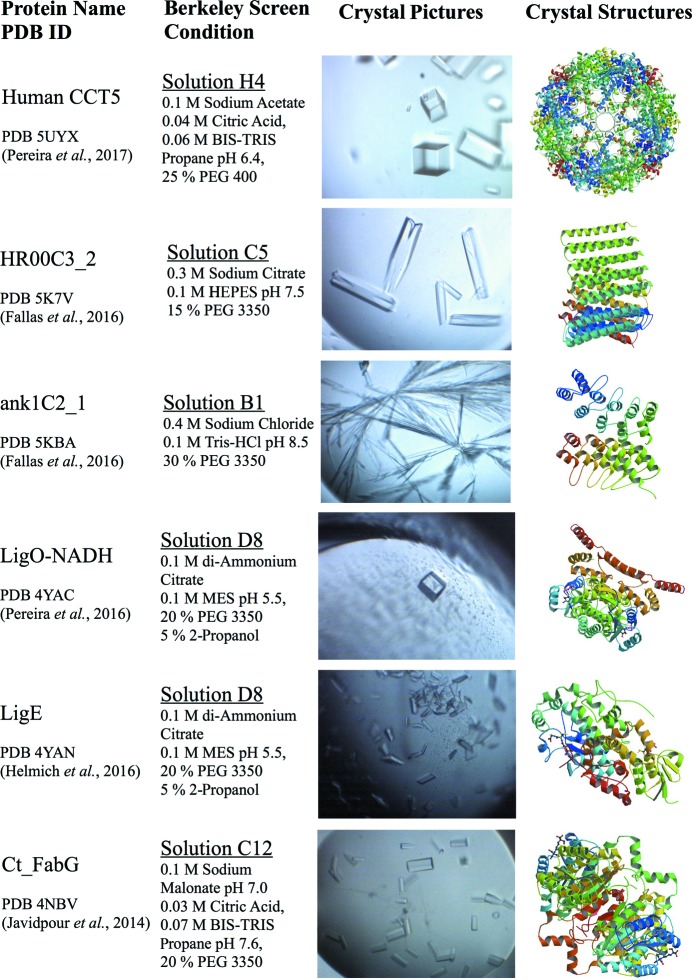
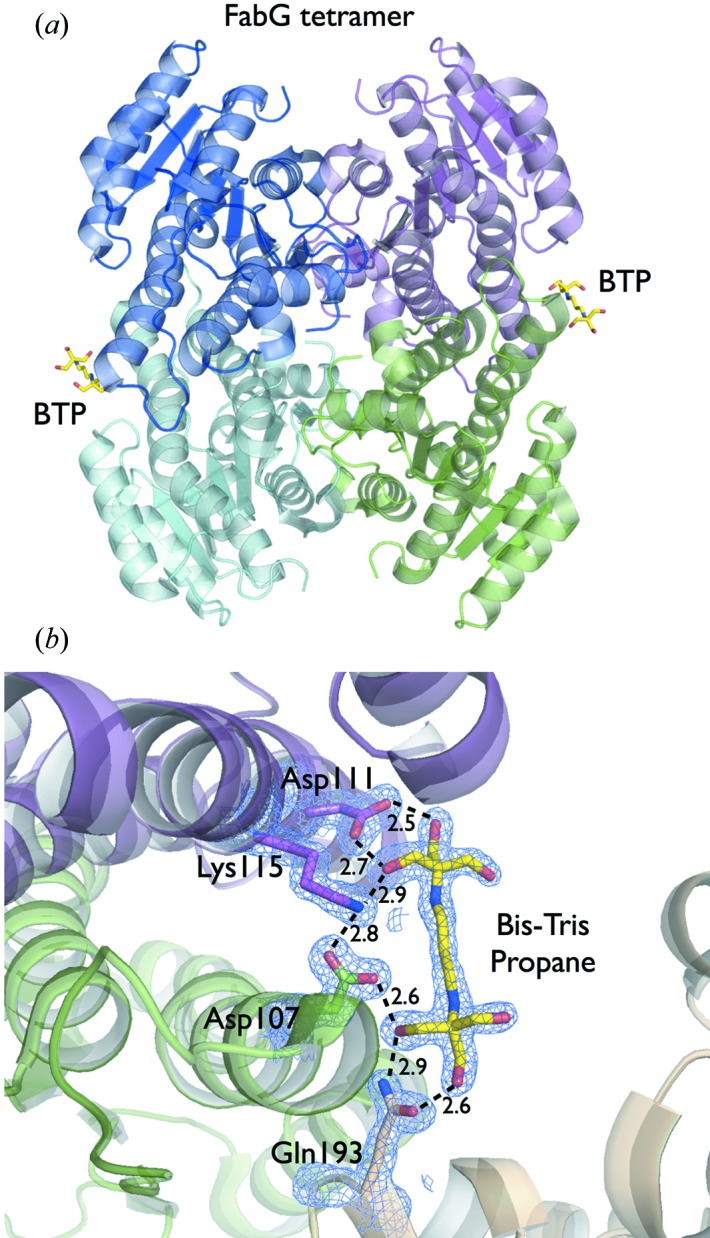
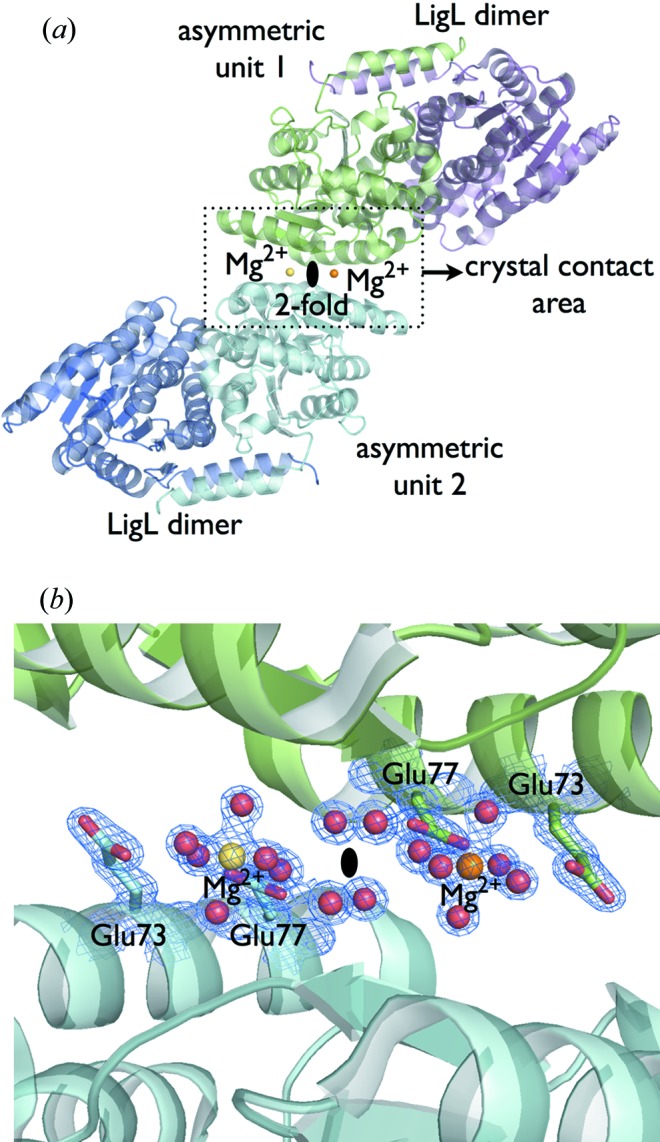
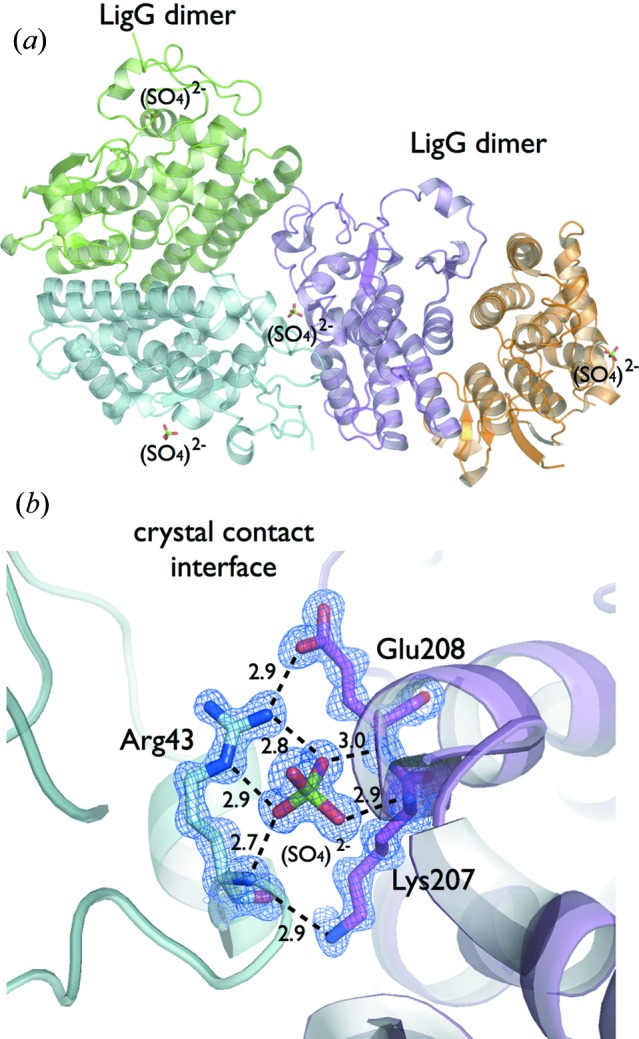
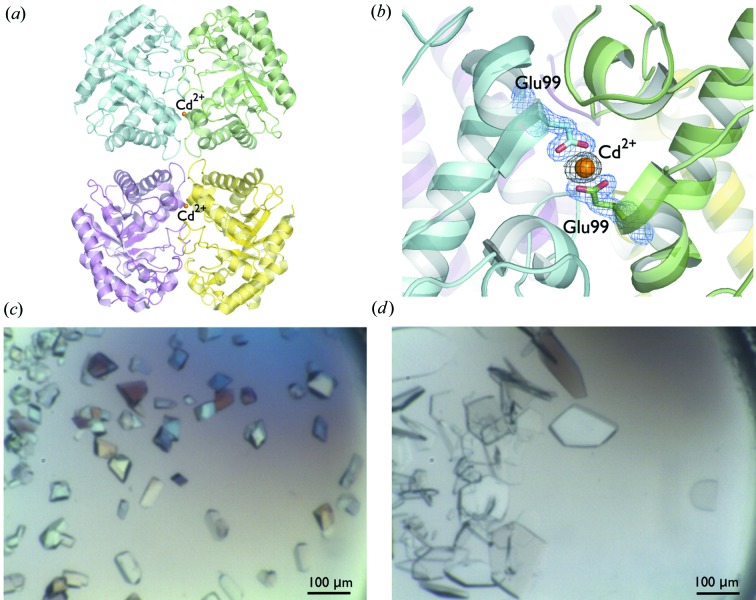
Using statistical analysis of the Biological Macromolecular Crystallization Database, combined with previous knowledge about crystallization reagents, a crystallization screen called the Berkeley Screen has been created. Correlating crystallization conditions and high-resolution protein structures, it is possible to better understand the influence that a particular solution has on protein crystal formation. Ions and small molecules such as buffers and precipitants used in crystallization experiments were identified in electron density maps, highlighting the role of these chemicals in protein crystal packing. The Berkeley Screen has been extensively used to crystallize target proteins from the Joint BioEnergy Institute and the Collaborative Crystallography program at the Berkeley Center for Structural Biology, contributing to several Protein Data Bank entries and related publications. The Berkeley Screen provides the crystallographic community with an efficient set of solutions for general macromolecular crystallization trials, offering a valuable alternative to the existing commercially available screens.
通过对生物大分子结晶数据库进行统计分析,并结合先前关于结晶试剂的知识,创建了一种名为伯克利筛选法的结晶筛选方法。将结晶条件与高分辨率蛋白质结构相关联,可以更好地理解特定溶液对蛋白质晶体形成的影响。在电子密度图中识别出了结晶实验中使用的离子和小分子,如缓冲剂和沉淀剂,突出了这些化学物质在蛋白质晶体堆积中的作用。伯克利筛选法已被广泛用于结晶联合生物能源研究所和伯克利结构生物学中心的协作结晶项目中的目标蛋白质,为多个蛋白质数据库条目和相关出版物做出了贡献。伯克利筛选法为晶体学界提供了一套高效的通用大分子结晶试验解决方案,是现有市售筛选方法的一个有价值的替代方案。