Ling Yun, Ter Meer Louis P, Yumak Zerrin, Veltkamp Remco C
Utrecht University, Utrecht, Netherlands.
Erasmus School of Health Policy and Management, Rotterdam, Netherlands.
JMIR Serious Games. 2017 Oct 12;5(4):e19. doi: 10.2196/games.7969.
Patients who receive rehabilitation after hip replacement surgery are shown to have increased muscle strength and better functional performance. However, traditional physiotherapy is often tedious and leads to poor adherence. Exercise games, provide ways for increasing the engagement of elderly patients and increase the uptake of rehabilitation exercises.
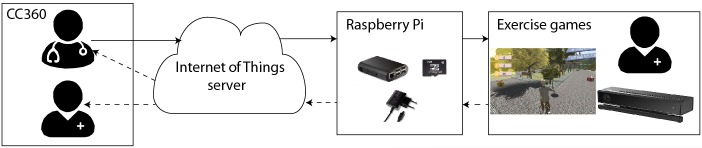
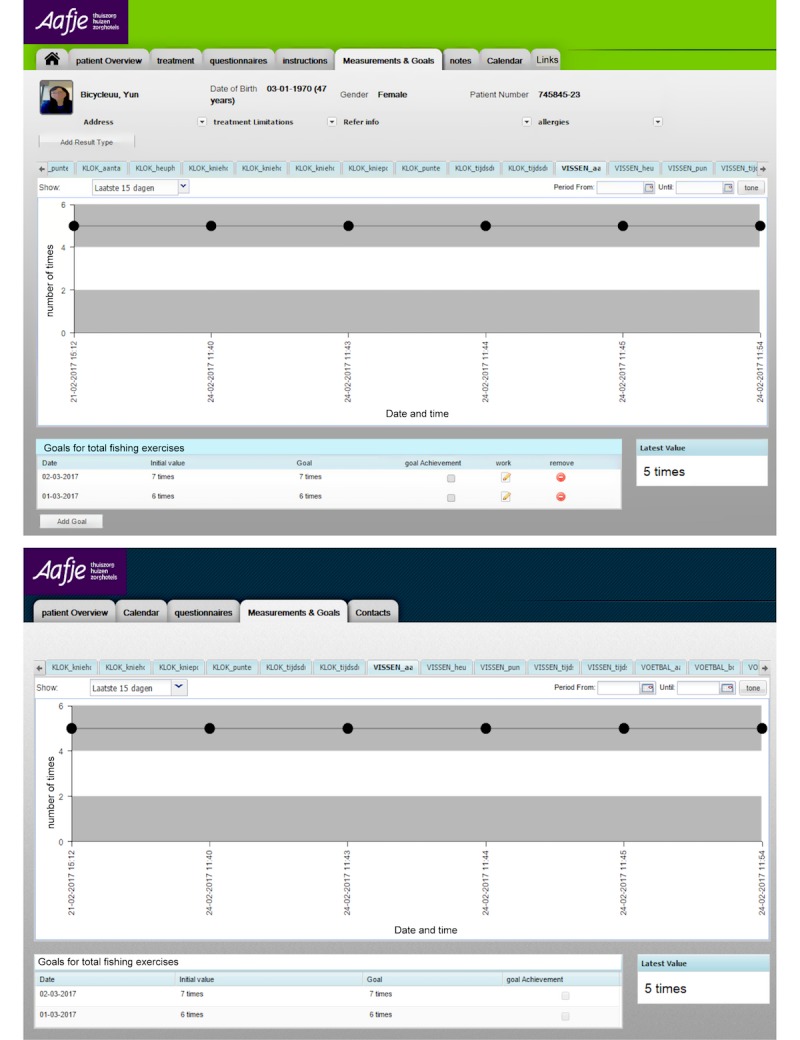
The objective of this study was to evaluate Fietsgame (Dutch for cycling game), which translates existing rehabilitation exercises into fun exercise games. The system connects exercise games with a patient's personal record and a therapist interface by an Internet of Things server. Thus, both the patient and physiotherapist can monitor the patient's medical status.
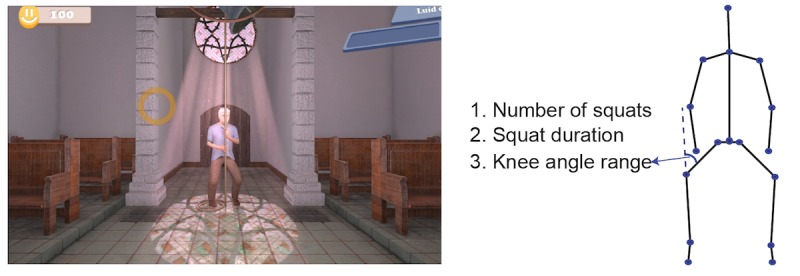
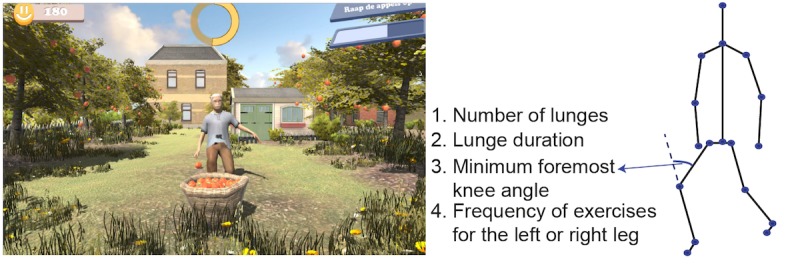
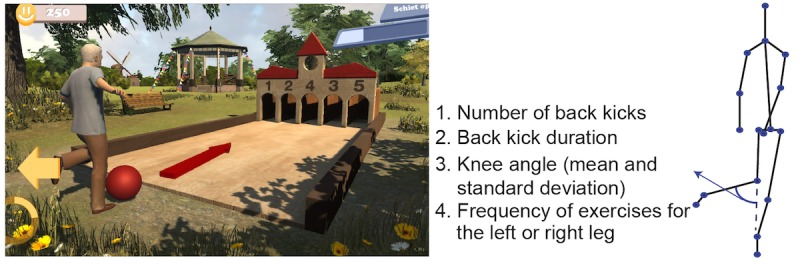
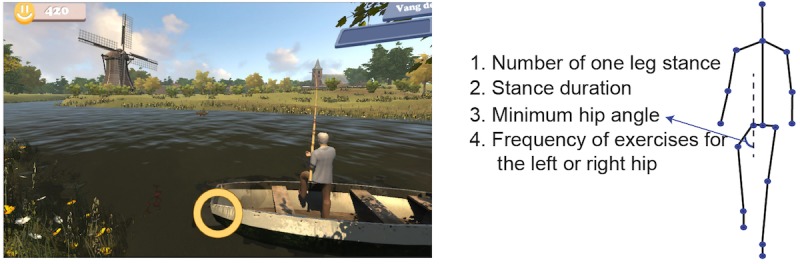
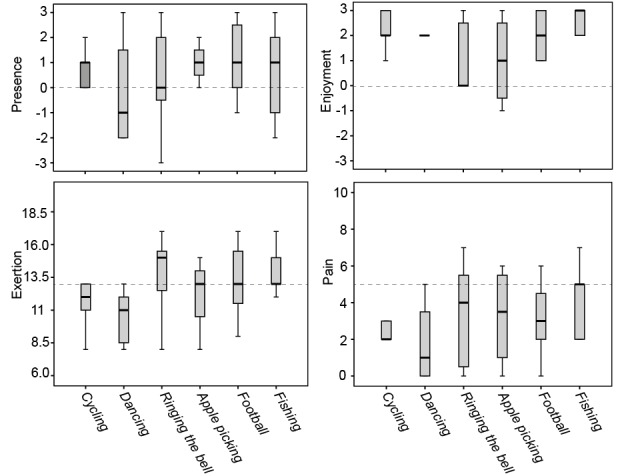
This paper describes a pilot study that evaluates the usability of the Fietsgame. The study was conducted in a rehabilitation center with 9 participants, including 2 physiotherapists and 7 patients. The patients were asked to play 6 exercise games, each lasting about 5 min, under the guidance of a physiotherapist. The mean age of the patients was 74.57 years (standard deviation [SD] 8.28); all the patients were in the recovery process after hip surgery. Surveys were developed to quantitatively measure the usability factors, including presence, enjoyment, pain, exertion, and technology acceptance. Comments on advantages and suggested improvements of our game system provided by the physiotherapists and patients were summarized and their implications were discussed.
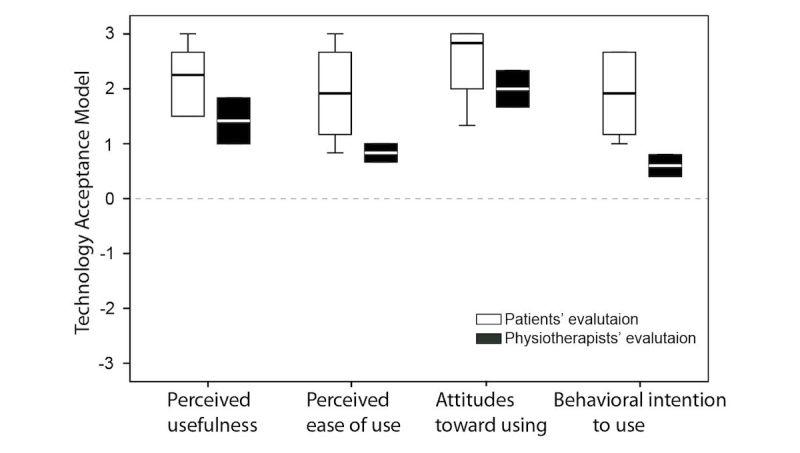
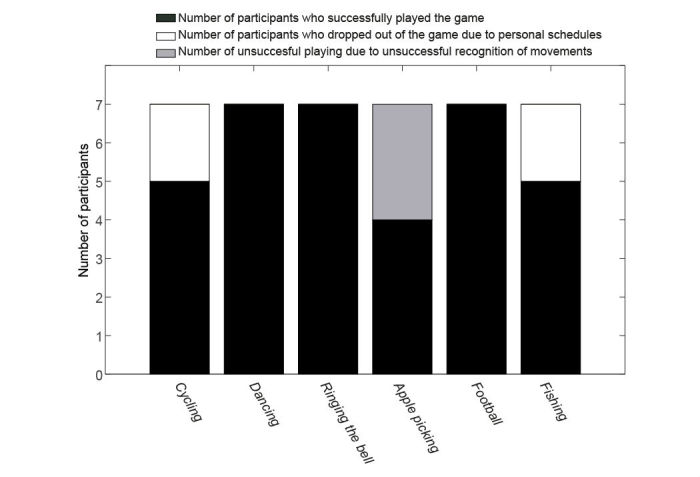
The results showed that after successfully playing the games, 75% to 100% of the patients experienced high levels of enjoyment in all the games except the squats game. Patients reported the highest level of exertion in squats when compared with other exercise games. Lunges resulted in the highest dropout rate (43%) due to interference with the Kinect v2 from support chairs. All the patients (100%) found the game system useful and easy to use, felt that it would be a useful tool in their further rehabilitation, and expressed that they would like to use the game in the future. The therapists indicated that the exercise games highly meet the criteria of motor rehabilitation, and they intend to continue using the game as part of their rehabilitation treatment of patients. Comments from the patients and physiotherapists suggest that real-time corrective feedback when patients perform the exercises wrongly and a more personalized user interface with options for increasing or decreasing cognitive load are needed.
The results suggest that Fietsgame can be used as an alternative tool to traditional motor rehabilitation for patients with hip surgery. Lunges and squats are found to be more beneficial for patients who have relatively better balance skills. A follow-up randomized controlled study will be conducted to test the effectiveness of the Fietsgame to investigate how motivating it is over a longer period of time.
髋关节置换手术后接受康复治疗的患者,其肌肉力量增强,功能表现更佳。然而,传统物理治疗往往枯燥乏味,导致患者依从性差。运动游戏为提高老年患者的参与度和增加康复锻炼的接受度提供了途径。
本研究旨在评估Fietsgame(荷兰语,意为骑行游戏),它将现有的康复锻炼转化为有趣的运动游戏。该系统通过物联网服务器将运动游戏与患者的个人记录及治疗师界面相连。这样,患者和物理治疗师都能监测患者的医疗状况。
本文描述了一项评估Fietsgame可用性的初步研究。该研究在一家康复中心进行,有9名参与者,包括2名物理治疗师和7名患者。患者在物理治疗师的指导下玩6种运动游戏,每种游戏持续约5分钟。患者的平均年龄为74.57岁(标准差[SD]8.28);所有患者均处于髋关节手术后的康复过程中。开发了调查问卷以定量测量可用性因素,包括沉浸感、趣味性、疼痛、用力程度和技术接受度。总结了物理治疗师和患者对我们游戏系统优点及改进建议的评论,并讨论了其影响。
结果显示,成功玩完游戏后,除深蹲游戏外,75%至100%的患者在所有游戏中都体验到了高度的趣味性。与其他运动游戏相比,患者报告深蹲时用力程度最高。由于支撑椅对Kinect v2的干扰,弓步运动的退出率最高(43%)。所有患者(100%)都认为游戏系统有用且易于使用,觉得它将是其进一步康复中的有用工具,并表示希望在未来使用该游戏。治疗师表示,运动游戏高度符合运动康复标准,他们打算继续将该游戏用作对患者康复治疗的一部分。患者和物理治疗师的评论表明,需要在患者错误执行锻炼时提供实时纠正反馈,以及一个更个性化的用户界面,带有增加或减少认知负荷的选项。
结果表明,Fietsgame可作为髋关节手术患者传统运动康复的替代工具。发现弓步运动和深蹲运动对平衡技能相对较好的患者更有益。将进行一项后续随机对照研究,以测试Fietsgame的有效性,调查其在更长时间段内的激励效果。