Liu Xiangwei, Tan Naiwen, Zhou Yuchao, Wei Hongbo, Ren Shuai, Yu Fan, Chen Hui, Jia Chengming, Yang Guodong, Song Yingliang
State Key Laboratory of Military Stomatology & National Clinical Research Center for Oral Diseases & Shaanxi Engineering Research Center for Dental Materials and Advanced Manufacture, Department of Implant Dentistry.
Department of Prosthodontics, School of Stomatology.
Int J Nanomedicine. 2017 Sep 26;12:7089-7101. doi: 10.2147/IJN.S124584. eCollection 2017.
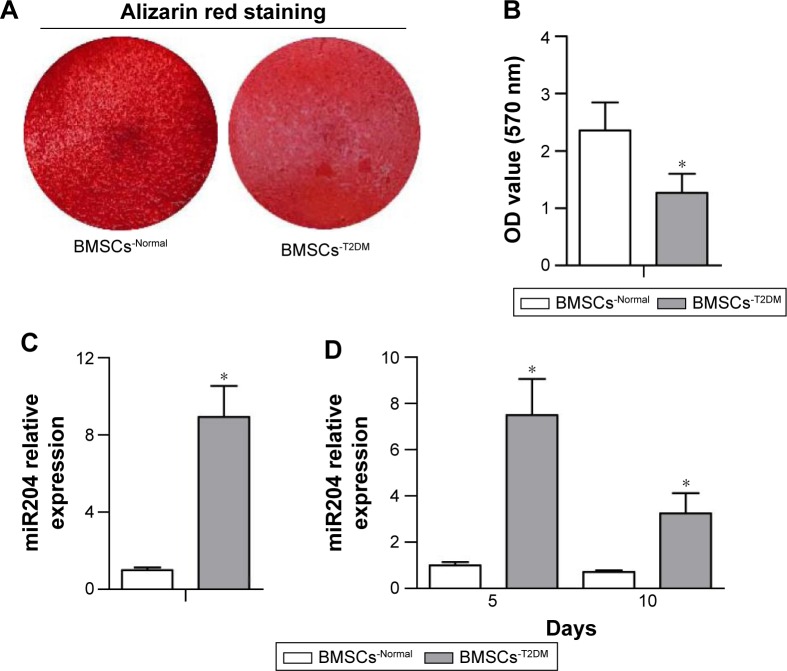
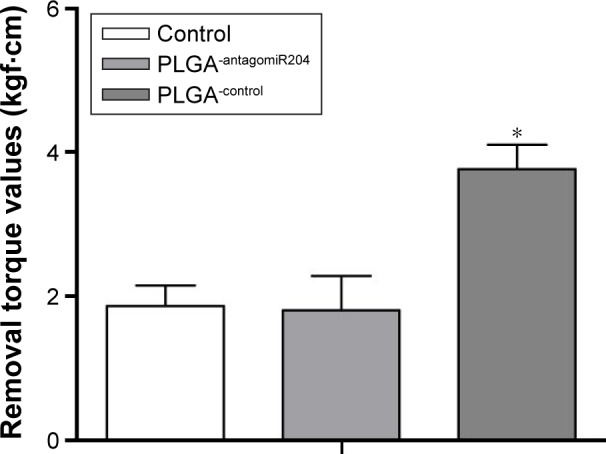
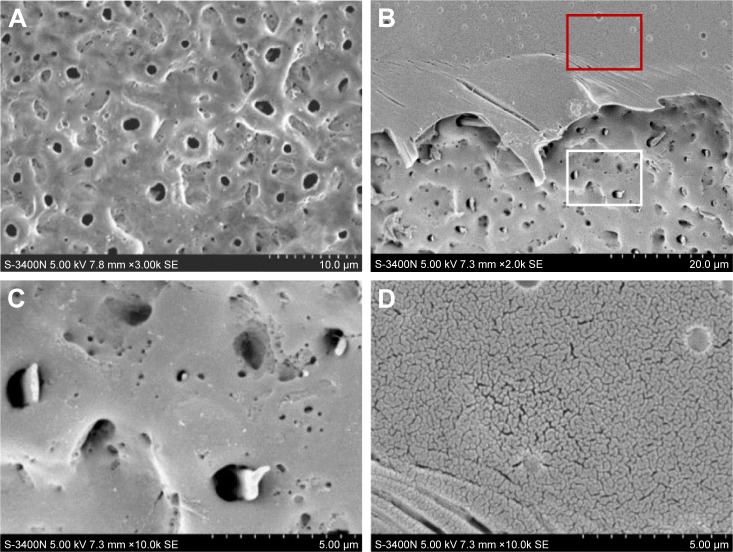
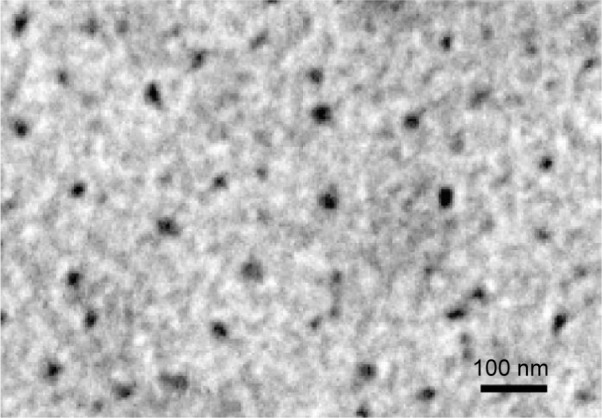
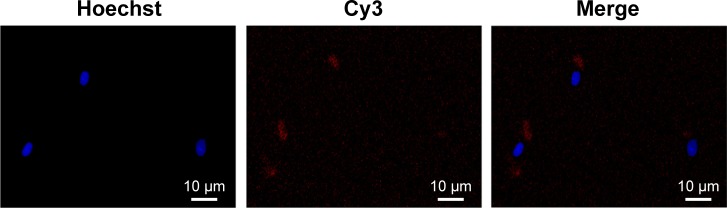
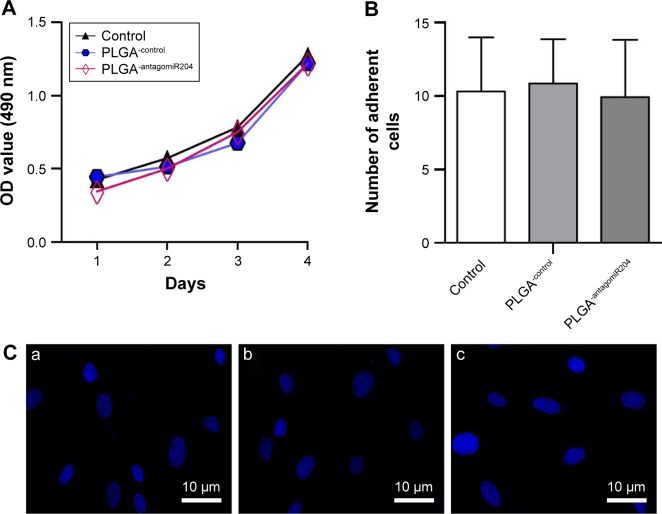
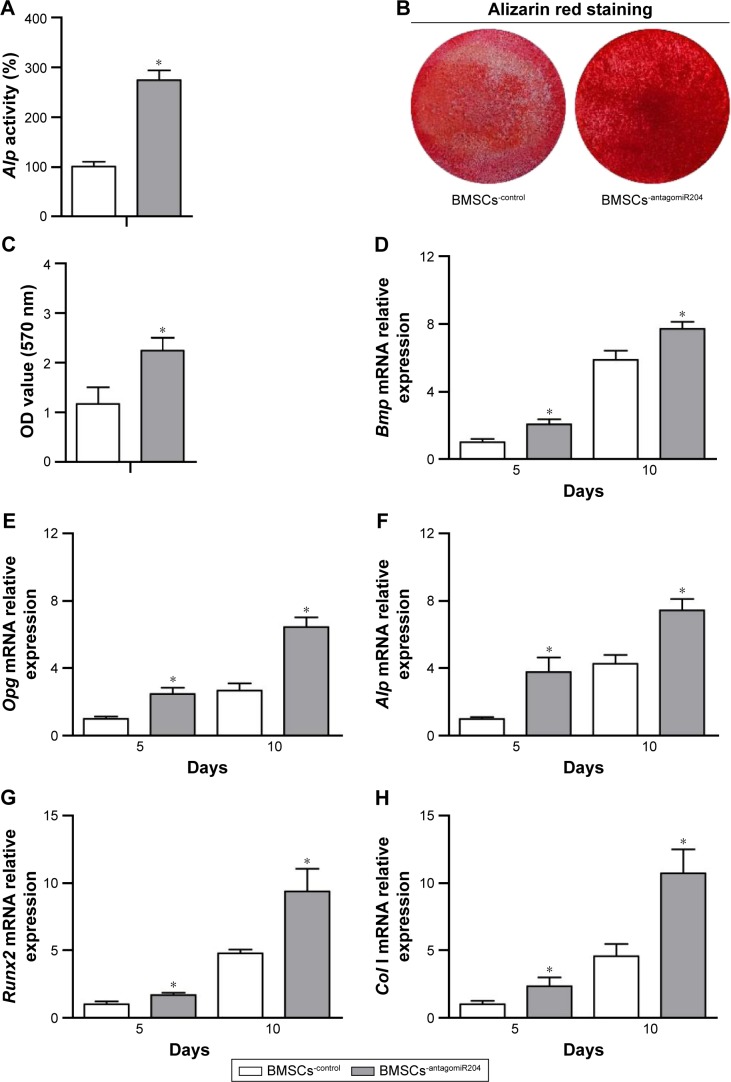
Impaired osseointegration of the implant remains the big hurdle for dental implant therapy in diabetic patients. In this study, the authors first identified that miR204 was strikingly highly expressed in the bone mesenchymal stem cells (BMSCs) of diabetic rats. Forced expression of miR204 repressed the osteogenic potential of BMSCs, while inhibition of miR204 significantly increased the osteogenic capacity. Moreover, the miR204 inhibitor was conjugated with gold nanoparticles (AuNP-antagomiR204) and dispersed them in the poly(lactic-co-glycolic acid) (PLGA) solution. The AuNP-antagomiR204 containing PLGA solution was applied for coating the surface of titanium implant. Electron microscope revealed that an ultrathin sheet was formed on the surface of the implant, and the AuNPs were evenly dispersed in the coated PLGA sheet. Cellular experiments revealed that these encapsulated AuNP-antagomiR204 were able to be released from the PLGA sheet and uptaken by adherent BMSCs. In vivo animal study further confirmed that the AuNP-antagomiR204 released from PLGA sheet promoted osseointegration, as revealed by microcomputerized tomography (microCT) reconstruction and histological assay. Taken together, this study established that miR204 misexpression accounted for the deficient osseointegation in diabetes mellitus, while PLGA sheets aided the release of AuNP-antagomiR204, which would be a promising strategy for titanium implant surface functionalization toward better osseointegration.
种植体骨结合受损仍然是糖尿病患者牙种植治疗的一大障碍。在本研究中,作者首先发现miR204在糖尿病大鼠的骨髓间充质干细胞(BMSC)中显著高表达。miR204的过表达抑制了BMSC的成骨潜能,而抑制miR204则显著提高了成骨能力。此外,将miR204抑制剂与金纳米颗粒(AuNP-antagomiR204)偶联,并将其分散在聚乳酸-乙醇酸共聚物(PLGA)溶液中。将含有AuNP-antagomiR204的PLGA溶液用于钛种植体表面涂层。电子显微镜显示,种植体表面形成了一层超薄片,金纳米颗粒均匀地分散在涂层的PLGA片中。细胞实验表明,这些包裹的AuNP-antagomiR204能够从PLGA片中释放出来,并被贴壁的BMSC摄取。体内动物研究进一步证实,从PLGA片中释放的AuNP-antagomiR204促进了骨结合,这通过微型计算机断层扫描(microCT)重建和组织学分析得以揭示。综上所述,本研究证实miR204表达异常是糖尿病患者骨结合不足的原因,而PLGA片有助于AuNP-antagomiR204的释放,这将是一种有前景的钛种植体表面功能化策略,以实现更好的骨结合。