Key Laboratory of Meat Processing and Quality Control, MOE, Key Laboratory of Meat Processing, MOA, Jiangsu Synergetic Innovation Center of Meat Processing and Quality Control, College of Food Science and Technology, Nanjing Agricultural University, Nanjing, 210095, P.R. China.
Department of Molecular and Human Genetics, Baylor College of Medicine, Houston, TX, 77030, USA.
Sci Rep. 2017 Oct 13;7(1):13184. doi: 10.1038/s41598-017-11834-5.
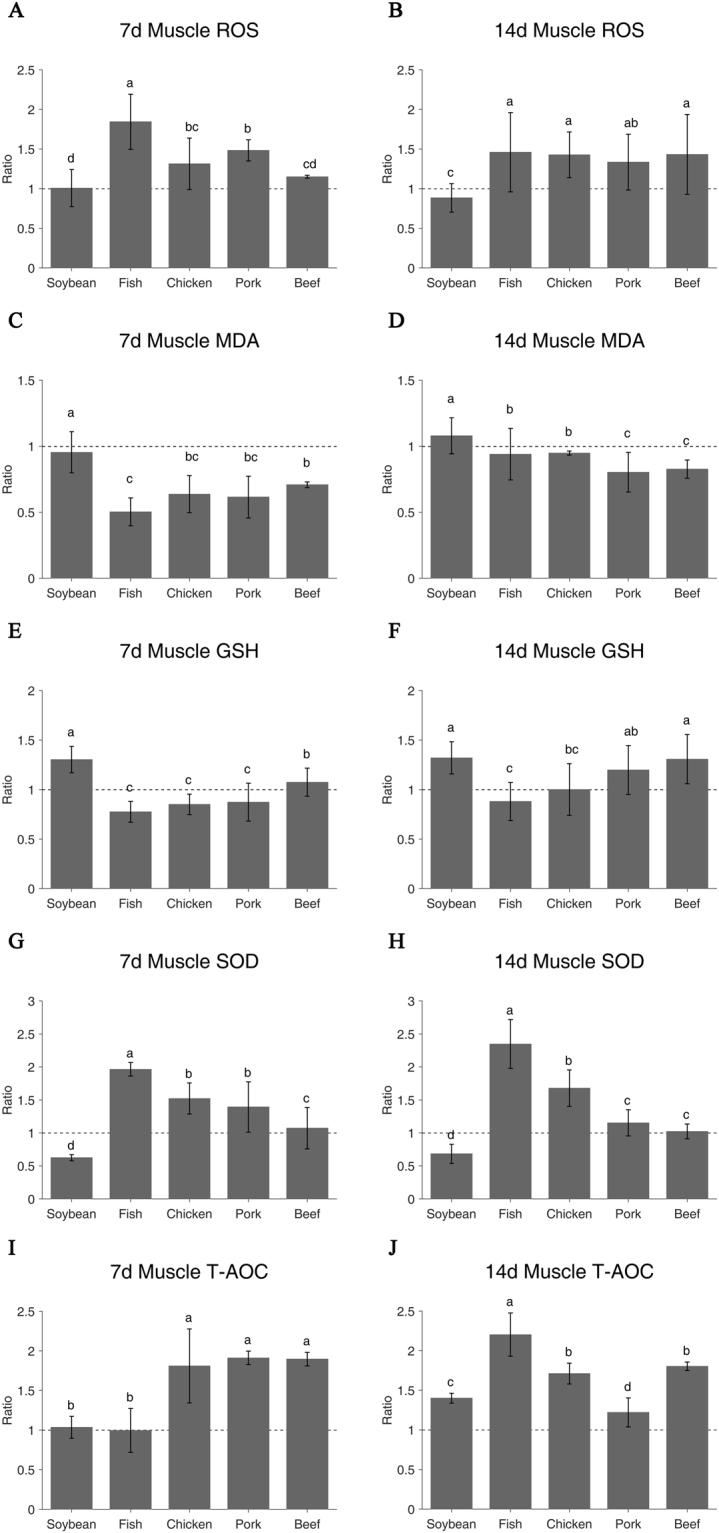
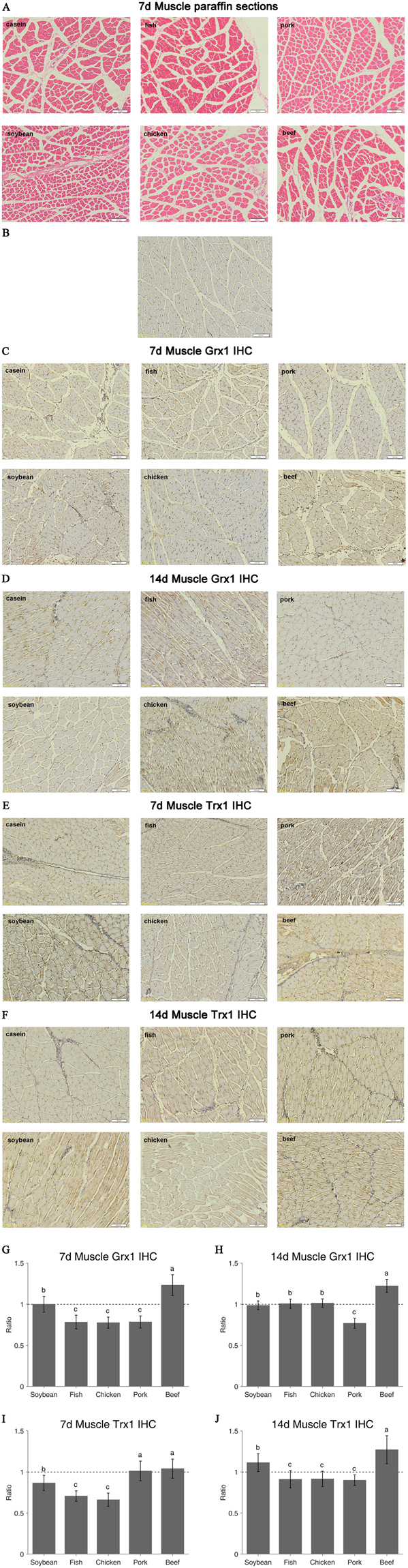
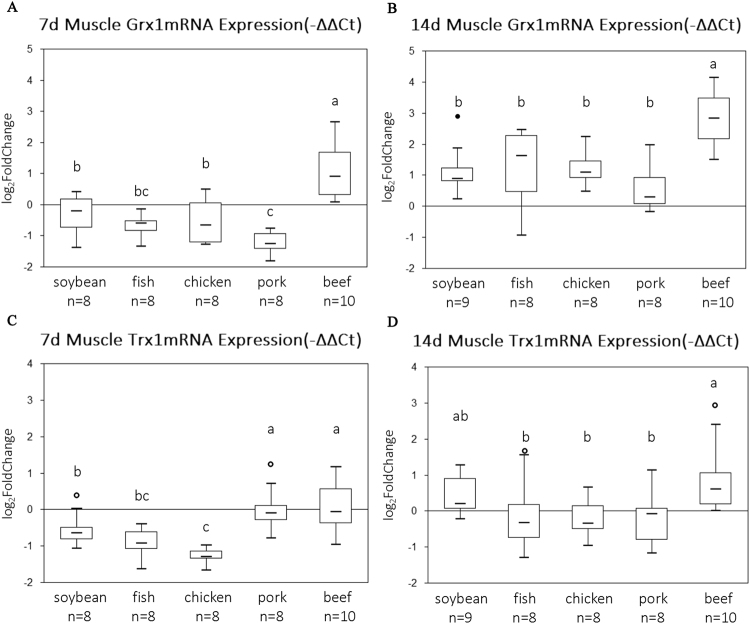
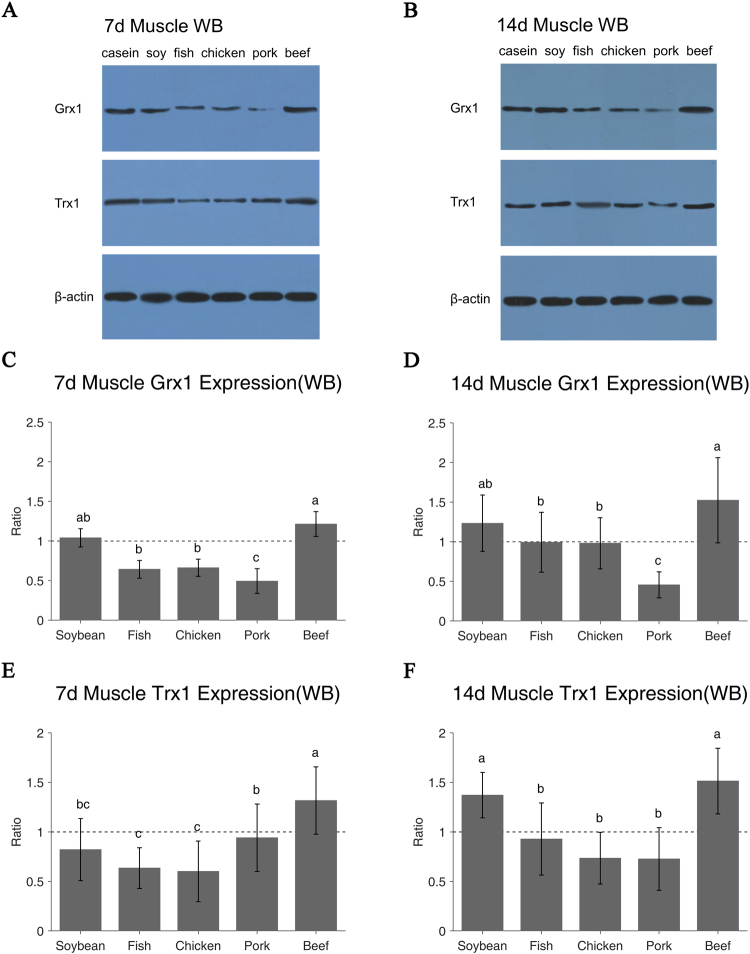
We investigated the impact of six protein diets on oxidation and anti-oxidation status in the muscle of young rats. Rats were fed six protein diets for 14 days, including casein (control), and proteins isolated from soy, fish, chicken, pork and beef. Grx1, Trx1 and other oxidative metabolic indices in muscle were quantified. Compared with the casein diet, the soy protein diet had a similar oxidation level, but higher GSH and lower SOD activities. The chicken and fish protein groups had lower GSH and higher SOD activities, the pork protein group showed lower Grx1 levels than the casein group and the beef protein group showed the highest GSH, Grx1 and Trx1 levels as reflected by RT-PCR, Western blotting and immunohistochemistry analyses. Intake of meat proteins showed higher ROS and T-AOC but lower MDA levels than non-meat proteins, which may be due to the increase in Grx1 and Trx1 expression and other antioxidants. Meat proteins are more conducive to muscle of growing rats.
我们研究了六种蛋白质饮食对幼鼠肌肉氧化和抗氧化状态的影响。大鼠喂养六种蛋白质饮食 14 天,包括酪蛋白(对照)和从大豆、鱼、鸡、猪和牛肉中分离的蛋白质。定量测定肌肉中的 Grx1、Trx1 和其他氧化代谢指标。与酪蛋白饮食相比,大豆蛋白饮食具有相似的氧化水平,但 GSH 更高,SOD 活性更低。鸡肉和鱼肉蛋白组的 GSH 更低,SOD 活性更高,猪肉蛋白组的 Grx1 水平低于酪蛋白组,牛肉蛋白组的 GSH、Grx1 和 Trx1 水平最高,反映在 RT-PCR、Western 印迹和免疫组织化学分析中。摄入肉蛋白显示更高的 ROS 和 T-AOC,但 MDA 水平低于非肉蛋白,这可能是由于 Grx1 和 Trx1 表达和其他抗氧化剂的增加。肉蛋白更有利于生长中的大鼠的肌肉。