Brennan M J, Li Z M, Cowell J L, Bisher M E, Steven A C, Novotny P, Manclark C R
Division of Bacterial Products, Food and Drug Administration, Bethesda, Maryland.
Infect Immun. 1988 Dec;56(12):3189-95. doi: 10.1128/iai.56.12.3189-3195.1988.
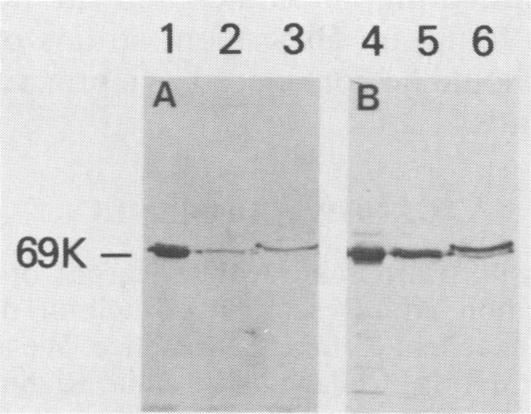
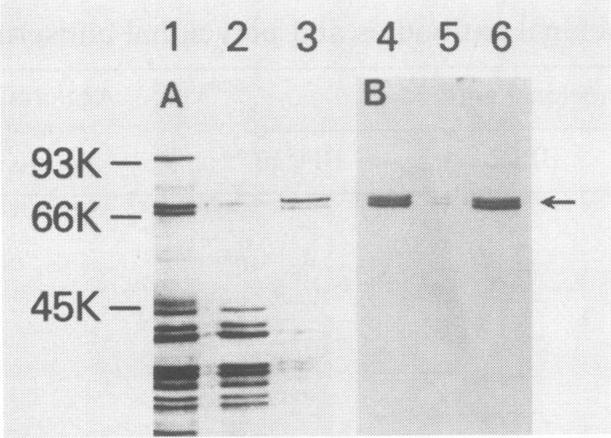
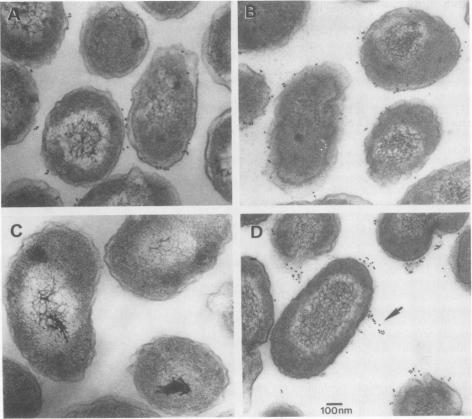
Cells of Bordetella pertussis BP353, a nonfimbriated Eldering serotype 1.3 strain, were used as an immunogen to produce three monoclonal antibodies, BPE3, BPD8, and BPE8, that agglutinated the immunizing cells, as well as certain other nonfimbriated and fimbriated serotype 3-containing B. pertussis strains. The antibodies did not agglutinate serotype 1 or nontypable B. pertussis cells. These monoclonal antibodies specifically detected a 69-kilodalton (kDa) band on Western blots (immunoblots) containing whole B. pertussis cell lysates of Eldering agglutinogen serotypes 1.3, 1.3.6, 1.2.3.4, and 1.2.3.4.6. This 69-kDa antigen was released from the bacteria by cell incubation for 60 min at 60 degrees C, and it was purified by affinity chromatography with a BPE3-agarose affinity matrix. Purified material was used to produce a polyclonal antiserum that agglutinated all nonfimbriated and fimbriated B. pertussis cells containing serotype 3 agglutinogen. Immunogold electron microscopy and indirect immunofluorescence studies demonstrated that it is an outer membrane constituent but nonfimbrial in appearance. BPE3 did not detect purified fimbriae on Western blots, and antibodies to these fimbriae did not bind to the 69-kDa component. Although B. bronchiseptica and B. parapertussis cells were not agglutinated by the monoclonal antibodies, antigenically similar proteins were detected in extracts of the bacteria. These results identify the 69-kDa protein as a nonfimbrial agglutinogen present on all virulent strains of B. pertussis. The monoclonal antibodies described here should be useful for further studies on the structure and function of this protein.
百日咳博德特氏菌BP353是一种无纤毛的埃尔德林1.3血清型菌株,其细胞被用作免疫原以产生三种单克隆抗体,即BPE3、BPD8和BPE8,这些抗体能凝集免疫细胞以及某些其他无纤毛和有纤毛的含3型血清型百日咳博德特氏菌菌株。这些抗体不能凝集1型血清型或不可分型的百日咳博德特氏菌细胞。这些单克隆抗体在含有埃尔德林凝集原血清型1.3、1.3.6、1.2.3.4和1.2.3.4.6的百日咳博德特氏菌全细胞裂解物的蛋白质印迹(免疫印迹)上特异性地检测到一条69千道尔顿(kDa)的条带。这种69-kDa抗原通过在60℃下将细菌孵育60分钟从细菌中释放出来,并通过用BPE3-琼脂糖亲和基质进行亲和层析进行纯化。纯化后的物质用于产生一种多克隆抗血清,该抗血清能凝集所有含有3型凝集原的无纤毛和有纤毛的百日咳博德特氏菌细胞。免疫金电子显微镜和间接免疫荧光研究表明它是一种外膜成分,但外观上无纤毛。BPE3在蛋白质印迹上未检测到纯化的菌毛,并且针对这些菌毛的抗体不与69-kDa成分结合。尽管支气管败血博德特氏菌和副百日咳博德特氏菌细胞未被单克隆抗体凝集,但在细菌提取物中检测到了抗原性相似的蛋白质。这些结果确定69-kDa蛋白是存在于所有百日咳博德特氏菌致病菌株上的一种无纤毛凝集原。这里描述的单克隆抗体应有助于对该蛋白的结构和功能进行进一步研究。