• 文献检索
  • 文档翻译
  • 深度研究
  • 学术资讯
  • Suppr Zotero 插件Zotero 插件
  • 邀请有礼
  • 套餐&价格
  • 历史记录
应用&插件
Suppr Zotero 插件Zotero 插件浏览器插件Mac 客户端Windows 客户端微信小程序
定价
高级版会员购买积分包购买API积分包
服务
文献检索文档翻译深度研究API 文档MCP 服务
关于我们
关于 Suppr公司介绍联系我们用户协议隐私条款
关注我们

Suppr 超能文献

核心技术专利:CN118964589B侵权必究
粤ICP备2023148730 号-1Suppr @ 2026

文献检索

告别复杂PubMed语法,用中文像聊天一样搜索,搜遍4000万医学文献。AI智能推荐,让科研检索更轻松。

立即免费搜索

文件翻译

保留排版,准确专业,支持PDF/Word/PPT等文件格式,支持 12+语言互译。

免费翻译文档

深度研究

AI帮你快速写综述,25分钟生成高质量综述,智能提取关键信息,辅助科研写作。

立即免费体验

作为具有一般结果和混杂因素的偏差放大器的工具变量。

Instrumental variables as bias amplifiers with general outcome and confounding.

作者信息

Ding P, VanderWeele T J, Robins J M

机构信息

Department of Statistics, University of California, Berkeley, California, USA.

Departments of Epidemiology and Biostatistics, Harvard T. H. Chan School of Public Health, Boston, Massachusetts, USA.

出版信息

Biometrika. 2017 Jun 1;104(2):291-302. doi: 10.1093/biomet/asx009. Epub 2017 Apr 17.

DOI:10.1093/biomet/asx009
PMID:29033459
原文链接:https://pmc.ncbi.nlm.nih.gov/articles/PMC5636691/
Abstract

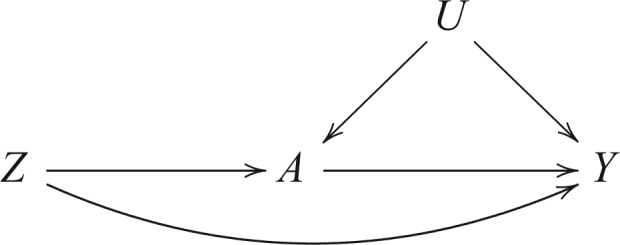
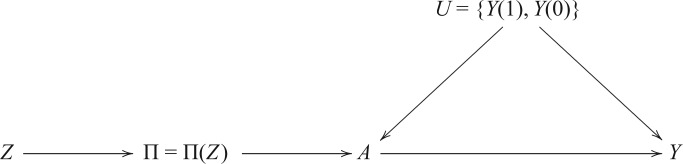
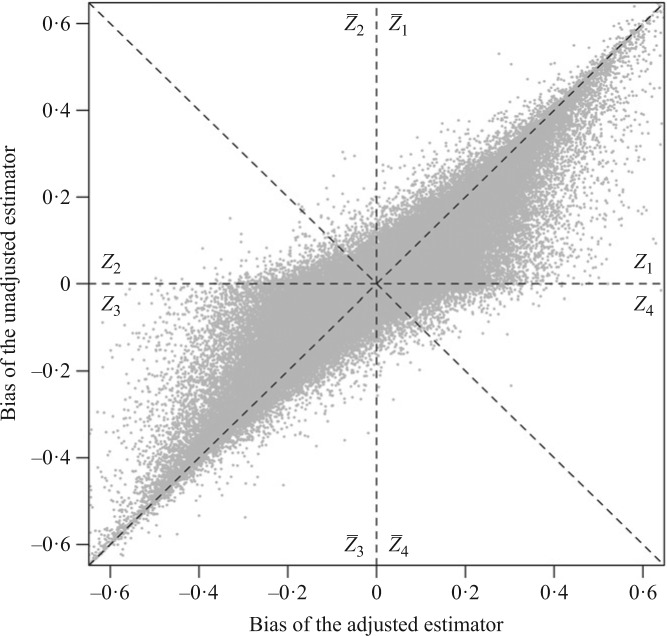
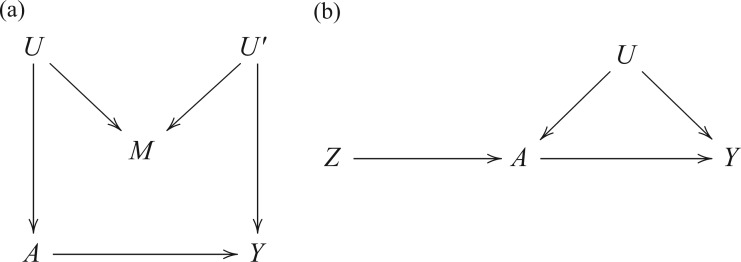
Drawing causal inference with observational studies is the central pillar of many disciplines. One sufficient condition for identifying the causal effect is that the treatment-outcome relationship is unconfounded conditional on the observed covariates. It is often believed that the more covariates we condition on, the more plausible this unconfoundedness assumption is. This belief has had a huge impact on practical causal inference, suggesting that we should adjust for all pretreatment covariates. However, when there is unmeasured confounding between the treatment and outcome, estimators adjusting for some pretreatment covariate might have greater bias than estimators without adjusting for this covariate. This kind of covariate is called a bias amplifier, and includes instrumental variables that are independent of the confounder, and affect the outcome only through the treatment. Previously, theoretical results for this phenomenon have been established only for linear models. We fill in this gap in the literature by providing a general theory, showing that this phenomenon happens under a wide class of models satisfying certain monotonicity assumptions. We further show that when the treatment follows an additive or multiplicative model conditional on the instrumental variable and the confounder, these monotonicity assumptions can be interpreted as the signs of the arrows of the causal diagrams.

摘要

利用观察性研究进行因果推断是许多学科的核心支柱。识别因果效应的一个充分条件是,在观察到的协变量条件下,处理-结果关系是无混杂的。人们通常认为,我们所基于的协变量越多,这种无混杂假设就越合理。这种观点对实际因果推断产生了巨大影响,这表明我们应该对所有预处理协变量进行调整。然而,当处理和结果之间存在未测量的混杂因素时,对某些预处理协变量进行调整的估计量可能比未对该协变量进行调整的估计量有更大的偏差。这种协变量被称为偏差放大器,包括与混杂因素独立且仅通过处理影响结果的工具变量。此前,这种现象的理论结果仅在线性模型中得到确立。我们通过提供一个通用理论填补了文献中的这一空白,表明这种现象在满足某些单调性假设的广泛模型类中都会发生。我们进一步表明,当处理在工具变量和混杂因素的条件下遵循加法或乘法模型时,这些单调性假设可以解释为因果图箭头的符号。
https://cdn.ncbi.nlm.nih.gov/pmc/blobs/35d7/5793498/52d5c77c08b0/asx009f4.jpg
https://cdn.ncbi.nlm.nih.gov/pmc/blobs/35d7/5793498/b4e565e30ce5/asx009f1.jpg
https://cdn.ncbi.nlm.nih.gov/pmc/blobs/35d7/5793498/451dfb16727b/asx009f2.jpg
https://cdn.ncbi.nlm.nih.gov/pmc/blobs/35d7/5793498/4868aabf6738/asx009f3.jpg
https://cdn.ncbi.nlm.nih.gov/pmc/blobs/35d7/5793498/52d5c77c08b0/asx009f4.jpg
https://cdn.ncbi.nlm.nih.gov/pmc/blobs/35d7/5793498/b4e565e30ce5/asx009f1.jpg
https://cdn.ncbi.nlm.nih.gov/pmc/blobs/35d7/5793498/451dfb16727b/asx009f2.jpg
https://cdn.ncbi.nlm.nih.gov/pmc/blobs/35d7/5793498/4868aabf6738/asx009f3.jpg
https://cdn.ncbi.nlm.nih.gov/pmc/blobs/35d7/5793498/52d5c77c08b0/asx009f4.jpg

相似文献

1
Instrumental variables as bias amplifiers with general outcome and confounding.作为具有一般结果和混杂因素的偏差放大器的工具变量。
Biometrika. 2017 Jun 1;104(2):291-302. doi: 10.1093/biomet/asx009. Epub 2017 Apr 17.
2
Instrumental variables and inverse probability weighting for causal inference from longitudinal observational studies.纵向观察性研究因果推断的工具变量与逆概率加权法
Stat Methods Med Res. 2004 Feb;13(1):17-48. doi: 10.1191/0962280204sm351ra.
3
Causal directed acyclic graphs and the direction of unmeasured confounding bias.因果有向无环图与未测量混杂偏倚的方向
Epidemiology. 2008 Sep;19(5):720-8. doi: 10.1097/EDE.0b013e3181810e29.
4
On the definition of a confounder.关于混杂因素的定义。
Ann Stat. 2013 Feb;41(1):196-220. doi: 10.1214/12-aos1058.
5
Assessing causal treatment effect estimation when using large observational datasets.使用大型观测数据集评估因果治疗效果估计。
BMC Med Res Methodol. 2019 Nov 14;19(1):207. doi: 10.1186/s12874-019-0858-x.
6
The impact of unmeasured within- and between-cluster confounding on the bias of effect estimatorsof a continuous exposure.未测量的组内和组间混杂因素对连续暴露效应估计值偏倚的影响。
Stat Methods Med Res. 2020 Aug;29(8):2119-2139. doi: 10.1177/0962280219883323. Epub 2019 Nov 7.
7
Confounder selection strategies targeting stable treatment effect estimators.针对稳定治疗效果估计量的混杂因素选择策略。
Stat Med. 2021 Feb 10;40(3):607-630. doi: 10.1002/sim.8792. Epub 2020 Nov 4.
8
Principles of confounder selection.混杂因素选择原则。
Eur J Epidemiol. 2019 Mar;34(3):211-219. doi: 10.1007/s10654-019-00494-6. Epub 2019 Mar 6.
9
An introduction to instrumental variable assumptions, validation and estimation.工具变量假设、验证与估计导论。
Emerg Themes Epidemiol. 2018 Jan 22;15:1. doi: 10.1186/s12982-018-0069-7. eCollection 2018.
10
A general approach to evaluating the bias of 2-stage instrumental variable estimators.两阶段工具变量估计量偏差的一般评估方法。
Stat Med. 2018 May 30;37(12):1997-2015. doi: 10.1002/sim.7636. Epub 2018 Mar 23.

引用本文的文献

1
Causal Association Between Genetically Predicted Ankle Spacing Width and Risk of Age-Related Bone Mineral Density.基因预测的踝间距宽度与年龄相关性骨密度风险之间的因果关联
Sci Rep. 2025 Jul 10;15(1):24863. doi: 10.1038/s41598-025-09765-7.
2
Modeling Versus Balancing Approaches to Addressing Instrumental Variables in Weighting: A Comparison of the Outcome-Adaptive Lasso, Stable Balancing Weighting, and Stable Confounder Selection.加权中处理工具变量的建模与平衡方法:结果自适应套索法、稳定平衡加权法和稳定混杂因素选择法的比较
Pharmacoepidemiol Drug Saf. 2025 Jul;34(7):e70173. doi: 10.1002/pds.70173.
3
Prioritizing Variables for Observational Study Design using the Joint Variable Importance Plot.

本文引用的文献

1
Propensity score methods and unobserved covariate imbalance: comments on "squeezing the balloon".倾向评分方法与未观测协变量不均衡:对“挤压气球”的评论。
Health Serv Res. 2014 Jun;49(3):1074-82. doi: 10.1111/1475-6773.12152. Epub 2014 Jan 24.
2
Matching on provider is risky.匹配提供者是有风险的。
J Clin Epidemiol. 2013 Aug;66(8 Suppl):S65-8. doi: 10.1016/j.jclinepi.2013.02.012.
3
Squeezing the balloon: propensity scores and unmeasured covariate balance.挤压气球:倾向评分与未测量协变量平衡。
使用联合变量重要性图对观察性研究设计中的变量进行优先级排序。
Am Stat. 2024;78(3):318-326. doi: 10.1080/00031305.2024.2303419. Epub 2024 Feb 8.
4
Multiple imputation using auxiliary imputation variables that only predict missingness can increase bias due to data missing not at random.仅使用辅助预测缺失变量的多重插补可能会因数据缺失而增加偏差。
BMC Med Res Methodol. 2024 Oct 7;24(1):231. doi: 10.1186/s12874-024-02353-9.
5
Assessment of the E-value in the presence of bias amplification: a simulation study.存在偏差放大时 E 值的评估:一项模拟研究。
BMC Med Res Methodol. 2024 Mar 28;24(1):79. doi: 10.1186/s12874-024-02196-4.
6
Investigating the causal associations between five anthropometric indicators and nonalcoholic fatty liver disease: Mendelian randomization study.探究五项人体测量指标与非酒精性脂肪性肝病之间的因果关联:孟德尔随机化研究
World J Clin Cases. 2024 Mar 6;12(7):1215-1226. doi: 10.12998/wjcc.v12.i7.1215.
7
Causal Relationships between Air Pollutant Exposure and Bone Mineral Density and the Risk of Bone Fractures: Evidence from a Two-Stage Mendelian Randomization Analysis.空气污染物暴露与骨密度及骨折风险之间的因果关系:来自两阶段孟德尔随机化分析的证据
Toxics. 2023 Dec 30;12(1):27. doi: 10.3390/toxics12010027.
8
Effects of Adjusting for Instrumental Variables on the Bias and Precision of Propensity Score Weighted Estimators: Analysis Under Complete, Near, and No Positivity Violations.调整工具变量对倾向得分加权估计量的偏差和精度的影响:完全、近似和无正性违背情况下的分析
Clin Epidemiol. 2023 Nov 9;15:1055-1068. doi: 10.2147/CLEP.S427933. eCollection 2023.
9
causalCmprsk: An R package for nonparametric and Cox-based estimation of average treatment effects in competing risks data.因果风险模型:一个用于在竞争风险数据中进行非参数和 Cox 基于估计的平均治疗效果的 R 包。
Comput Methods Programs Biomed. 2023 Dec;242:107819. doi: 10.1016/j.cmpb.2023.107819. Epub 2023 Sep 21.
10
Reducing antimicrobial overuse through targeted therapy for patients with community-acquired pneumonia: a study protocol for a cluster-randomized factorial controlled trial (CARE-CAP).通过针对社区获得性肺炎患者的靶向治疗来减少抗菌药物过度使用:一项集群随机化因子对照试验(CARE-CAP)的研究方案。
Trials. 2023 Sep 16;24(1):595. doi: 10.1186/s13063-023-07615-3.
Health Serv Res. 2013 Aug;48(4):1487-507. doi: 10.1111/1475-6773.12020. Epub 2012 Dec 6.
4
Invited commentary: understanding bias amplification.特邀评论:理解偏差放大。
Am J Epidemiol. 2011 Dec 1;174(11):1223-7; discussion pg 1228-9. doi: 10.1093/aje/kwr352. Epub 2011 Oct 27.
5
Effects of adjusting for instrumental variables on bias and precision of effect estimates.调整工具变量对效应估计偏差和精度的影响。
Am J Epidemiol. 2011 Dec 1;174(11):1213-22. doi: 10.1093/aje/kwr364. Epub 2011 Oct 24.
6
A new criterion for confounder selection.一种新的混杂因素选择标准。
Biometrics. 2011 Dec;67(4):1406-13. doi: 10.1111/j.1541-0420.2011.01619.x. Epub 2011 May 31.
7
Confounding control in healthcare database research: challenges and potential approaches.医疗数据库研究中的混杂控制:挑战与潜在方法。
Med Care. 2010 Jun;48(6 Suppl):S114-20. doi: 10.1097/MLR.0b013e3181dbebe3.
8
Propensity scores and M-structures.倾向得分与M结构。
Stat Med. 2009 Apr 30;28(9):1416-20; author reply 1420-3. doi: 10.1002/sim.3532.
9
Propensity scores.倾向评分
Stat Med. 2009 Apr 15;28(8):1317-8. doi: 10.1002/sim.3554.
10
Re: The design versus the analysis of observational studies for causal effects: parallels with the design of randomized trials.关于:因果效应观察性研究的设计与分析:与随机试验设计的相似之处。
Stat Med. 2008 Jun 30;27(14):2740-1; author reply 2741-2. doi: 10.1002/sim.3172.