Ibarra-Meneses Ana V, Sanchez Carmen, Alvar Jorge, Moreno Javier, Carrillo Eugenia
WHO Collaborating Centre for Leishmaniasis, Centro Nacional de Microbiología, Instituto de Salud Carlos III, Madrid, Spain.
Drugs for Neglected Diseases Initiative (DNDi), Geneva, Switzerland.
Front Immunol. 2017 Sep 29;8:1208. doi: 10.3389/fimmu.2017.01208. eCollection 2017.
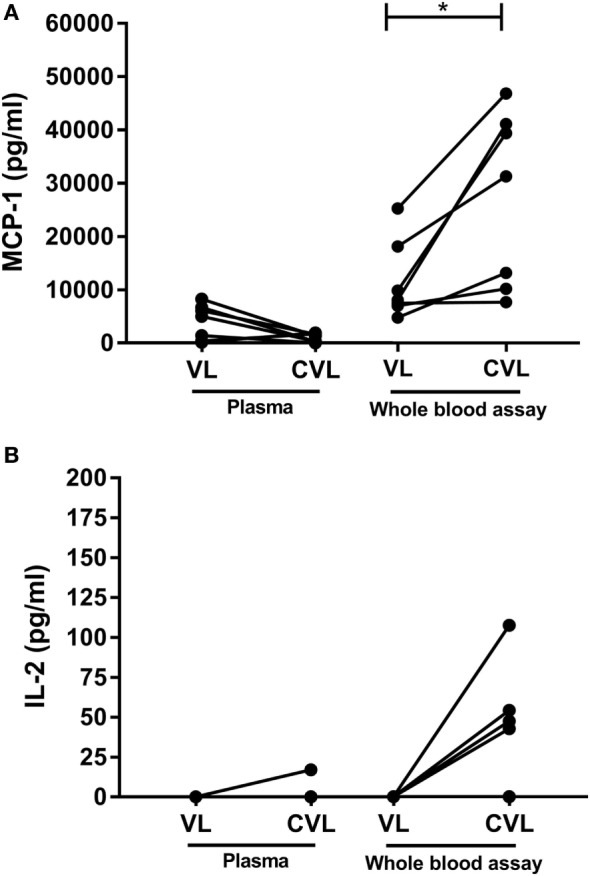
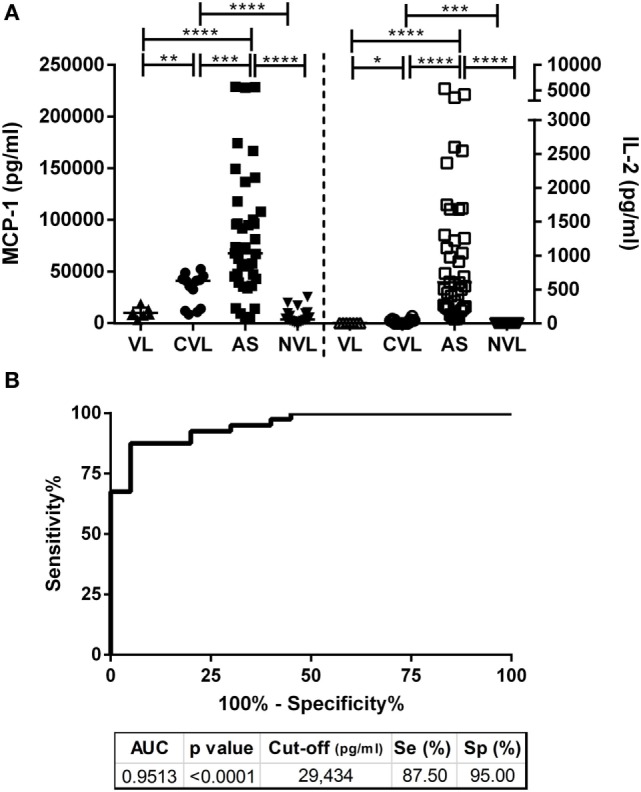
New biomarkers are needed to identify asymptomatic infection as well as immunity following vaccination or treatment. With the aim of finding a robust biomarker to assess an effective cellular immune response, monocyte chemotactic protein 1 (MCP-1) was examined in plasma from soluble antigen (SLA)-stimulated whole blood collected from subjects living in a -endemic area. MCP-1, expressed 110 times more strongly than IL-2, identified 87.5% of asymptomatic subjects and verified some asymptomatic subjects close to the cutoff. MCP-1 was also significantly elevated in all patients cured of visceral leishmaniasis (VL), unlike IL-2, indicating the specific memory response generated against . These results show MCP-1 to be a robust candidate biomarker of immunity that could be used as a marker of cure and to both select and follow the population in vaccine phase I-III human clinical trials with developed rapid, easy-to-use field tools.
需要新的生物标志物来识别无症状感染以及疫苗接种或治疗后的免疫情况。为了找到一种可靠的生物标志物来评估有效的细胞免疫反应,对来自生活在流行地区的受试者的可溶性抗原(SLA)刺激全血的血浆中的单核细胞趋化蛋白1(MCP-1)进行了检测。MCP-1的表达比IL-2强110倍,识别出87.5%的无症状受试者,并验证了一些接近临界值的无症状受试者。与IL-2不同,所有内脏利什曼病(VL)治愈的患者中MCP-1也显著升高,表明针对[此处原文缺失相关内容]产生了特异性记忆反应。这些结果表明MCP-1是一种可靠的免疫候选生物标志物,可用作治愈标志物,并在使用已开发的快速、易用现场工具的I-III期人类疫苗临床试验中用于选择和跟踪人群。