Yao Jie J, Lewallen Eric A, Trousdale William H, Xu Wei, Thaler Roman, Salib Christopher G, Reina Nicolas, Abdel Matthew P, Lewallen David G, van Wijnen Andre J
Department of Orthopedic Surgery, Mayo Clinic, Rochester, Minnesota.
Department of Orthopedics, Second Affiliated Hospital of Soochow University, Suzhou, China.
Biores Open Access. 2017 Jul 1;6(1):94-103. doi: 10.1089/biores.2017.0017. eCollection 2017.
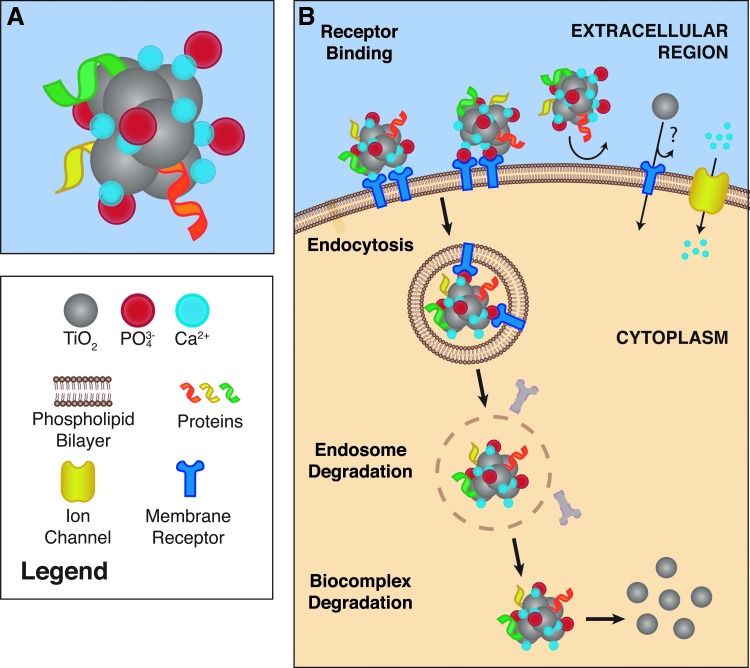
We evaluated recently published articles relevant to the biological effects of titanium dioxide (TiO) particles on local endogenous cells required for normal bone homeostasis, repair, and implant osseointegration. Structural characteristics, size, stability, and agglomeration of TiO particles alter the viability and behavior of multiple bone-related cell types. Resulting shifts in bone homeostasis may increase bone resorption and lead to clinical incidents of osteolysis, implant loosening, and joint pain. TiO particles that enter cells (through endocytosis or Trojan horse mechanism) may further disrupt implant retention. We propose that cellular responses to titanium-based nanoparticles contribute to pathological mechanisms underlying the aseptic loosening of titanium-based metal implants.
我们评估了最近发表的与二氧化钛(TiO)颗粒对正常骨稳态、修复和种植体骨整合所需的局部内源性细胞的生物学效应相关的文章。TiO颗粒的结构特征、大小、稳定性和团聚改变了多种骨相关细胞类型的活力和行为。骨稳态的变化可能会增加骨吸收,并导致骨溶解、种植体松动和关节疼痛等临床事件。进入细胞的TiO颗粒(通过内吞作用或特洛伊木马机制)可能会进一步破坏种植体的固定。我们认为,细胞对钛基纳米颗粒的反应促成了钛基金属植入物无菌性松动的病理机制。