Kang Yun-Seok, Kim Chun-Ho, Kim Jeong-Seok
Department of Sports Science, Chonbuk National University, Jeonju, Republic of Korea.
Department of Physical Education, Chonbuk National University, Jeonju, Republic of Korea.
J Exerc Nutrition Biochem. 2017 Sep 30;21(3):1-10. doi: 10.20463/jenb.2017.0010.
Recent evidence suggests that regular exercise training plays a decisive role in maintaining homeostasis and promoting muscle and skeletal formation. However, the effect of downhill exercise training on osteogenesis-related factors is not well understood.
Thus, we investigated the effect of uphill and downhill training on ovariectomy (OVX)-induced bone loss. After ovary removal, the exercise method performed included uphill (16 m/min, +15°) and downhill training (16 m/min, -15°) for 60 min/day and 5 days/week, respectively, for 8 weeks.
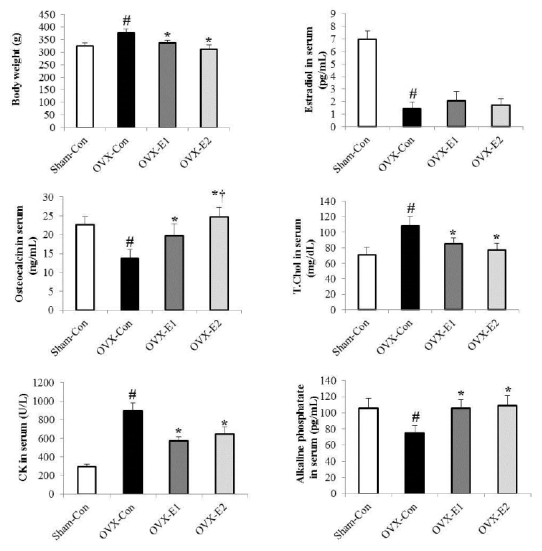
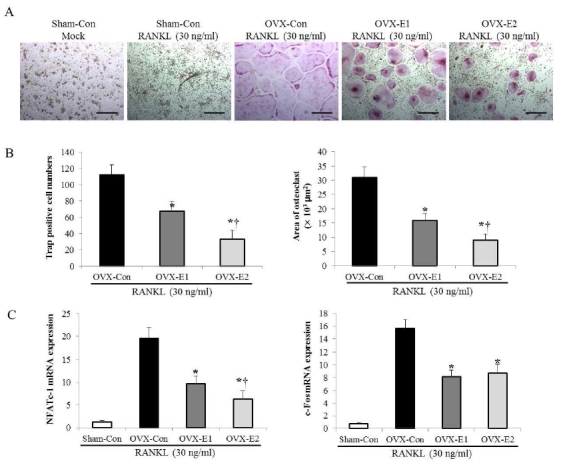
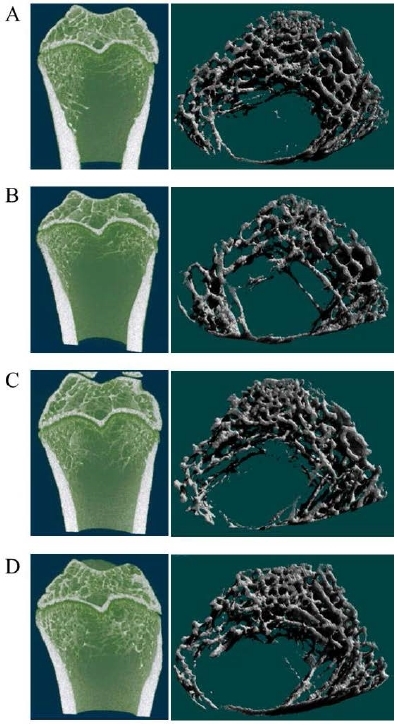
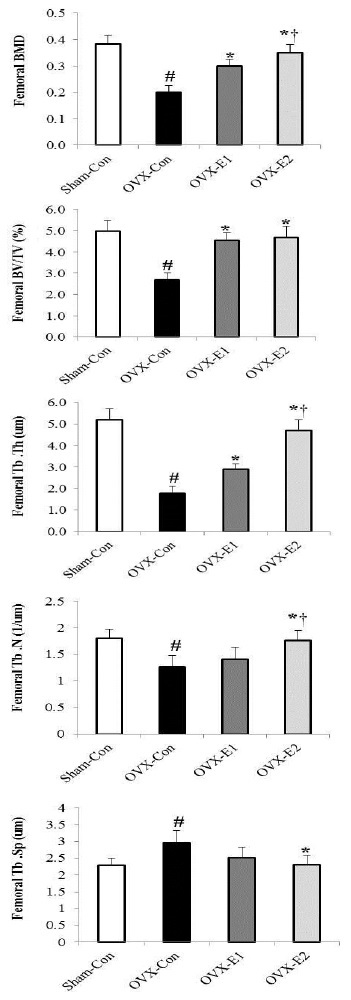
Our results showed that both uphill and downhill training significantly decreased the body weight, total cholesterol, and creatine kinase (CK) levels in the context of OVX-induced bone loss. On the contrary, levels of an osteogenesis indicator, osteocalcin and alkaline phosphatase were elevated. Consequently, the uphill and downhill training reduced OVX- induced bone loss in the distal femoral metaphysis. Likewise, the bone microstructure in OVX-induced bone loss was enhanced upon training. In particular, the inhibition of RANKL-induced osteoclast formation and osteoclast-specific gene expression improved upon downhill training compared to uphill training.
These results suggest that the uphill and downhill exercise types appeared to positively affect the expression of osteogenesis-related factors along with bone density and microstructure. Particularly, the downhill training has more beneficial effects on the maintenance of homeostasis during bone formation.
最近的证据表明,定期运动训练在维持体内平衡以及促进肌肉和骨骼形成方面起着决定性作用。然而,下坡运动训练对成骨相关因子的影响尚未得到充分了解。
因此,我们研究了上坡和下坡训练对去卵巢(OVX)诱导的骨质流失的影响。去除卵巢后,所进行的运动方式分别为上坡训练(16米/分钟,+15°)和下坡训练(16米/分钟,-15°),每天60分钟,每周5天,持续8周。
我们的结果表明,在上坡和下坡训练中,OVX诱导的骨质流失情况下,体重、总胆固醇和肌酸激酶(CK)水平均显著降低。相反,成骨指标骨钙素和碱性磷酸酶的水平升高。因此,上坡和下坡训练减少了OVX诱导的股骨远端干骺端骨质流失。同样,训练后OVX诱导的骨质流失中的骨微结构得到增强。特别是,与上坡训练相比,下坡训练时RANKL诱导的破骨细胞形成和破骨细胞特异性基因表达的抑制作用有所改善。
这些结果表明,上坡和下坡运动类型似乎对成骨相关因子的表达以及骨密度和微结构有积极影响。特别是,下坡训练对骨形成过程中体内平衡的维持具有更有益的作用。