Tada Tomohiro Institute of Gastroenterology and Proctology, Japan; Department of Gastrointestinal Oncology, Osaka International Cancer Institute, Japan.
Department of Global Health Policy, Graduate School of Medicine, The University of Tokyo, Japan; Department of Epidemiology and Biostatistics, School of Public Health, Imperial College London, UK.
EBioMedicine. 2017 Nov;25:106-111. doi: 10.1016/j.ebiom.2017.10.014. Epub 2017 Oct 16.
The role of artificial intelligence in the diagnosis of Helicobacter pylori gastritis based on endoscopic images has not been evaluated. We constructed a convolutional neural network (CNN), and evaluated its ability to diagnose H. pylori infection.
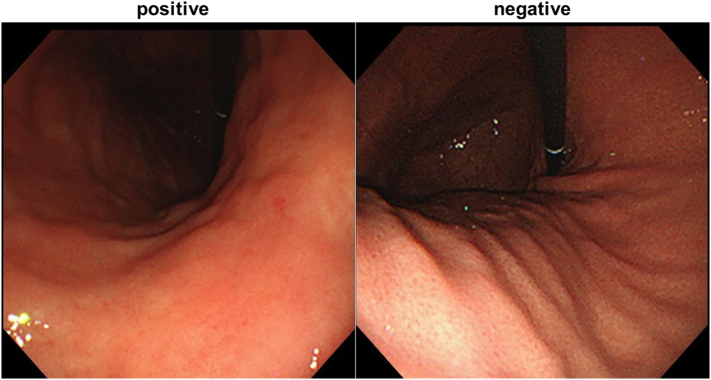
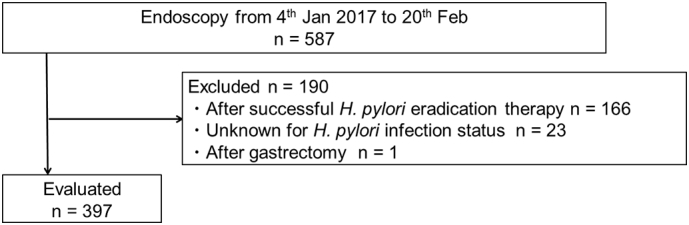
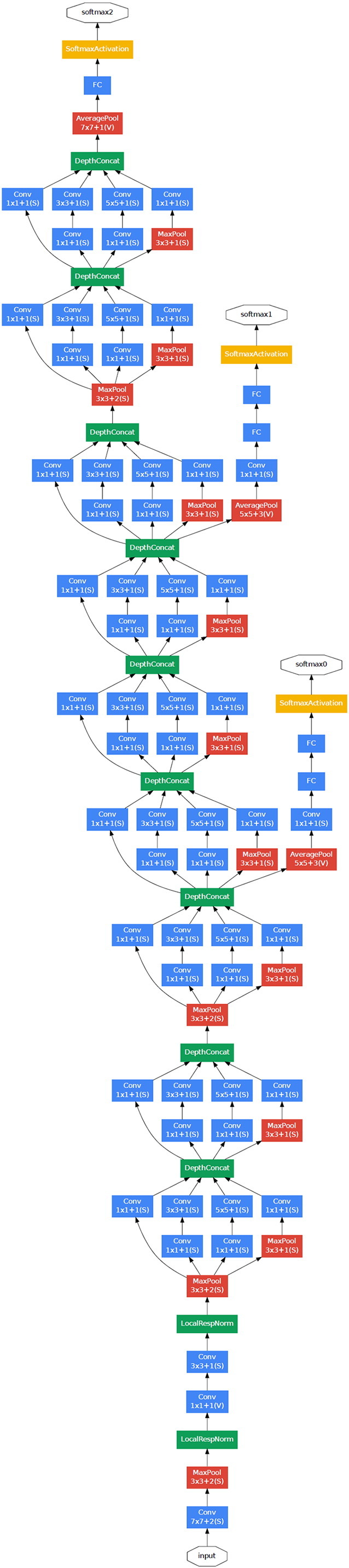
A 22-layer, deep CNN was pre-trained and fine-tuned on a dataset of 32,208 images either positive or negative for H. pylori (first CNN). Another CNN was trained using images classified according to 8 anatomical locations (secondary CNN). A separate test data set (11,481 images from 397 patients) was evaluated by the CNN, and 23 endoscopists, independently.
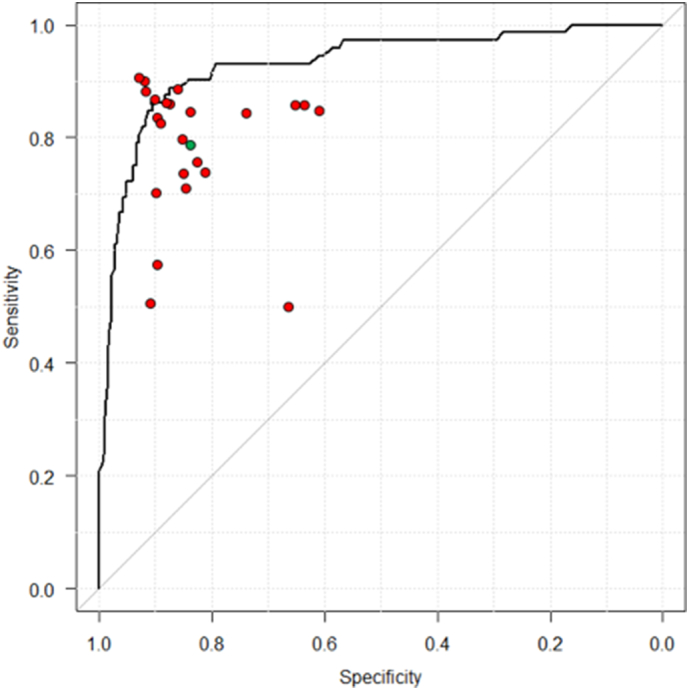
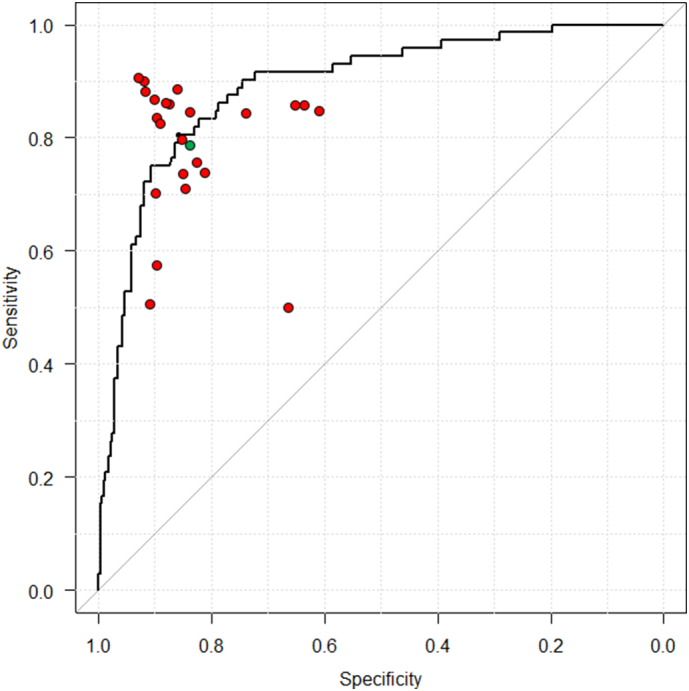
The sensitivity, specificity, accuracy, and diagnostic time were 81.9%, 83.4%, 83.1%, and 198s, respectively, for the first CNN, and 88.9%, 87.4%, 87.7%, and 194s, respectively, for the secondary CNN. These values for the 23 endoscopists were 79.0%, 83.2%, 82.4%, and 230±65min (85.2%, 89.3%, 88.6%, and 253±92min by 6 board-certified endoscopists), respectively. The secondary CNN had a significantly higher accuracy than endoscopists (by 5.3%; 95% CI, 0.3-10.2).
H. pylori gastritis could be diagnosed based on endoscopic images using CNN with higher accuracy and in a considerably shorter time compared to manual diagnosis by endoscopists.
基于内镜图像的人工智能在幽门螺杆菌胃炎诊断中的作用尚未得到评估。我们构建了一个卷积神经网络(CNN),并评估其诊断幽门螺杆菌感染的能力。
使用 32208 张内镜图像数据集(阳性或阴性的幽门螺杆菌图像)对 22 层深层 CNN 进行预训练和微调(第一 CNN)。另一个 CNN 使用根据 8 个解剖位置分类的图像进行训练(第二 CNN)。通过 CNN 和 23 名内镜医师分别对独立的测试数据集(来自 397 名患者的 11481 张图像)进行评估。
第一 CNN 的敏感性、特异性、准确性和诊断时间分别为 81.9%、83.4%、83.1%和 198s,第二 CNN 分别为 88.9%、87.4%、87.7%和 194s。23 名内镜医师的相应值分别为 79.0%、83.2%、82.4%和 230±65min(6 名经董事会认证的内镜医师为 85.2%、89.3%、88.6%和 253±92min)。第二 CNN 的准确性明显高于内镜医师(高 5.3%;95%CI,0.3-10.2)。
与内镜医师的手动诊断相比,使用 CNN 可以根据内镜图像更准确且在相当短的时间内诊断幽门螺杆菌胃炎。