Lopez-Delgado R, Zhou Y, Zazueta-Raynaud A, Zhao H, Pelayo J E, Vomiero A, Álvarez-Ramos M E, Rosei F, Ayon A
MEMS Research Lab, Department of Physics and Astronomy, University of Texas at San Antonio, San Antonio, TX, 78249, USA.
Departamento de Física, Universidad de Sonora, Hermosillo, Son, 83000, Mexico.
Sci Rep. 2017 Oct 26;7(1):14104. doi: 10.1038/s41598-017-14269-0.
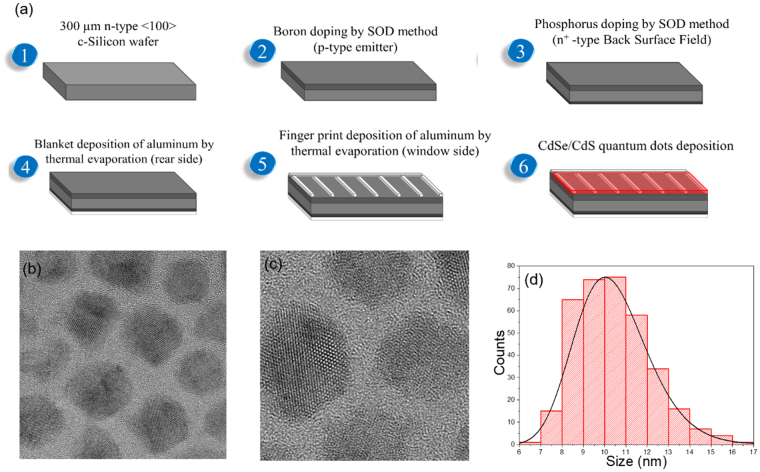
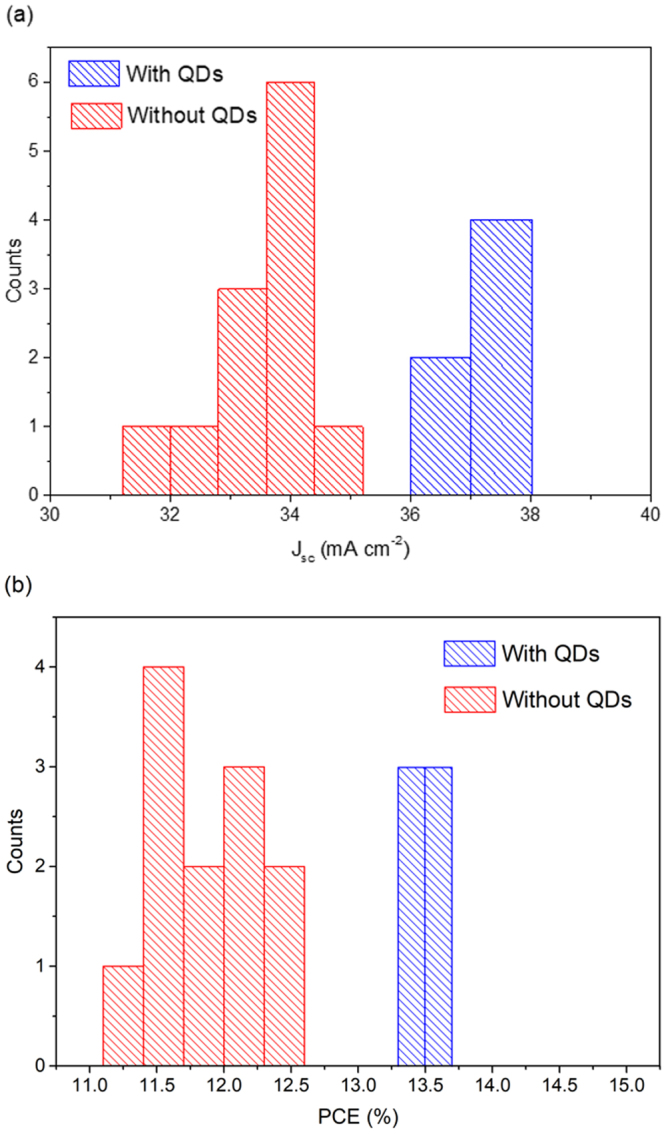
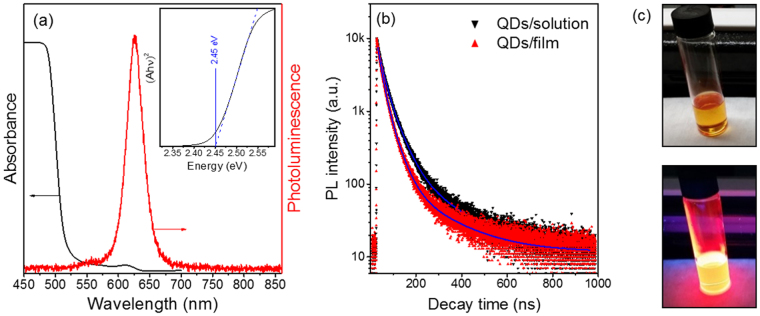
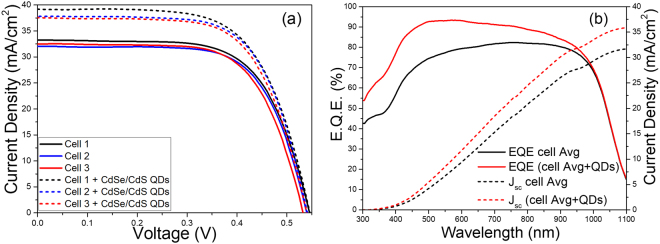
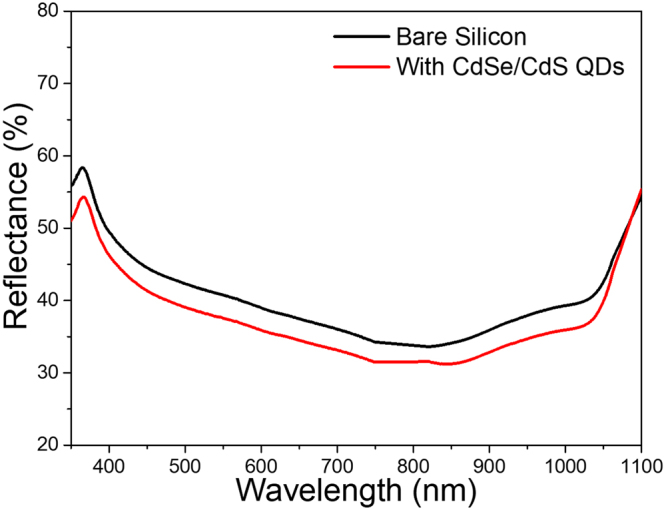
Silicon solar cells have captured a large portion of the total market of photovoltaic devices mostly due to their relatively high efficiency. However, Silicon exhibits limitations in ultraviolet absorption because high-energy photons are absorbed at the surface of the solar cell, in the heavily doped region, and the photo-generated electron-hole pairs need to diffuse into the junction region, resulting in significant carrier recombination. One of the alternatives to improve the absorption range involves the use of down-shifting nano-structures able to interact with the aforementioned high energy photons. Here, as a proof of concept, we use downshifting CdSe/CdS quantum dots to improve the performance of a silicon solar cell. The incorporation of these nanostructures triggered improvements in the short circuit current density (J, from 32.5 to 37.0 mA/cm). This improvement led to a ∼13% increase in the power conversion efficiency (PCE), from 12.0 to 13.5%. Our results demonstrate that the application of down-shifting materials is a viable strategy to improve the efficiency of Silicon solar cells with mass-compatible techniques that could serve to promote their widespread utilization.
硅太阳能电池已占据光伏器件总市场的很大一部分,这主要归功于其相对较高的效率。然而,硅在紫外线吸收方面存在局限性,因为高能光子在太阳能电池表面、重掺杂区域被吸收,并且光生电子 - 空穴对需要扩散到结区,从而导致显著的载流子复合。改善吸收范围的替代方法之一是使用能够与上述高能光子相互作用的降频纳米结构。在此,作为概念验证,我们使用降频CdSe/CdS量子点来提高硅太阳能电池的性能。这些纳米结构的引入使短路电流密度(J)从32.5提高到37.0 mA/cm²,实现了改善。这一改善使功率转换效率(PCE)从12.0%提高到13.5%,增长了约13%。我们的结果表明,应用降频材料是一种可行的策略,可通过与大规模生产兼容的技术提高硅太阳能电池的效率,这有助于促进其广泛应用。