College of Forestry, Henan Agricultural University, Zhengzhou, 450002, China.
State Key Laboratory for Conservation and Utilization of Subtropical Agro-bioresources (South China Agricultural University), Guangdong Key Laboratory for Innovative Development and Utilization of Forest Plant Germplasm, College of Forestry and Landscape Architecture, South China Agricultural University, Guangzhou, 510642, China.
Sci Rep. 2017 Oct 27;7(1):14242. doi: 10.1038/s41598-017-14724-y.
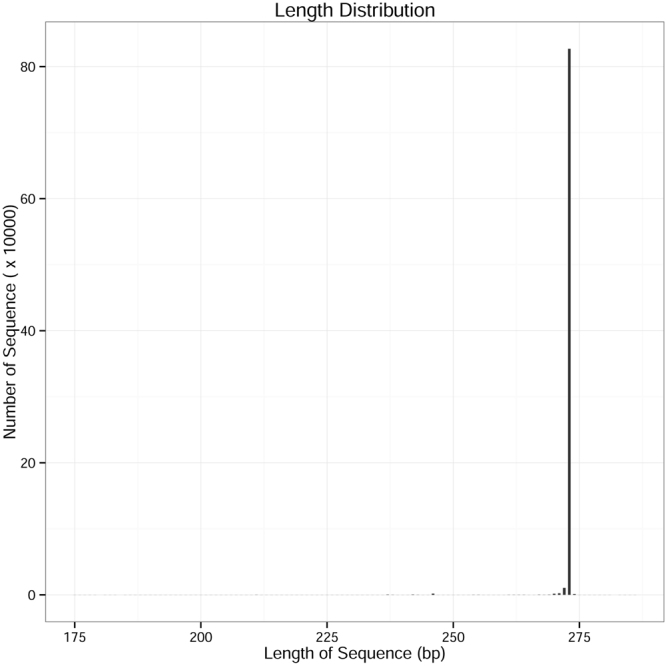
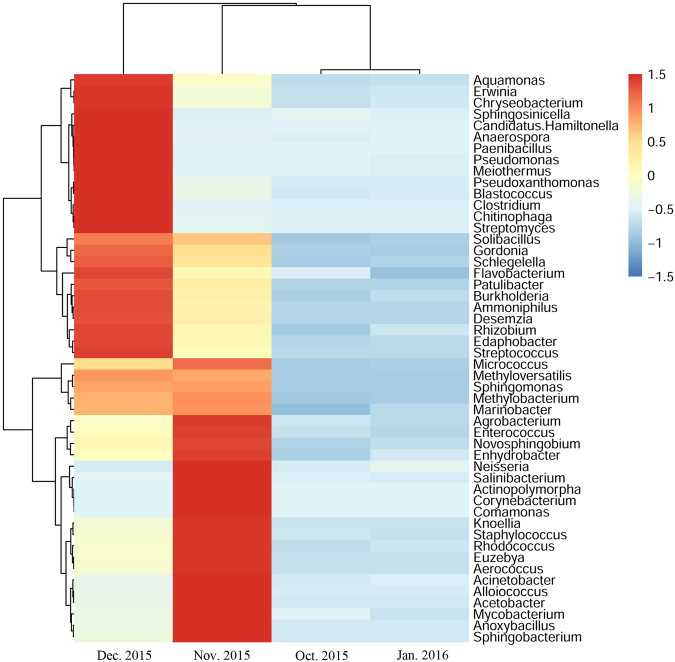
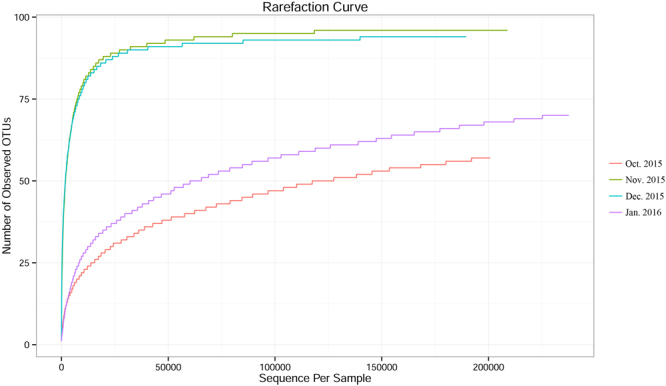
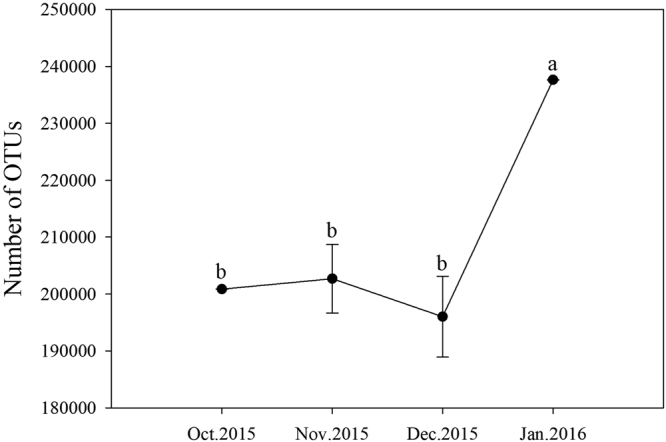
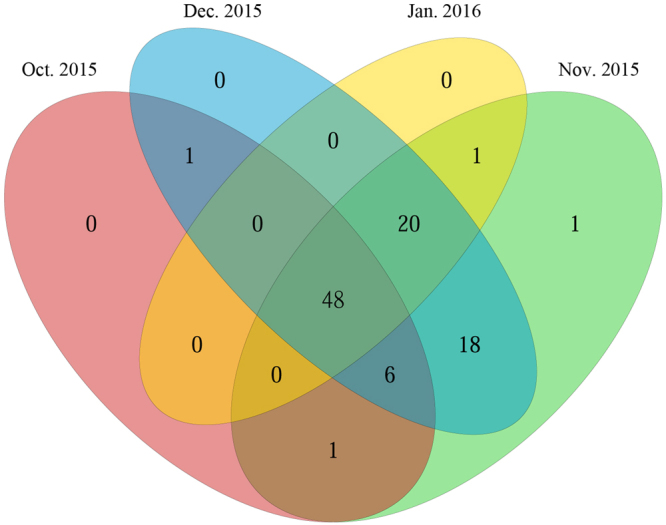
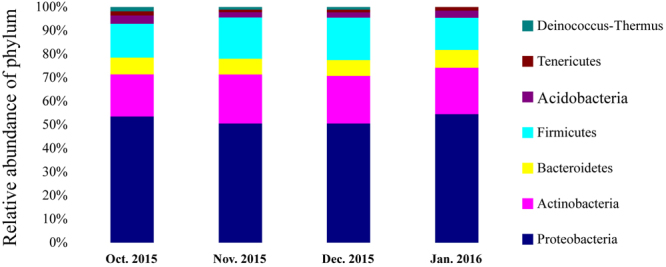
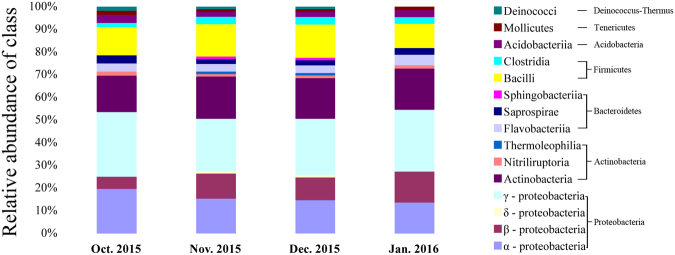
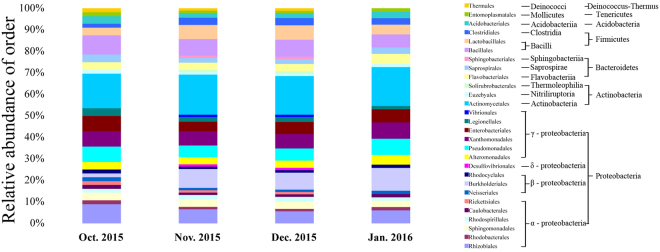
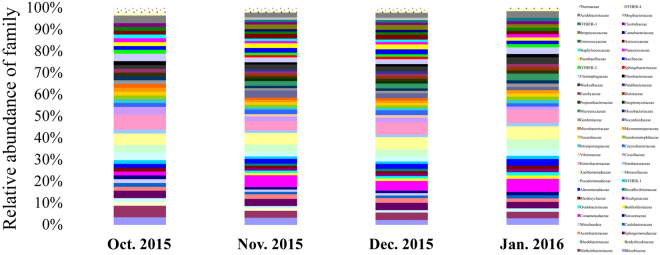
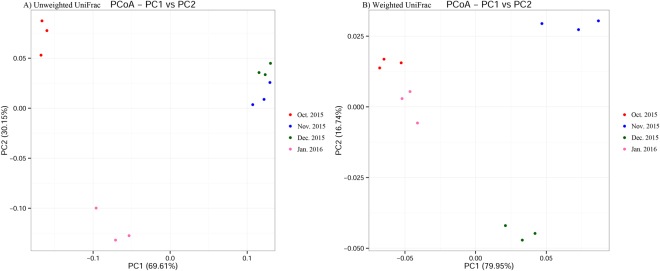
Survival rate at low temperature becomes a crucial strategy since temperature change often leads to fluctuations in the insect population. Microbes play important roles in the process of resisting low temperature. In this study, we analyzed gut bacterial communities from Chinese white pine beetle Dendroctonus armandi which remained overwintering process under natural conditions from October 2015 to January 2016, monthly, in the Qinling Mountains, Shaanxi, China using Illumina MiSeq sequencing. A total of 835,227 high-quality sequences and 48 singleton operational taxonomic units were obtained. Gut bacterial communities showed variation in relative abundance during the overwintering stage. As ambient temperature declined, Proteobacteria (mostly γ-proteobacteria) became the predominant phylum in the larvae guts, and followed with Actinobacteria and Firmicutes, respectively. In particular, there was no Deinococcus-Thermus in January 2016. Thermoleophilia appeared in November and December 2015, but not for October 2015 and January 2016, nor did δ-proteobacteria. By contrast, gut bacterial community compositions increased in relative abundance in November and December 2015. This study provided initial evidence that gut bacterial communities were associated with the larvae overwintering process at low temperature. Moreover, no complementary studies combining overwintering process of Coleoptera insect and high-throughput sequencing were carried out, paying particular attention to insect in cold season.
存活率在低温下成为一个关键的策略,因为温度变化往往会导致昆虫种群的波动。微生物在抵抗低温的过程中起着重要的作用。在这项研究中,我们分析了中华松大小蠹肠道细菌群落,中华松大小蠹是中国陕西秦岭地区自然条件下越冬过程的样本,从 2015 年 10 月到 2016 年 1 月,每月采集一次。使用 Illumina MiSeq 测序,共获得 835227 条高质量序列和 48 个单操作分类单元。肠道细菌群落的相对丰度在越冬阶段表现出变化。随着环境温度的下降,变形菌门(主要是γ-变形菌门)成为幼虫肠道中的主要门,其次是放线菌门和厚壁菌门。特别是,2016 年 1 月没有发现 Deinococcus-Thermus。嗜热菌在 2015 年 11 月和 12 月出现,但 10 月和 2016 年 1 月没有,δ-变形菌也是如此。相比之下,2015 年 11 月和 12 月肠道细菌群落的相对丰度增加。本研究首次证明,肠道细菌群落与幼虫在低温下的越冬过程有关。此外,没有结合鞘翅目昆虫越冬过程和高通量测序的补充研究,特别是在寒冷季节对昆虫的研究。