From the Center for Health Sciences, SRI International, Menlo Park, Calif.; the Department of Psychiatry and Behavioral Sciences, Stanford University School of Medicine, Stanford, Calif.; the Department of Psychiatry, University of California, San Diego, La Jolla; the Department of Family Medicine and Public Health, University of California, San Diego; the Healthy Childhood Brain Development Research Program, Department of Psychiatry and Behavioral Sciences, Duke University School of Medicine, Durham, N.C.; the Department of Psychiatry, University of Pittsburgh, Pittsburgh; the Department of Psychiatry and the Department of Behavioral Neuroscience, Oregon Health and Sciences University, Portland; and the Department of Robotics Engineering, Daegu Gyeongbuk Institute of Science and Technology, Daegu, South Korea.
Am J Psychiatry. 2018 Apr 1;175(4):370-380. doi: 10.1176/appi.ajp.2017.17040469. Epub 2017 Oct 31.
The authors sought evidence for altered adolescent brain growth trajectory associated with moderate and heavy alcohol use in a large national, multisite, prospective study of adolescents before and after initiation of appreciable alcohol use.
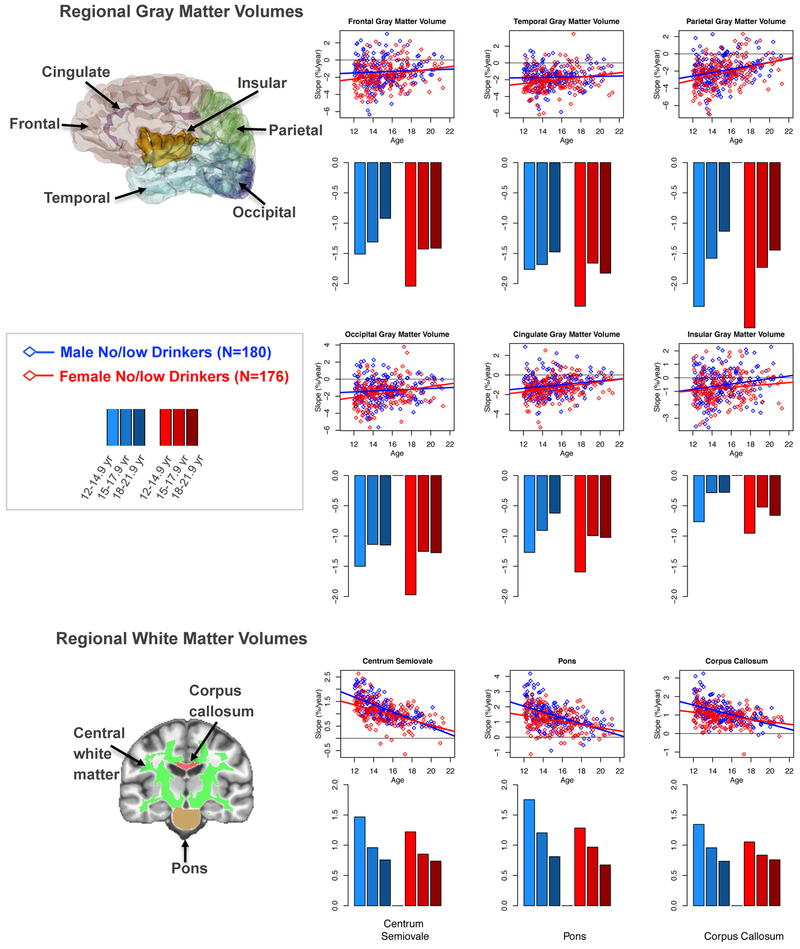
This study examined 483 adolescents (ages 12-21) before initiation of drinking and 1 and 2 years later. At the 2-year assessment, 356 participants continued to meet the study's no/low alcohol consumption entry criteria, 65 had initiated moderate drinking, and 62 had initiated heavy drinking. MRI was used to quantify regional cortical and white matter volumes. Percent change per year (slopes) in adolescents who continued to meet no/low criteria served as developmental control trajectories against which to compare those who initiated moderate or heavy drinking.
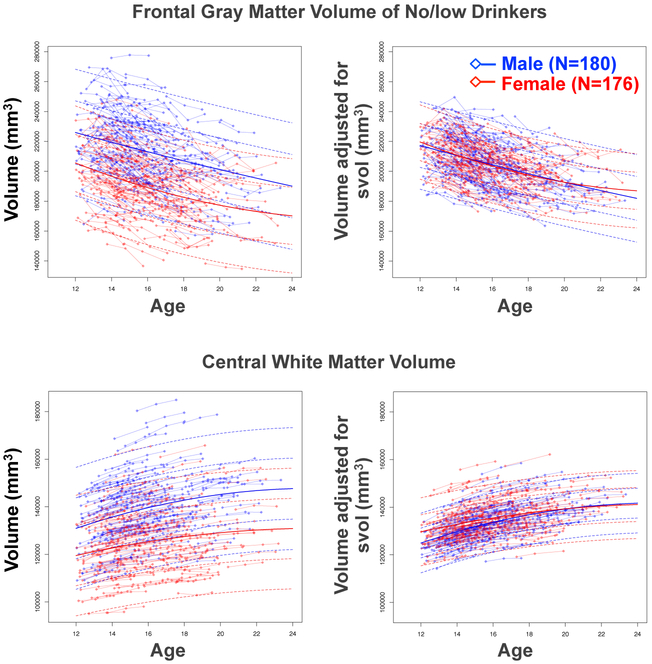
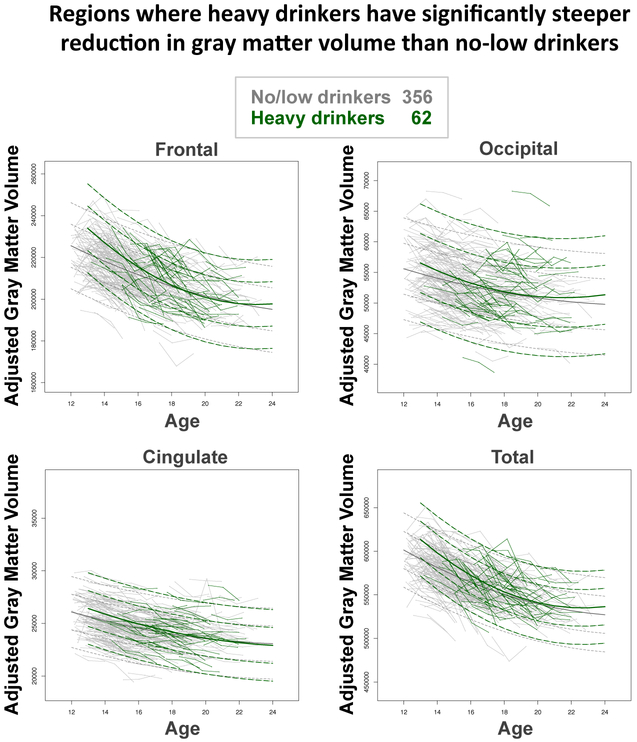
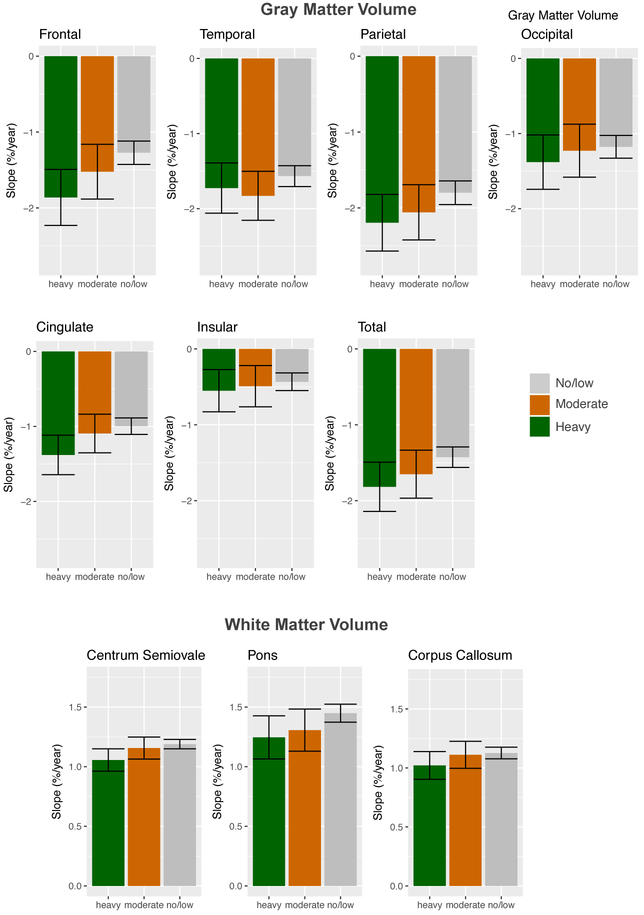
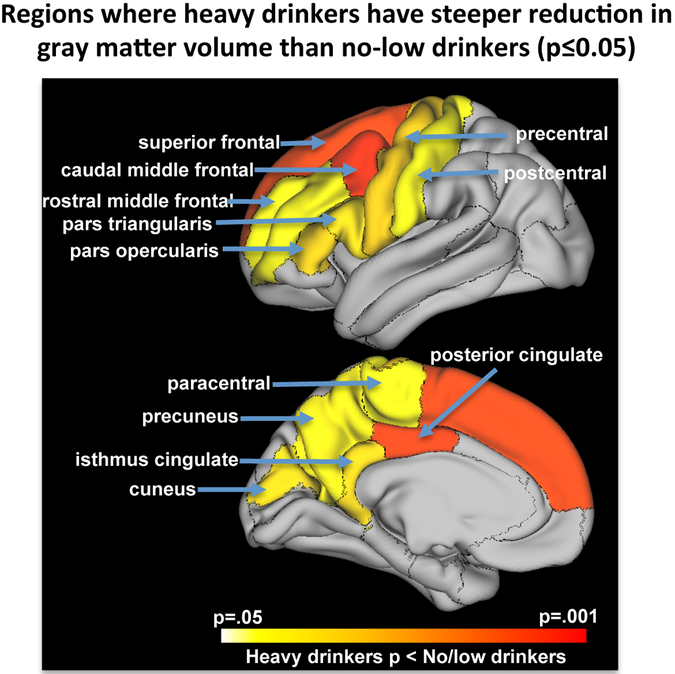
In no/low drinkers, gray matter volume declined throughout adolescence and slowed in many regions in later adolescence. Complementing gray matter declines, white matter regions grew at faster rates at younger ages and slowed toward young adulthood. Youths who initiated heavy drinking exhibited an accelerated frontal cortical gray matter trajectory, divergent from the norm. Although significant effects on trajectories were not observed in moderate drinkers, their intermediate position between no/low and heavy drinkers suggests a dose effect. Neither marijuana co-use nor baseline volumes contributed significantly to the alcohol effect.
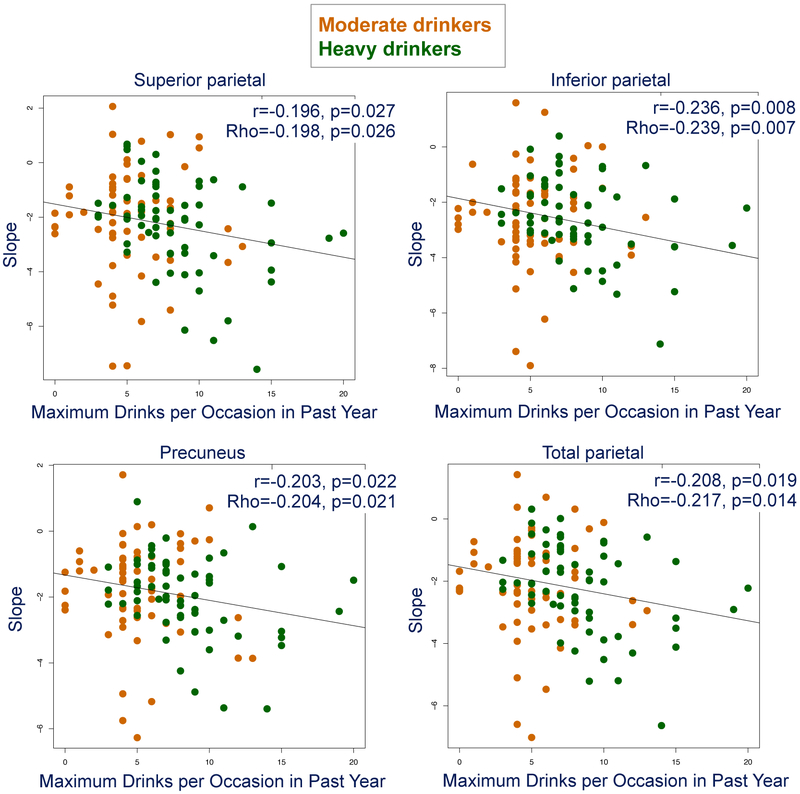
Initiation of drinking during adolescence, with or without marijuana co-use, disordered normal brain growth trajectories. Factors possibly contributing to abnormal cortical volume trajectories include peak consumption in the past year and family history of alcoholism.
作者在一项针对青少年的大型全国多地点前瞻性研究中,寻找与中度和重度饮酒相关的青少年大脑生长轨迹改变的证据,该研究在青少年开始大量饮酒之前和之后进行。
本研究在开始饮酒之前检查了 483 名青少年(年龄 12-21 岁),并在 1 年和 2 年后进行了检查。在 2 年评估时,356 名参与者继续符合研究的无/低酒精摄入标准,65 名参与者开始适度饮酒,62 名参与者开始重度饮酒。使用 MRI 来量化区域皮质和白质体积。继续符合无/低标准的青少年的每年百分比变化(斜率)作为发育对照轨迹,与开始适度或重度饮酒的青少年进行比较。
在无/低饮酒者中,灰质体积在整个青春期下降,并在后期青春期的许多区域中减缓。补充灰质下降的是,白质区域在年轻时以更快的速度增长,并在接近成年早期时减缓。开始重度饮酒的青少年表现出额皮质灰质轨迹加速,与正常情况不同。虽然在中度饮酒者中没有观察到轨迹的显著影响,但他们在无/低和重度饮酒者之间的中间位置表明存在剂量效应。大麻共使用或基线体积均未对酒精效应有显著贡献。
青少年时期开始饮酒,无论是否与大麻共使用,都会扰乱正常的大脑生长轨迹。可能导致皮质体积轨迹异常的因素包括过去一年的峰值饮酒量和酗酒家族史。