Purushothaman Anurag, Bandari Shyam K, Chandrashekar Darshan S, Jones Richard J, Lee Hans C, Weber Donna M, Orlowski Robert Z
Department of Lymphoma and Myeloma, The University of Texas MD Anderson Cancer Center, Houston, Texas, USA.
Department of Pathology, University of Alabama at Birmingham, Birmingham, Alabama, USA.
Oncotarget. 2017 Aug 27;8(43):73723-73732. doi: 10.18632/oncotarget.20564. eCollection 2017 Sep 26.
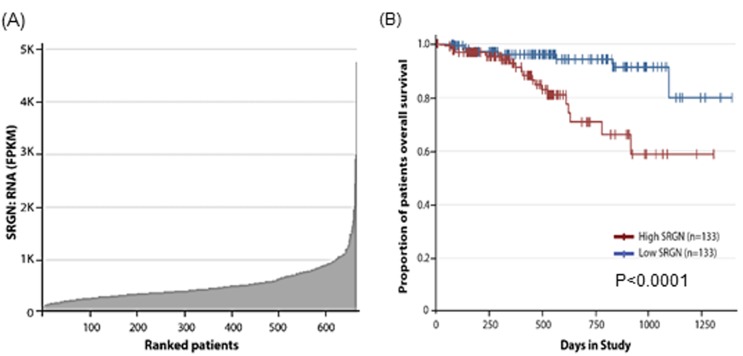
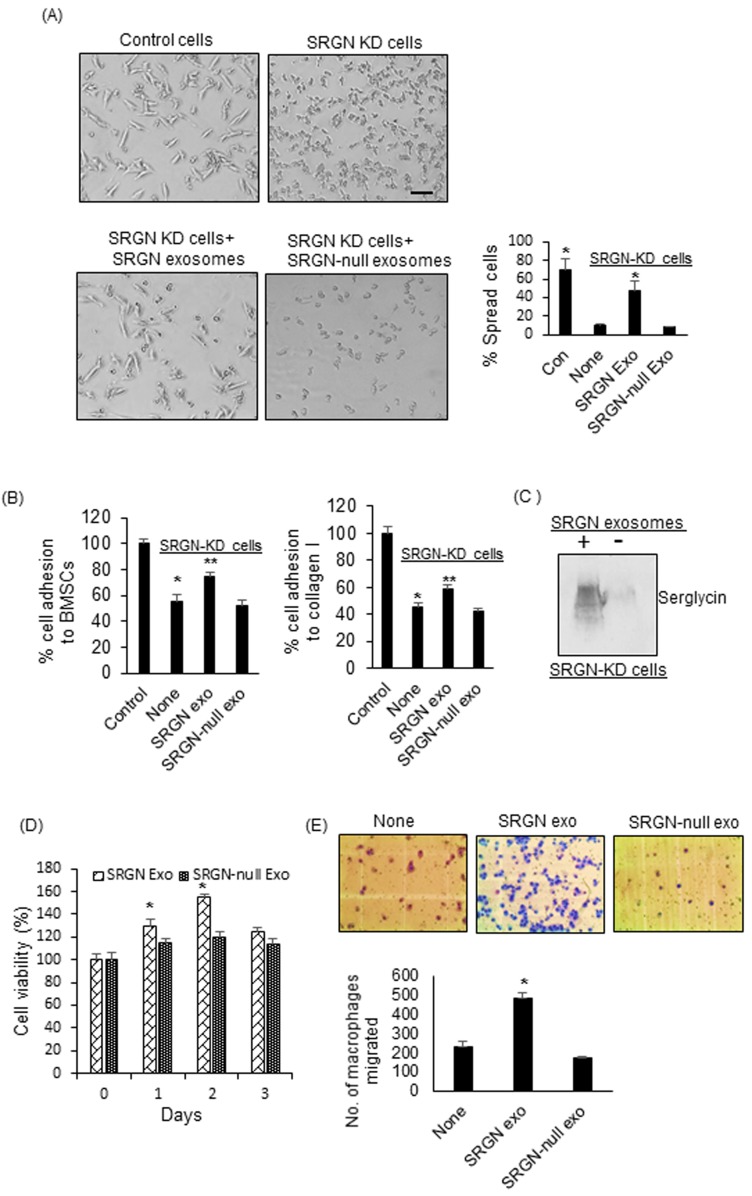
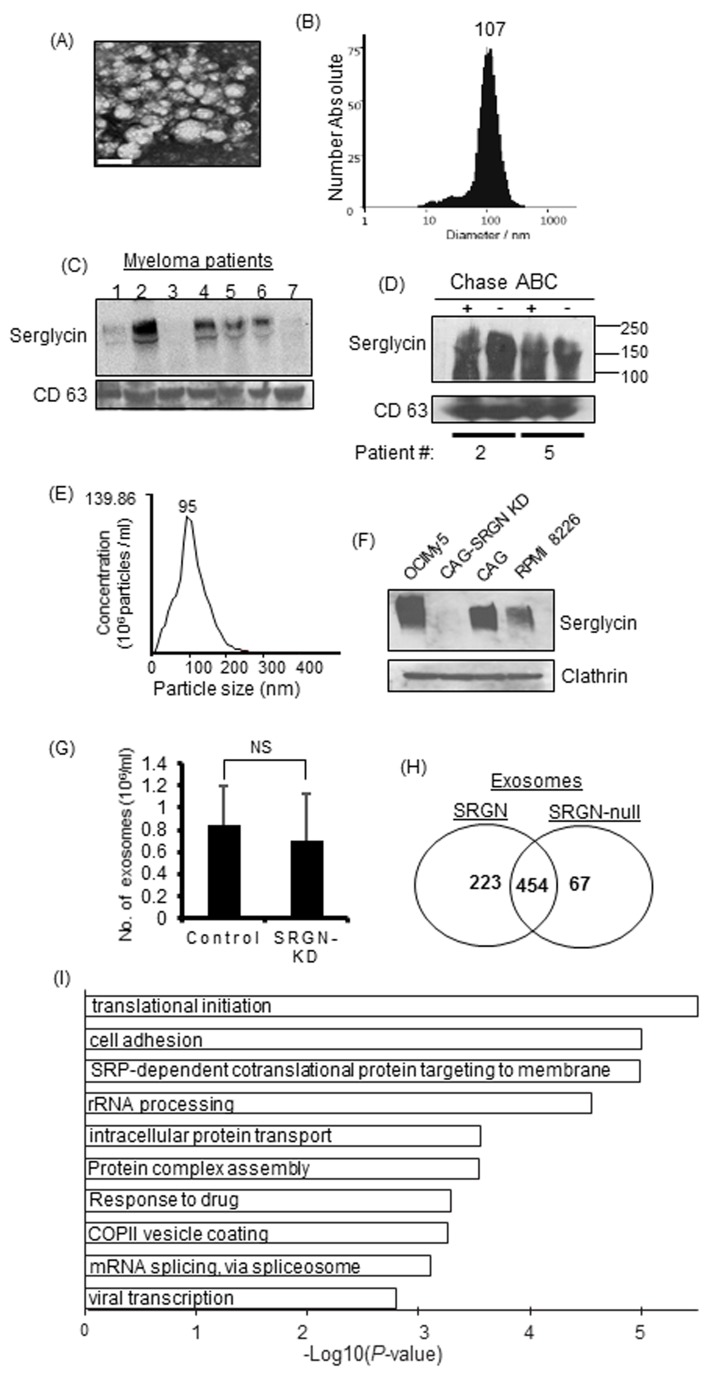
Tumor cells produce and utilize exosomes to promote tumor growth and metastasis. Tumor-cell-derived exosomes deliver cargos that partially mimic the contents of the parent cell to nearby or distant normal or abnormal cells, thereby reprogramming the recipient cells to support tumor progression. Mechanisms by which tumor-derived exosomes subserve the tumor are under intense investigation. Here we demonstrate a critical role of the chondroitin sulfate proteoglycan serglycin in regulating the protein cargo and functions of myeloma cell-derived exosomes. Previous studies have shown that serglycin, the only known intracellular proteoglycan, functions mainly in the storage of basically charged components within the intracellular granules/vesicles serglycin's densely clustered, negatively charged glycosaminoglycan chains. Here we demonstrate that serglycin plays a critical role in the protein cargo loading of tumor-derived exosomes. Serglycin was detected in exosomes derived from cell culture supernatants of human myeloma cell lines and serum of myeloma patients. Mass spectrometry analysis of exosomal proteins identified significantly fewer protein components within exosomes derived from serglycin-knockdown myeloma cells than within exosomes from control cells. On gene ontology analysis, exosomes derived from serglycin-knockdown cells, but not from control cells, lacked many proteins that are required for mediating different cellular processes. In functional assays, exosomes from serglycin-knockdown cells failed to induce an invasive phenotype in myeloma cells and failed to promote migration of macrophages. These findings reveal that serglycin plays an important role in maintaining the protein cargo in tumor-derived exosomes and suggest that targeting serglycin may temper the influence of these exosomes on cancer progression.
肿瘤细胞产生并利用外泌体来促进肿瘤生长和转移。肿瘤细胞来源的外泌体携带的物质部分模仿了亲代细胞的内容物,并传递给附近或远处的正常或异常细胞,从而使受体细胞重新编程以支持肿瘤进展。肿瘤来源的外泌体促进肿瘤生长的机制正在深入研究中。在此,我们证明了硫酸软骨素蛋白聚糖丝甘蛋白聚糖在调节骨髓瘤细胞来源的外泌体的蛋白质货物和功能中起关键作用。先前的研究表明,丝甘蛋白聚糖是唯一已知的细胞内蛋白聚糖,主要在细胞内颗粒/囊泡中储存带正电荷的成分,其糖胺聚糖链密集聚集且带负电荷。在此我们证明,丝甘蛋白聚糖在肿瘤来源的外泌体的蛋白质货物装载中起关键作用。在源自人骨髓瘤细胞系的细胞培养上清液和骨髓瘤患者血清的外泌体中检测到了丝甘蛋白聚糖。对外泌体蛋白质进行质谱分析发现,源自丝甘蛋白聚糖敲低的骨髓瘤细胞的外泌体中的蛋白质成分明显少于对照细胞的外泌体。基因本体分析显示,源自丝甘蛋白聚糖敲低细胞而非对照细胞的外泌体缺乏许多介导不同细胞过程所需的蛋白质。在功能试验中,丝甘蛋白聚糖敲低细胞的外泌体未能在骨髓瘤细胞中诱导侵袭表型,也未能促进巨噬细胞迁移。这些发现表明,丝甘蛋白聚糖在维持肿瘤来源的外泌体中的蛋白质货物方面起重要作用,并表明靶向丝甘蛋白聚糖可能会减弱这些外泌体对癌症进展的影响。