Fiedler John L, Yadav Suryakant
The International Dietary Data Expansion (INDDEX) Project, Poverty, Health and Nutrition Division, International Food Policy Research Institute, 2006 K Street NW, Washington, DC 20006, United States.
Department of Development Studies, International Institute of Population Sciences (IIPS), Mumbai 88, India.
Food Policy. 2017 Oct;72:81-93. doi: 10.1016/j.foodpol.2017.08.015.
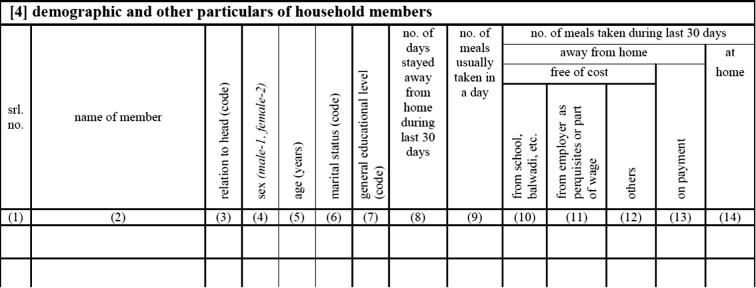
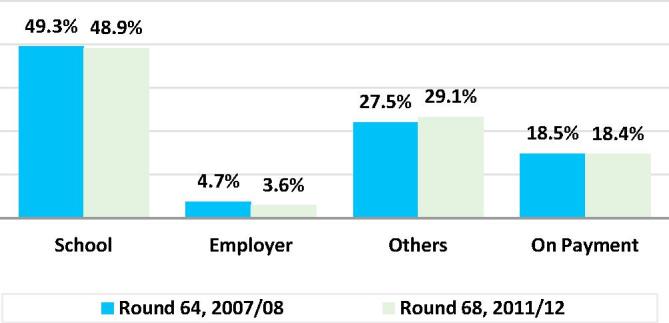
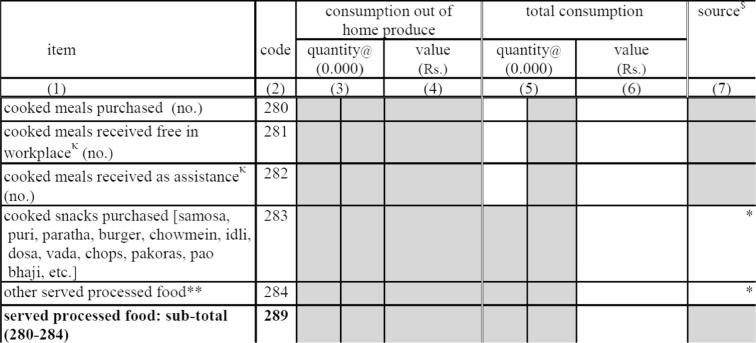
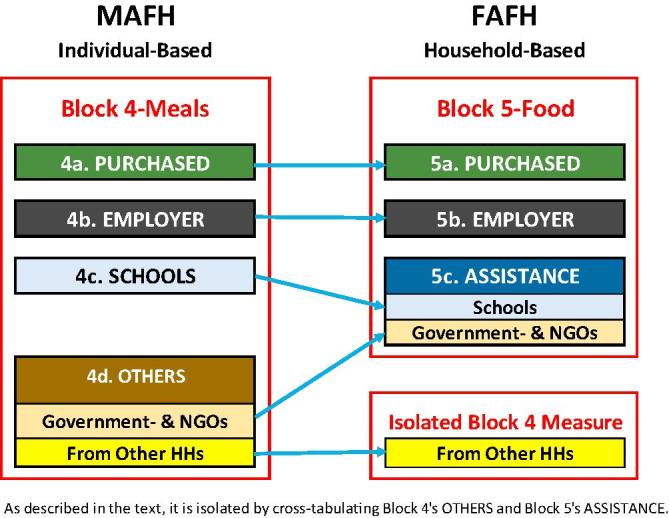
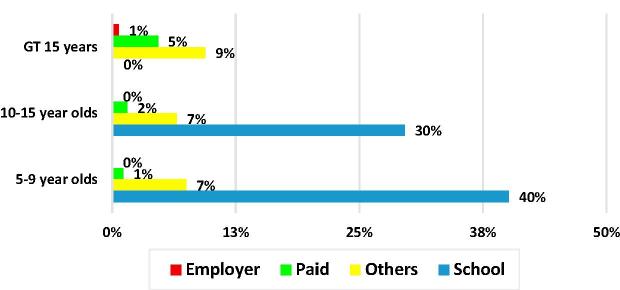
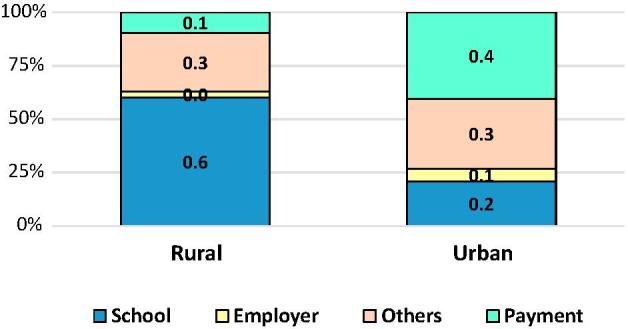
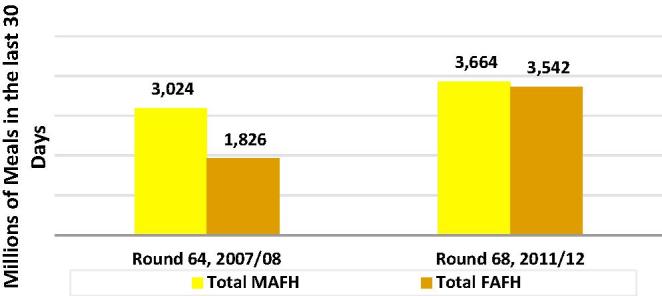
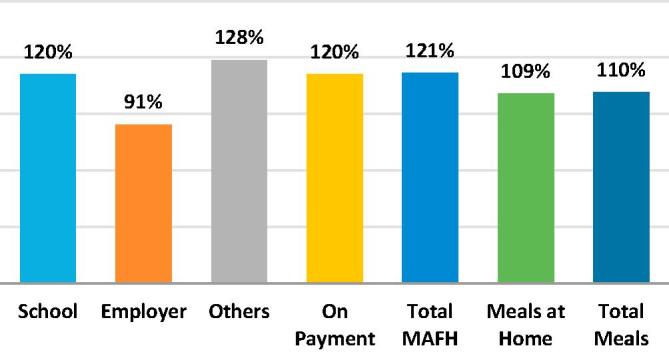
Despite acknowledged shortcomings, household consumption and expenditure surveys (HCES) are increasingly being used to proxy food consumption because they are relatively more available and affordable than surveys using more precise dietary assessment methods. One of the most common, significant sources of HCES measurement error is their under-estimation of food away from home (FAFH). In 2011, India's National Survey Sample Organization introduced revisions in its HCES questionnaire that included replacing "cooked meals"-the single item in the food consumption module designed to capture FAFH at the household level-with five more detailed and explicitly FAFH sub-categories. The survey also contained a section with seven, household member-specific questions about meal patterns during the reference period and included three sources of meals away from home (MAFH) that overlapped three of the new FAFH categories. By providing a conceptual framework with which to organize and consider each household member's meal pattern throughout the reference period, and breaking down the recalling (or estimating) process into household member-specific responses, we assume the MAFH approach makes the key respondent's task less memory- and arithmetically-demanding, and thus more accurate than the FAFH household level approach. We use the MAFH estimates as a reference point, and approximate one portion of FAFH measurement error as the differences in MAFH and FAFH estimates. The MAFH estimates reveal marked heterogeneity in intra-household meal patterns, reflecting the complexity of the HCES's key informant task of reporting household level data, and underscoring its importance as a source of measurement error. We find the household level-based estimates of FAFH increase from just 60.4% of the individual-based estimates in the round prior to the questionnaire modifications to 96.7% after the changes. We conclude that the MFAH-FAFH linked approach substantially reduced FAFH measurement error in India. The approach has wider applicability in global efforts to improve HCES.
尽管家庭消费与支出调查(HCES)存在公认的缺陷,但因其相对更容易获取且成本更低,相较于使用更精确饮食评估方法的调查,它们正越来越多地被用于估算食物消费。家庭消费与支出调查测量误差最常见且显著的来源之一是对在外就餐(FAFH)的低估。2011年,印度国家抽样调查组织对其家庭消费与支出调查问卷进行了修订,其中包括用另外五个更详细且明确针对在外就餐的子类别,取代了食物消费模块中用于在家庭层面获取在外就餐情况的单一项目“烹饪餐食”。该调查还包含一个部分,有七个针对家庭成员在参考期内用餐模式的特定问题,并涵盖了三个与新的在外就餐类别中的三个重叠的外出就餐(MAFH)来源。通过提供一个概念框架,用以在整个参考期内组织和考量每个家庭成员的用餐模式,并将回忆(或估算)过程分解为针对家庭成员的具体回答,我们认为外出就餐方法使关键受访者的任务对记忆和算术的要求降低,从而比家庭层面的在外就餐方法更准确。我们将外出就餐估算值作为参考点,并将在外就餐测量误差的一部分近似为外出就餐和在外就餐估算值之间的差异。外出就餐估算值揭示了家庭内部用餐模式的显著异质性,反映了家庭消费与支出调查在报告家庭层面数据时关键信息提供者任务的复杂性,并突出了其作为测量误差来源的重要性。我们发现,基于家庭层面的在外就餐估算值从问卷修改前一轮基于个人估算值的仅60.4%增至修改后的96.7%。我们得出结论,将外出就餐与在外就餐相联系的方法大幅降低了印度在外就餐的测量误差。该方法在全球改进家庭消费与支出调查的努力中具有更广泛的适用性。