Department of Infectious Diseases, Unit of Vectorborne Diseases, Istituto Superiore di Sanità, Rome, Italy.
Department of Veterinary Prevention, Unit of Animal Health Service, ASP Trapani, Pantelleria, Italy.
Parasit Vectors. 2017 Nov 2;10(1):543. doi: 10.1186/s13071-017-2488-7.
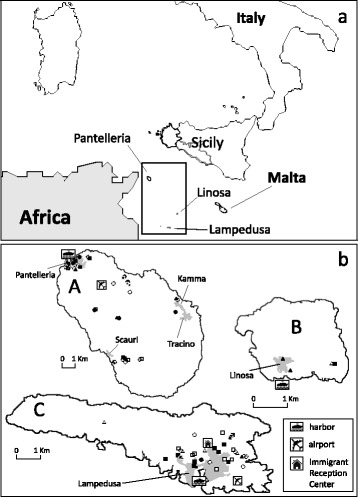
Aedes albopictus, a known worldwide vector of several mosquito-borne disease pathogens including dengue, chikungunya and Zika viruses, was introduced into Europe in the late 1970s through global trade. First recorded in northern Italy in 1990, this mosquito species has rapidly spread throughout the country, where it was responsible for an outbreak of chikungunya in 2007 that affected more than 200 people. As part of the VectorNet project, which is aimed at improving preparedness and responsiveness for animal and human vector-borne diseases in Europe, a mosquito targeted study was carried out on the three southernmost Italian islands. The objective was to verify the current European southern distribution limits of Ae. albopictus and the potential occurrence of other invasive mosquito species, in the light of the introduction of high risk for vector-borne disease pathogens into Europe via migration flows.
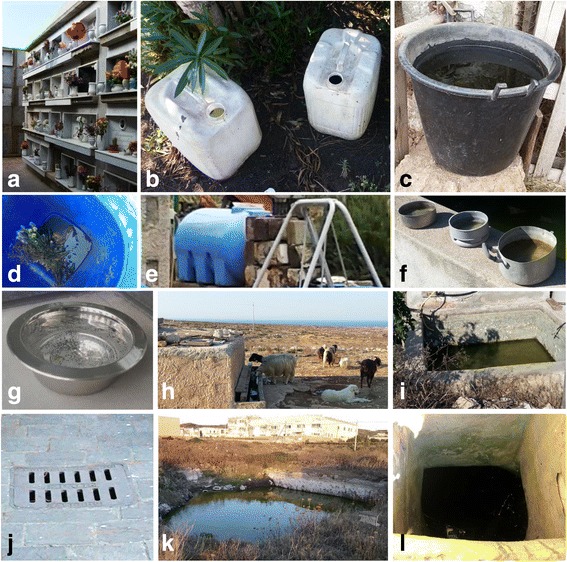
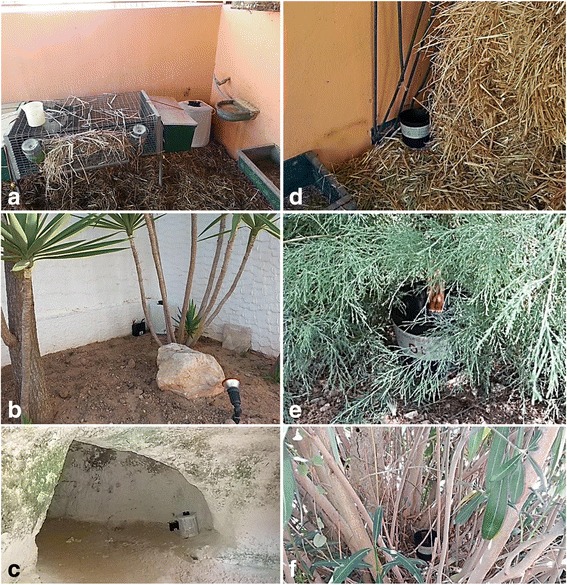
In the summer 2015, six surveys for container-breeding mosquitoes were carried out by setting up a network of oviposition traps and BG Sentinel traps in selected areas on the islands of Pantelleria, Lampedusa and Linosa. Aedes albopictus was found on all three islands under investigation. The consequences on public health with regard to the presence of this mosquito vector and the migrant people entering the country from Africa and the Middle East are also discussed here.
The detection of the Asian tiger mosquito on these islands, which represent the last European strip of land facing Africa, has important implications for public health policy and should prompt the national authorities to implement tailored surveillance activities and reinforce plans for preparedness strategies in such contexts.
白纹伊蚊是一种世界范围内的蚊子传播病原体的已知媒介,包括登革热、基孔肯雅热和寨卡病毒。它于 20 世纪 70 年代末通过全球贸易传入欧洲。这种蚊子于 1990 年首次在意大利北部被记录到,此后迅速在全国范围内传播,2007 年在该国引发了基孔肯雅热疫情,超过 200 人受到感染。作为 VectorNet 项目的一部分,该项目旨在提高欧洲对动物和人类媒介传播疾病的准备和反应能力,在意大利最南端的三个岛屿上进行了一项针对蚊子的目标研究。目的是根据通过移民流将媒介传播病原体引入欧洲的高风险情况,验证白纹伊蚊在欧洲南部的当前分布极限和其他入侵蚊子物种的潜在发生情况。
在 2015 年夏季,通过在选定地区设置产卵陷阱和 BG Sentinel 陷阱,在 Pantelleria、Lampedusa 和 Linosa 三个岛屿上进行了六次容器繁殖蚊子调查。在所调查的三个岛屿上均发现了白纹伊蚊。还讨论了这种蚊子媒介和从非洲和中东进入该国的移民对公共卫生的影响。
在这些岛屿上发现亚洲虎蚊,这对公共卫生政策具有重要意义,应促使国家当局在这种情况下实施有针对性的监测活动,并加强准备策略计划。