Losada-Echeberría María, Herranz-López María, Micol Vicente, Barrajón-Catalán Enrique
Institute of Molecular and Cell Biology (IBMC), Miguel Hernández University (UMH), Avda. Universidad s/n, Elche 03202, Spain.
CIBER, Fisiopatología de la Obesidad y la Nutrición, CIBERobn, Instituto de Salud Carlos III (CB12/03/30038), Palma de Mallorca 07122, Spain.
Antioxidants (Basel). 2017 Nov 7;6(4):88. doi: 10.3390/antiox6040088.
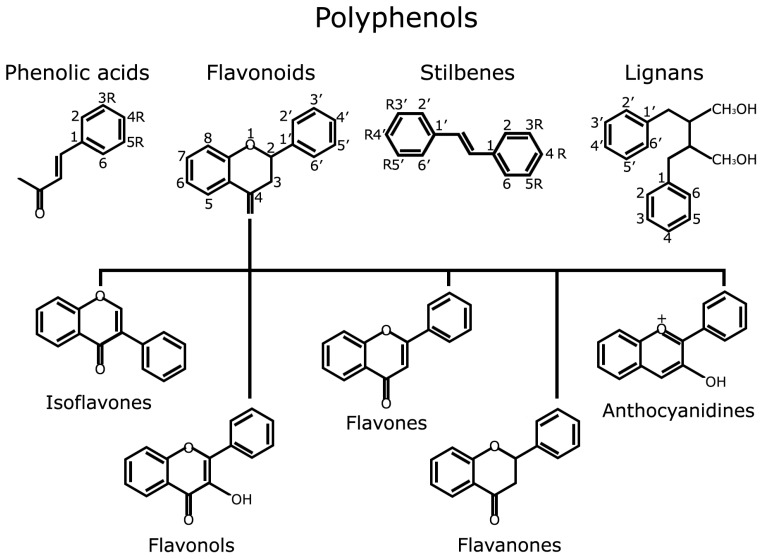
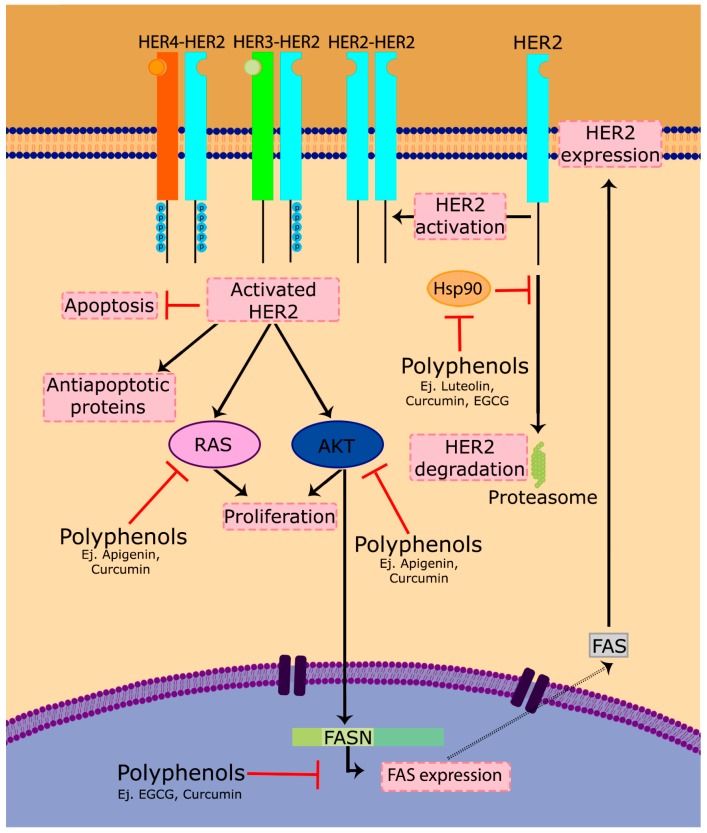
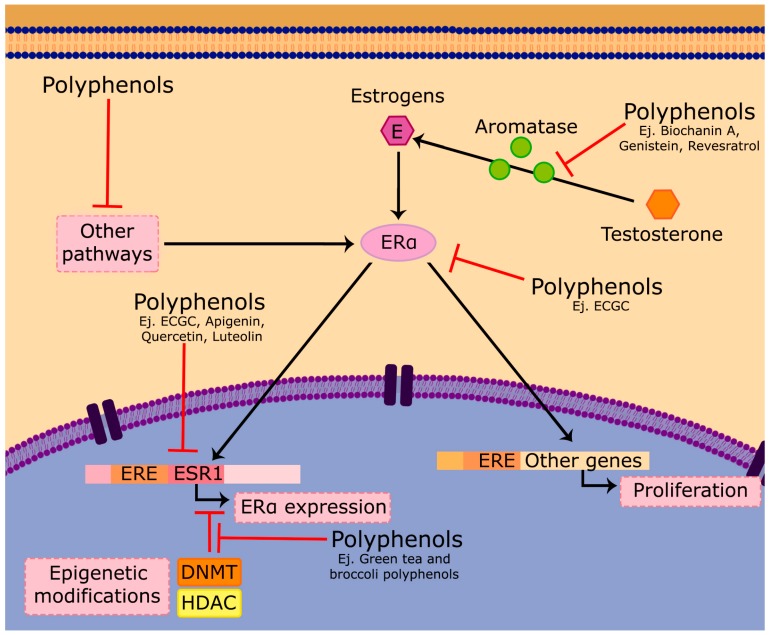
Breast cancer is one of the most common neoplasms worldwide, and in spite of clinical and pharmacological advances, it is still a clinical problem, causing morbidity and mortality. On the one hand, breast cancer shares with other neoplasms some molecular signatures such as an imbalanced redox state, cell cycle alterations, increased proliferation and an inflammatory status. On the other hand, breast cancer shows differential molecular subtypes that determine its prognosis and treatment. These are characterized mainly by hormone receptors especially estrogen receptors (ERs) and epidermal growth factor receptor 2 (HER2). Tumors with none of these receptors are classified as triple negative breast cancer (TNBC) and are associated with a worse prognosis. The success of treatments partially depends on their specificity and the adequate molecular classification of tumors. New advances in anticancer drug discovery using natural compounds have been made in the last few decades, and polyphenols have emerged as promising molecules. They may act on various molecular targets because of their promiscuous behavior, presenting several physiological effects, some of which confer antitumor activity. This review analyzes the accumulated evidence of the antitumor effects of plant polyphenols on breast cancer, with special attention to their activity on ERs and HER2 targets and also covering different aspects such as redox balance, uncontrolled proliferation and chronic inflammation.
乳腺癌是全球最常见的肿瘤之一,尽管在临床和药理学方面取得了进展,但它仍然是一个临床问题,会导致发病和死亡。一方面,乳腺癌与其他肿瘤有一些共同的分子特征,如氧化还原状态失衡、细胞周期改变、增殖增加和炎症状态。另一方面,乳腺癌表现出不同的分子亚型,这些亚型决定了其预后和治疗方法。这些亚型主要由激素受体特别是雌激素受体(ERs)和表皮生长因子受体2(HER2)来表征。没有这些受体的肿瘤被归类为三阴性乳腺癌(TNBC),其预后较差。治疗的成功部分取决于其特异性和肿瘤的适当分子分类。在过去几十年中,利用天然化合物进行抗癌药物研发取得了新进展,多酚已成为有前景的分子。由于它们的混杂行为,多酚可能作用于各种分子靶点,呈现出多种生理效应,其中一些具有抗肿瘤活性。本综述分析了植物多酚对乳腺癌抗肿瘤作用的累积证据,特别关注它们对ERs和HER2靶点的活性,还涵盖了氧化还原平衡、不受控制的增殖和慢性炎症等不同方面。