Turnbull Lindsey B, Siwo Geoffrey H, Button-Simons Katrina A, Tan Asako, Checkley Lisa A, Painter Heather J, Llinás Manuel, Ferdig Michael T
Department of Biological Sciences, Eck Institute for Global Health, University of Notre Dame, Notre Dame, Indiana, United States of America.
Ryan White Center for Pediatric Infectious Diseases and Global Health, Indiana University, Indianapolis, Indiana, United States of America.
PLoS One. 2017 Nov 7;12(11):e0187595. doi: 10.1371/journal.pone.0187595. eCollection 2017.
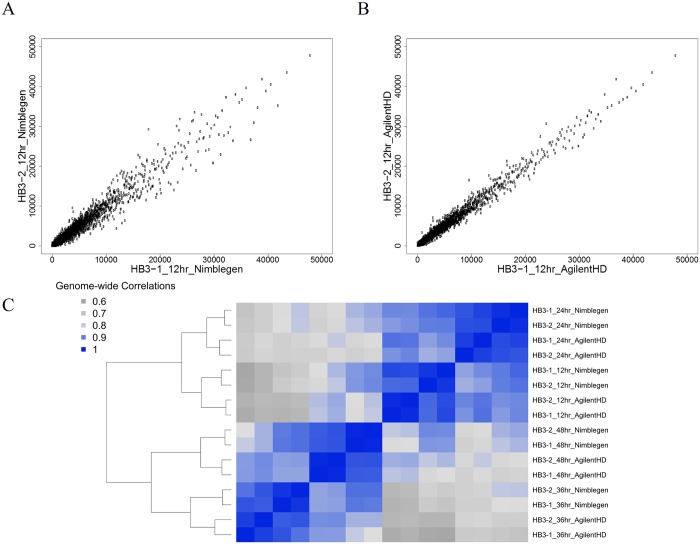
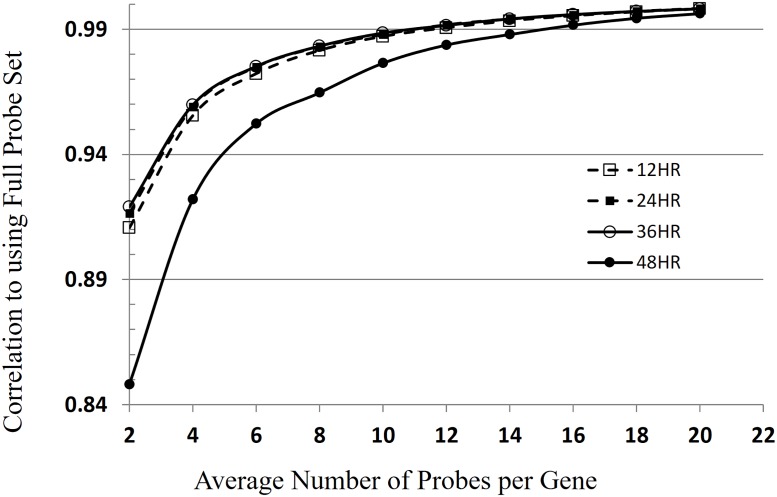
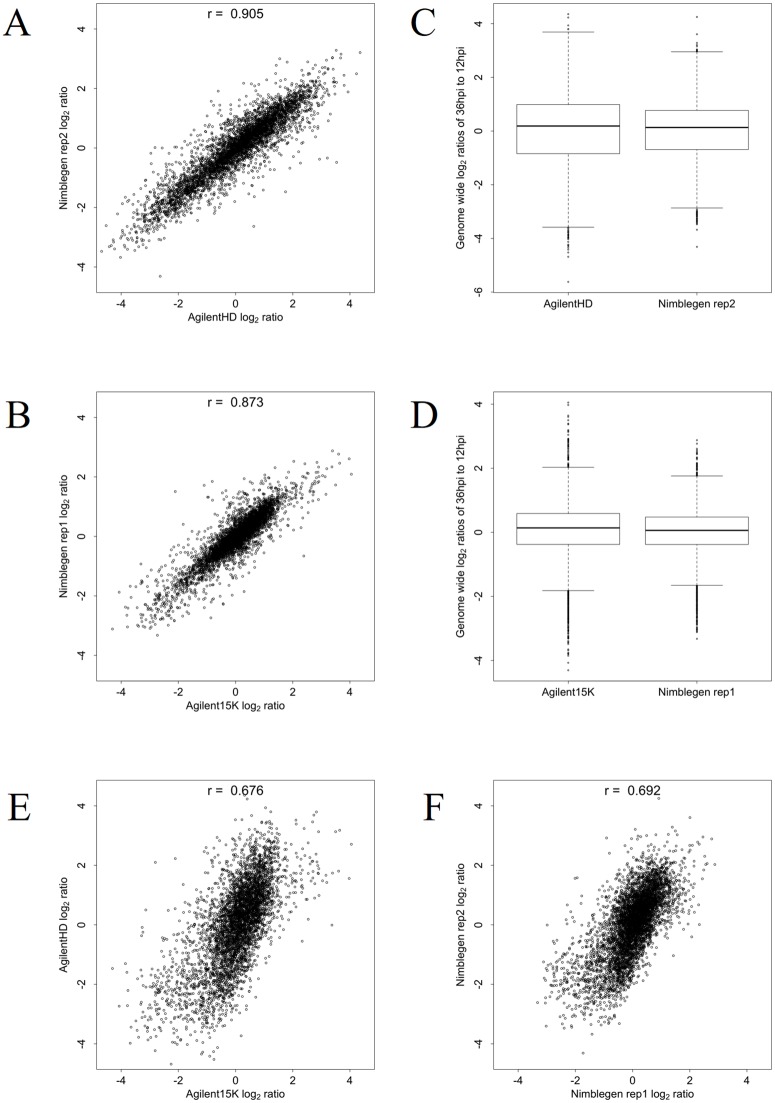
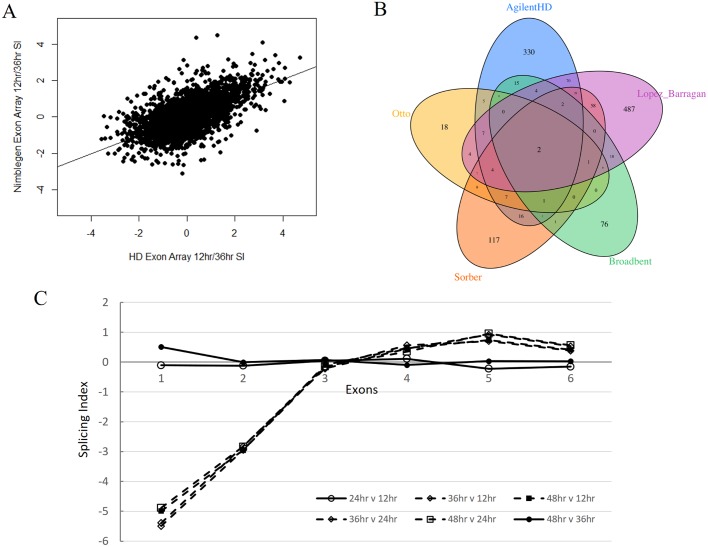
Gene expression DNA microarrays have been vital for characterizing whole-genome transcriptional profiles. Nevertheless, their effectiveness relies heavily on the accuracy of genome sequences, the annotation of gene structures, and the sequence-dependent performance of individual probes. Currently available gene expression arrays for the malaria parasite Plasmodium falciparum rely on an average of 2 probes per gene, usually positioned near the 3' end of genes; consequently, existing designs are prone to measurement bias and cannot capture complexities such as the occurrence of transcript isoforms arising from alternative splicing or alternative start/ stop sites. Here, we describe two novel gene expression arrays with exon-focused probes designed with an average of 12 and 20 probes spanning each gene. This high probe density minimizes signal noise inherent in probe-to-probe sequence-dependent hybridization intensity. We demonstrate that these exon arrays accurately profile genome-wide expression, comparing favorably to currently available arrays and RNA-seq profiling, and can detect alternatively spliced transcript isoforms as well as non-coding RNAs (ncRNAs). Of the 964 candidate alternate splicing events from published RNA-seq studies, 162 are confirmed using the exon array. Furthermore, the exon array predicted 330 previously unidentified alternate splicing events. Gene expression microarrays continue to offer a cost-effective alternative to RNA-seq for the simultaneous monitoring of gene expression and alternative splicing events. Microarrays may even be preferred in some cases due to their affordability and the rapid turn-around of results when hundreds of samples are required for fine-scale systems biology investigations, including the monitoring of the networks of gene co-expression in the emergence of drug resistance.
基因表达DNA微阵列对于描绘全基因组转录谱至关重要。然而,它们的有效性在很大程度上依赖于基因组序列的准确性、基因结构的注释以及单个探针的序列依赖性性能。目前用于疟原虫恶性疟原虫的基因表达阵列平均每个基因依赖2个探针,通常位于基因的3'端附近;因此,现有的设计容易产生测量偏差,并且无法捕捉诸如由可变剪接或可变起始/终止位点产生的转录本异构体等复杂性。在这里,我们描述了两种新型的基因表达阵列,其外显子聚焦探针的设计平均每个基因有12个和20个探针。这种高探针密度将探针间序列依赖性杂交强度中固有的信号噪声降至最低。我们证明,这些外显子阵列能够准确地描绘全基因组表达,与目前可用的阵列和RNA测序分析相比具有优势,并且能够检测可变剪接的转录本异构体以及非编码RNA(ncRNA)。在已发表的RNA测序研究中的964个候选可变剪接事件中,有162个使用外显子阵列得到了证实。此外,外显子阵列预测了330个以前未识别的可变剪接事件。基因表达微阵列继续为同时监测基因表达和可变剪接事件提供一种经济高效的替代RNA测序的方法。在某些情况下,微阵列甚至可能更受青睐,因为它们价格实惠,并且当需要数百个样本进行精细的系统生物学研究(包括监测耐药性出现过程中的基因共表达网络)时,结果周转迅速。