Salmier Arielle, Tirera Sourakhata, de Thoisy Benoit, Franc Alain, Darcissac Edith, Donato Damien, Bouchier Christiane, Lacoste Vincent, Lavergne Anne
Laboratoire des Interactions Virus-Hôtes, Institut Pasteur de la Guyane, Cayenne, French Guiana.
UMR BIOGECO, Institut National de la Recherche Agronomique (INRA), Cestas, France.
PLoS One. 2017 Nov 8;12(11):e0186943. doi: 10.1371/journal.pone.0186943. eCollection 2017.
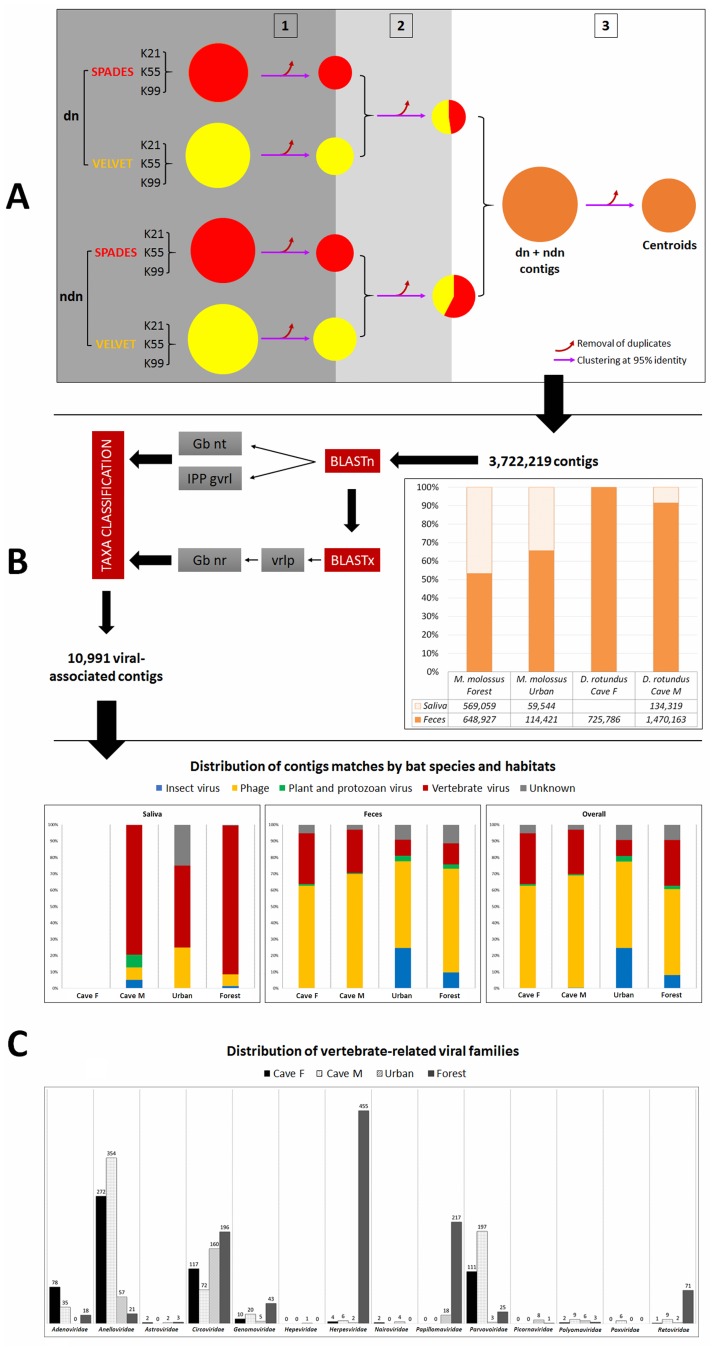
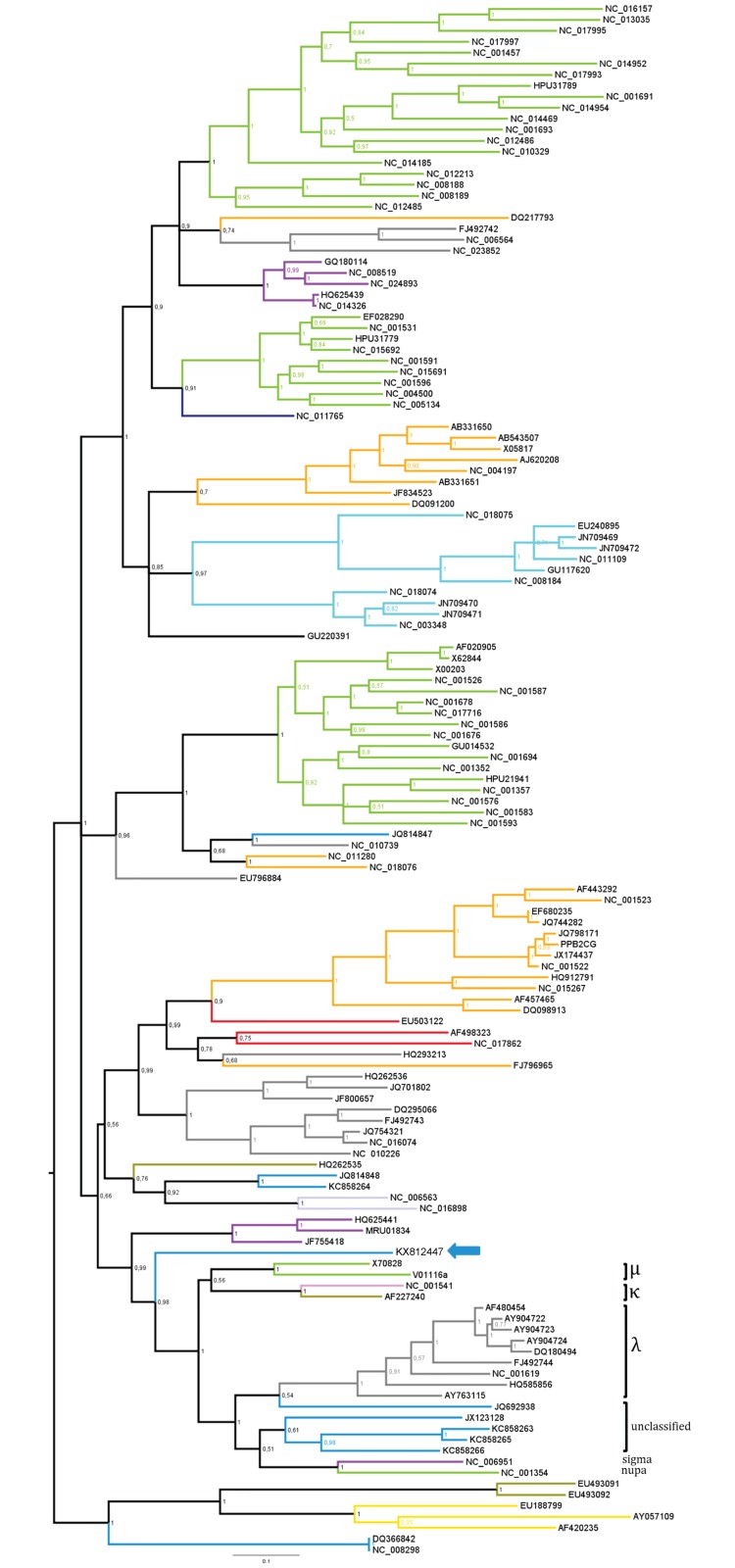
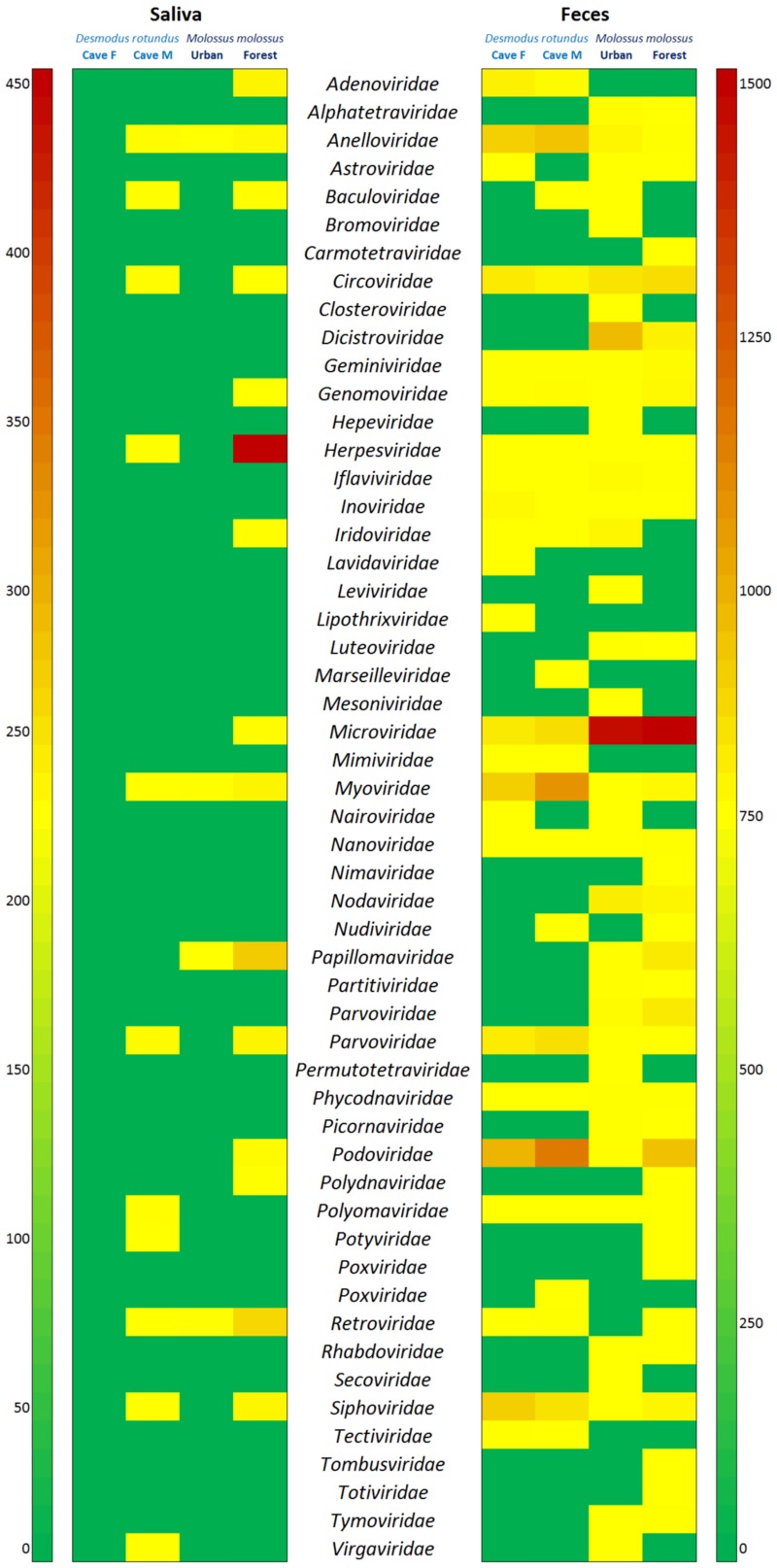
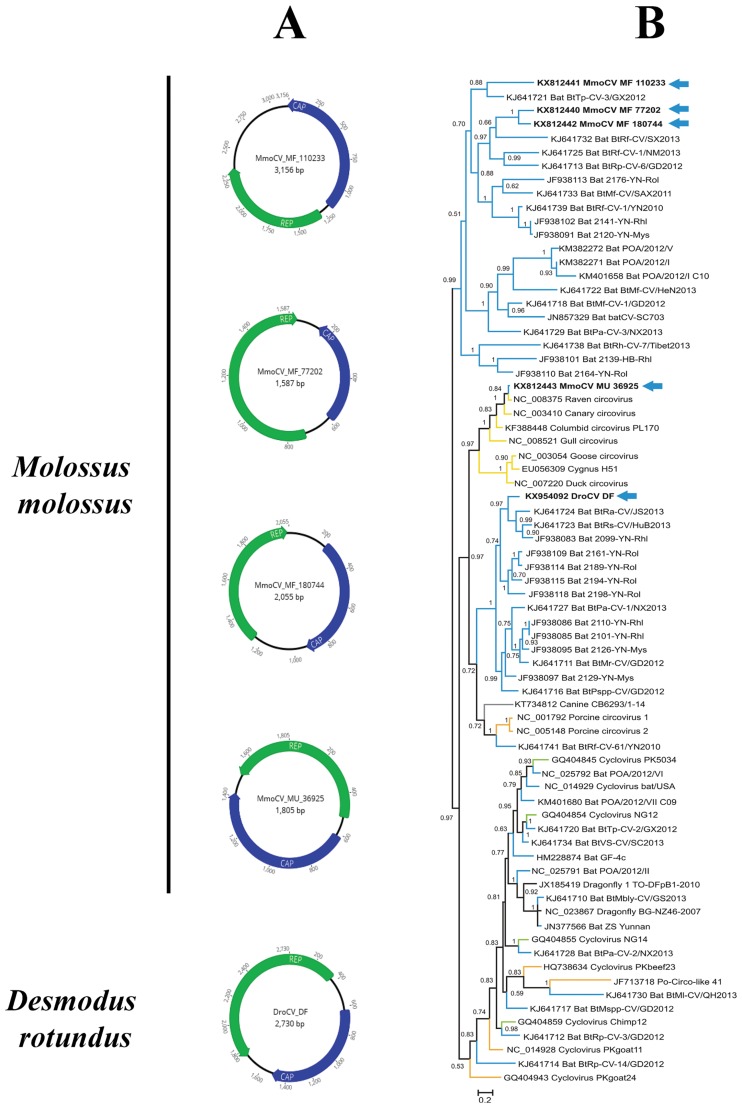
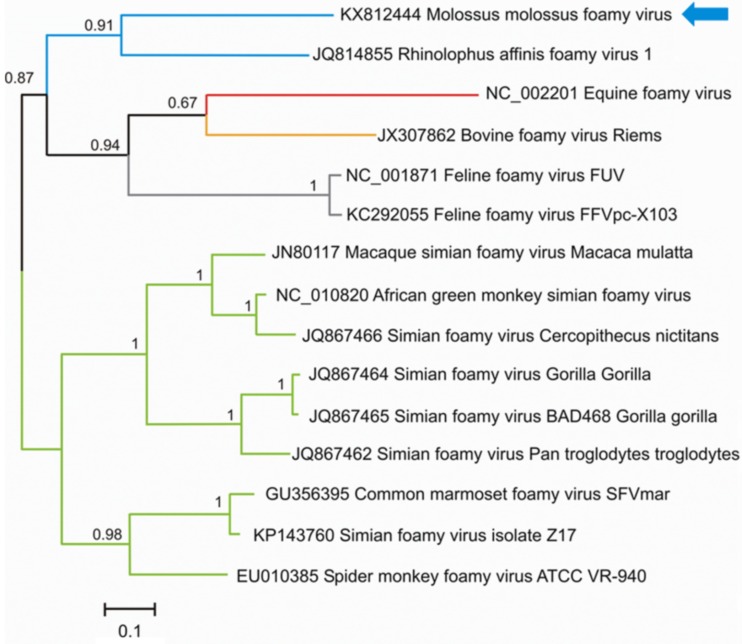
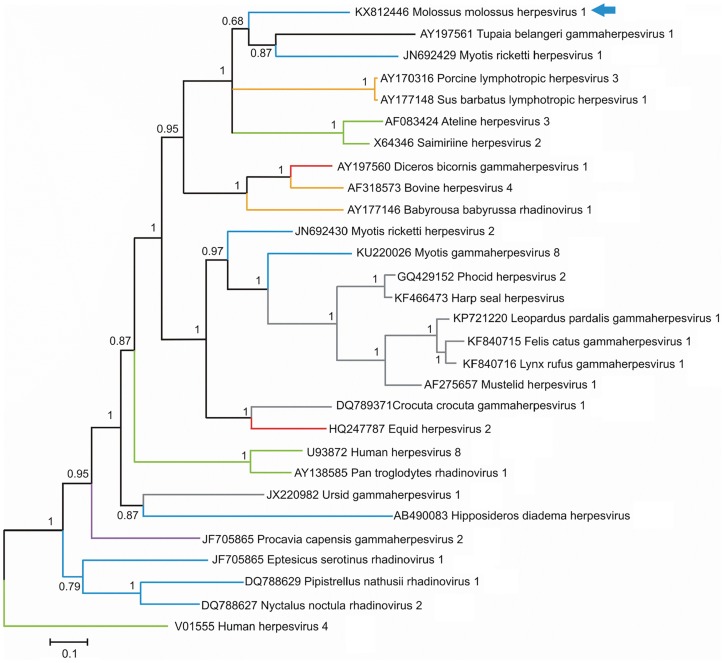
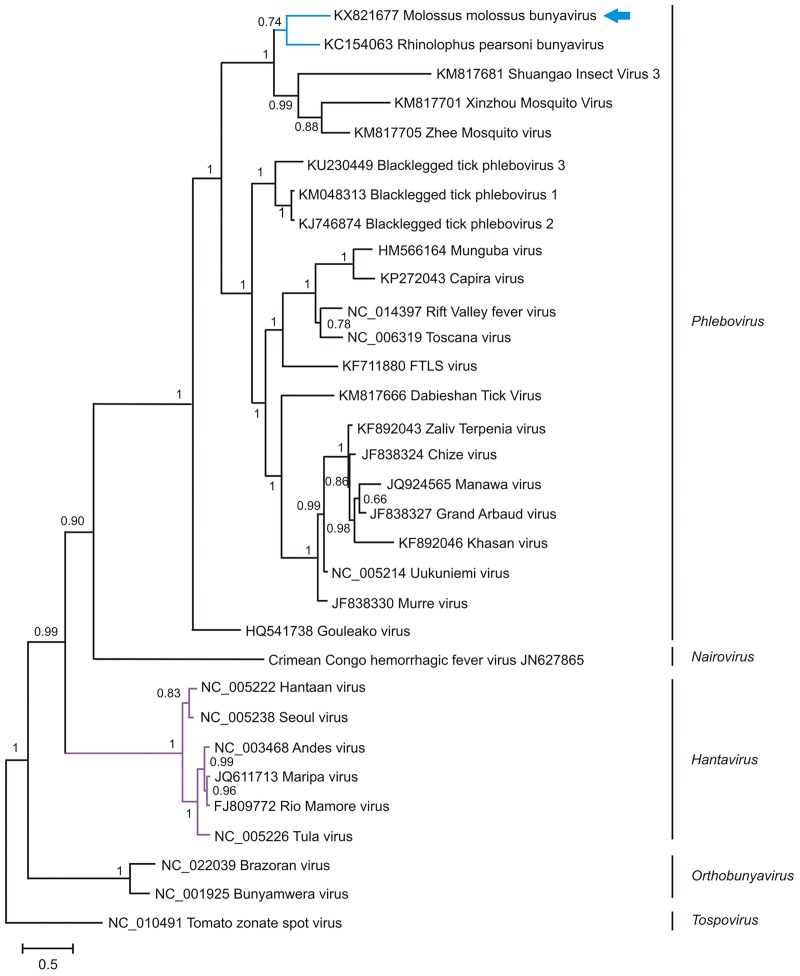
Environmental disturbances in the Neotropics (e.g., deforestation, agriculture intensification, urbanization) contribute to an increasing risk of cross-species transmission of microorganisms and to disease outbreaks due to changing ecosystems of reservoir hosts. Although Amazonia encompasses the greatest diversity of reservoir species, the outsized viral population diversity (virome) has yet to be investigated. Here, through a metagenomic approach, we identified 10,991 viral sequences in the saliva and feces of two bat species, Desmodus rotundus (hematophagous), trapped in two different caves surrounded by primary lowland forest, and Molossus molossus (insectivorous), trapped in forest and urban habitats. These sequences are related to 51 viral families known to infect a wide range of hosts (i.e., bacteria, plants, insects and vertebrates). Most viruses detected reflected the diet of bat species, with a high proportion of plant and insect-related viral families for M. molossus and a high proportion of vertebrate-related viral families for D. rotundus, highlighting its influence in shaping the viral diversity of bats. Lastly, we reconstructed the phylogenetic relationships for five vertebrate-related viral families (Nairoviridae, Circoviridae, Retroviridae, Herpesviridae, Papillomaviridae). The results showed highly supported clustering with other viral sequences of the same viral family hosted by other bat species, highlighting the potential association of viral diversity with the host's diet. These findings provide significant insight into viral bat diversity in French Guiana belonging to the Amazonian biome and emphasize that habitats and the host's dietary ecology may drive the viral diversity in the bat communities investigated.
新热带地区的环境干扰(如森林砍伐、农业集约化、城市化)导致微生物跨物种传播的风险增加,以及由于宿主生态系统变化而引发疾病爆发。尽管亚马逊地区拥有最多样化的宿主物种,但庞大的病毒种群多样性(病毒组)尚未得到研究。在这里,我们通过宏基因组学方法,在两种蝙蝠的唾液和粪便中鉴定出10991个病毒序列,这两种蝙蝠分别是在被原始低地森林环绕的两个不同洞穴中捕获的圆叶吸血蝠(食血),以及在森林和城市栖息地捕获的獒蝠(食虫)。这些序列与已知感染广泛宿主(即细菌、植物、昆虫和脊椎动物)的51个病毒科相关。检测到的大多数病毒反映了蝙蝠物种的饮食情况,獒蝠中与植物和昆虫相关的病毒科比例较高,而圆叶吸血蝠中与脊椎动物相关的病毒科比例较高,这突出了其在塑造蝙蝠病毒多样性方面的影响。最后,我们重建了五个与脊椎动物相关的病毒科(内罗病毒科、圆环病毒科、逆转录病毒科、疱疹病毒科、乳头瘤病毒科)的系统发育关系。结果表明,它们与其他蝙蝠物种携带的同一病毒科的其他病毒序列高度聚类,突出了病毒多样性与宿主饮食的潜在关联。这些发现为法属圭亚那属于亚马逊生物群落的蝙蝠病毒多样性提供了重要见解,并强调栖息地和宿主的饮食生态可能驱动所研究蝙蝠群落中的病毒多样性。