
足球比赛后神经肌肉疲劳的病因及恢复情况
Etiology and Recovery of Neuromuscular Fatigue following Competitive Soccer Match-Play.
作者信息
Brownstein Callum G, Dent Jack P, Parker Paul, Hicks Kirsty M, Howatson Glyn, Goodall Stuart, Thomas Kevin
机构信息
Department of Sport, Exercise and Rehabilitation, Faculty of Health and Life Sciences, Northumbria University, Newcastle-upon-Tyne, United Kingdom.
Water Research Group, School of Environmental Sciences and Development, Northwest University, Potchefstroom, South Africa.
出版信息
Front Physiol. 2017 Oct 25;8:831. doi: 10.3389/fphys.2017.00831. eCollection 2017.
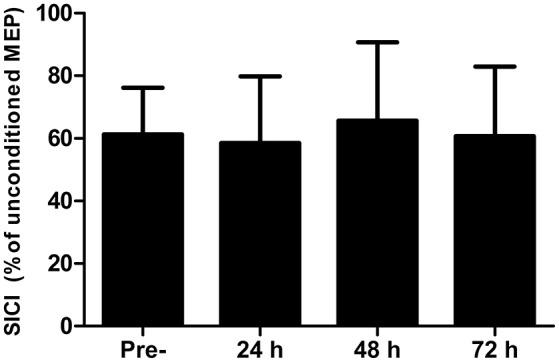
Previous research into the etiology of neuromuscular fatigue following competitive soccer match-play has primarily focused on peripheral perturbations, with limited research assessing central nervous system function in the days post-match. The aim of the present study was to examine the contribution and time-course of recovery of central and peripheral factors toward neuromuscular fatigue following competitive soccer match-play. Sixteen male semi-professional soccer players completed a 90-min soccer match. Pre-, post- and at 24, 48, and 72 h participants completed a battery of neuromuscular, physical, and perceptual tests. Maximal voluntary contraction force (MVC) and twitch responses to electrical (femoral nerve) and transcranial magnetic stimulation (TMS) of the motor cortex during isometric knee-extension and at rest were measured to assess central nervous system (voluntary activation, VA) and muscle contractile (potentiated twitch force, Q) function. Electromyography responses of the to single- and paired-pulse TMS were used to assess corticospinal excitability and short-interval intracortical inhibition (SICI), respectively. Fatigue and perceptions of muscle soreness were assessed via visual analog scales, and physical function was assessed through measures of jump (countermovement jump height and reactive strength index) and sprint performance. Competitive match-play elicited significant post-match declines in MVC force (-14%, < 0.001) that persisted for 48 h (-4%, = 0.01), before recovering by 72 h post-exercise. VA (motor point stimulation) was reduced immediately post-match (-8%, < 0.001), and remained depressed at 24 h (-5%, = 0.01) before recovering by 48 h post-exercise. Q was reduced post-match (-14%, < 0.001), remained depressed at 24 h (-6%, = 0.01), before recovering by 48 h post-exercise. No changes were evident in corticospinal excitability or SICI. Jump performance took 48 h to recover, while perceptions of fatigue persisted at 72 h. Competitive soccer match-play elicits substantial impairments in central nervous system and muscle function, requiring up to 48 h to resolve. The results of the study could have important implications for fixture scheduling, the optimal management of the training process, squad rotation during congested competitive schedules, and the implementation of appropriate recovery interventions.
先前针对足球比赛后神经肌肉疲劳病因的研究主要集中在外周干扰因素,而在赛后数天评估中枢神经系统功能的研究有限。本研究的目的是探讨中枢和外周因素对足球比赛后神经肌肉疲劳恢复的贡献及时间进程。16名男性半职业足球运动员完成了一场90分钟的足球比赛。在赛前、赛后以及赛后24、48和72小时,参与者完成了一系列神经肌肉、身体和感知测试。测量了等长伸膝及静息状态下最大自主收缩力(MVC)以及对运动皮层的电刺激(股神经)和经颅磁刺激(TMS)的抽搐反应,以评估中枢神经系统(自主激活,VA)和肌肉收缩功能(增强抽搐力,Q)。分别使用对单脉冲和双脉冲TMS的肌电图反应来评估皮质脊髓兴奋性和短间隔皮质内抑制(SICI)。通过视觉模拟量表评估疲劳和肌肉酸痛感,并通过跳跃(反向运动跳跃高度和反应力量指数)和冲刺表现的测量来评估身体功能。足球比赛导致赛后MVC力量显著下降(-14%,P<0.001),持续48小时(-4%,P=0.01),运动后72小时恢复。赛后立即VA(运动点刺激)降低(-8%,P<0.001),并在24小时保持下降(-5%,P=0.01),运动后48小时恢复。Q赛后降低(-14%,P<0.001),在24小时保持下降(-6%,P=0.01),运动后48小时恢复。皮质脊髓兴奋性或SICI无明显变化。跳跃表现需要48小时恢复,而疲劳感在72小时仍持续存在。足球比赛会引发中枢神经系统和肌肉功能的显著损害,需要长达48小时才能恢复。该研究结果可能对赛程安排、训练过程的优化管理、密集比赛赛程中的阵容轮换以及适当恢复干预措施的实施具有重要意义。



 Zotero 插件