Takagi Shimon, Momose Fumitaka, Morikawa Yuko
Kitasato Institute for Life Sciences and Graduate School for Infection Control Kitasato University Tokyo Japan.
Present address: A2 Healthcare Corporation Sumitomo Fudosan Korakuen Bldg., Koishikawa 1-4-1, Bunkyo-ku Tokyo 112-0002 Japan.
FEBS Open Bio. 2017 Oct 19;7(11):1815-1825. doi: 10.1002/2211-5463.12328. eCollection 2017 Nov.
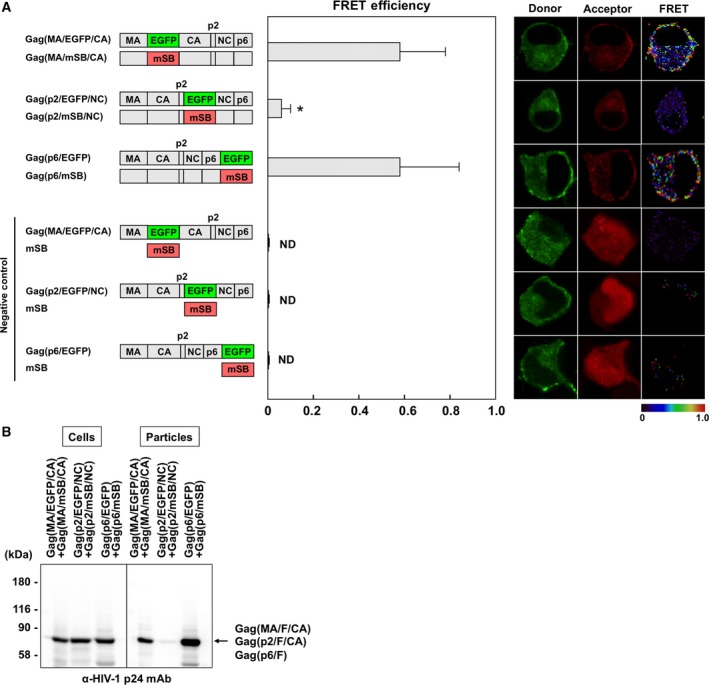
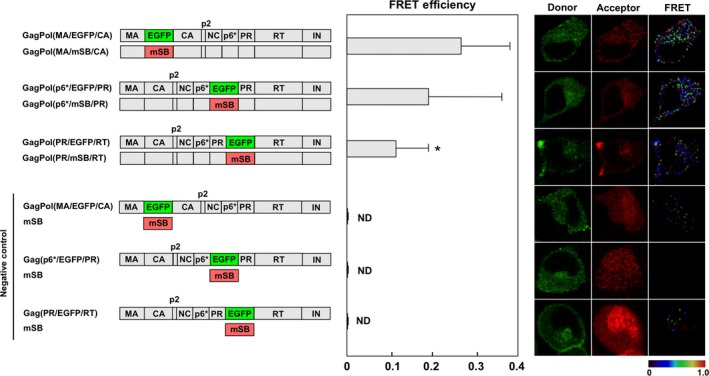
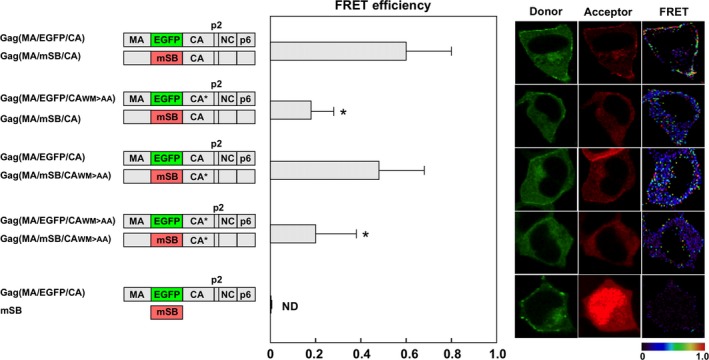
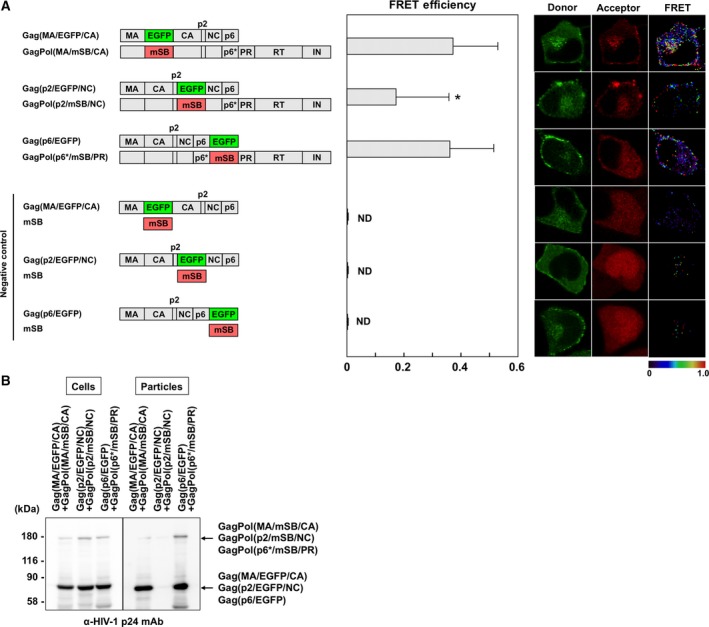
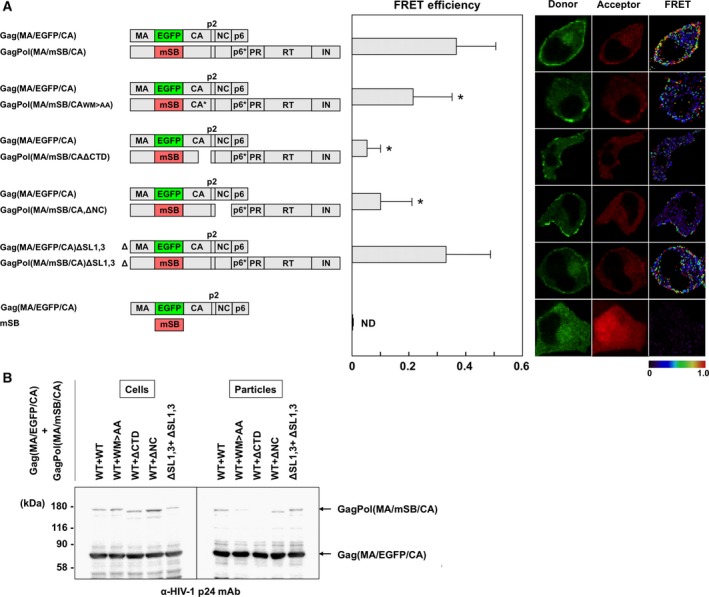
The Gag protein of HIV multimerizes to form viral particles. The GagPol protein encoding virus-specific enzymes, such as protease, reverse transcriptase, and integrase, is incorporated into HIV particles via interactions with Gag. The catalytically active forms of these enzymes are dimeric or tetrameric. We employed Förster resonance energy transfer (FRET) assays to evaluate Gag-Gag, Gag-GagPol, and GagPol-GagPol interactions and investigated Gag and Pol interdomains tolerant to fluorescent protein insertion for FRET assays. Our data indicated that the matrix (MA)-capsid (CA) domain junction in the Gag region and the Gag C terminus were equally available for Gag-Gag and Gag-GagPol interaction assays. For GagPol dimerization assays, insertion at the MA-CA domain junction was most favorable.
HIV的Gag蛋白多聚化形成病毒颗粒。编码病毒特异性酶(如蛋白酶、逆转录酶和整合酶)的GagPol蛋白通过与Gag的相互作用被整合到HIV颗粒中。这些酶的催化活性形式为二聚体或四聚体。我们采用Förster共振能量转移(FRET)分析来评估Gag-Gag、Gag-GagPol和GagPol-GagPol相互作用,并研究了Gag和Pol中可耐受荧光蛋白插入以进行FRET分析的结构域间区域。我们的数据表明,Gag区域中的基质(MA)-衣壳(CA)结构域连接处和Gag C末端同样适用于Gag-Gag和Gag-GagPol相互作用分析。对于GagPol二聚化分析,在MA-CA结构域连接处插入最为有利。