a Health Effects Laboratory Division , National Institute for Occupational Safety and Health , Morgantown , WV , USA.
b Respiratory Health Division , National Institute for Occupational Safety and Health , Morgantown , WV , USA.
J Immunotoxicol. 2017 Dec;14(1):204-214. doi: 10.1080/1547691X.2017.1397826.
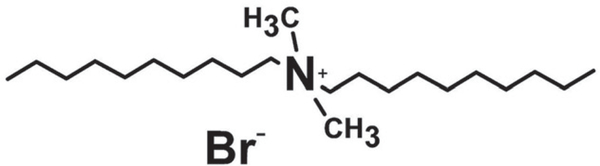
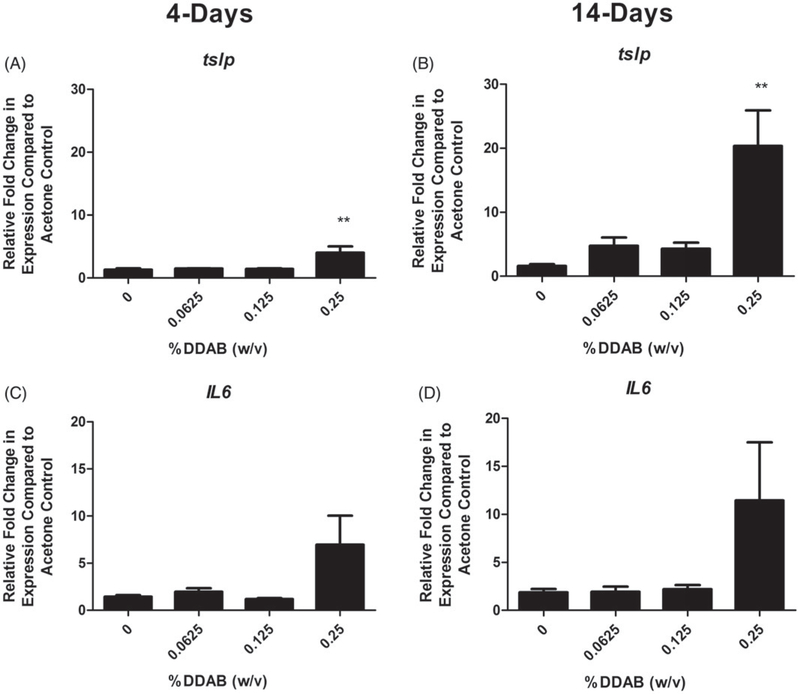
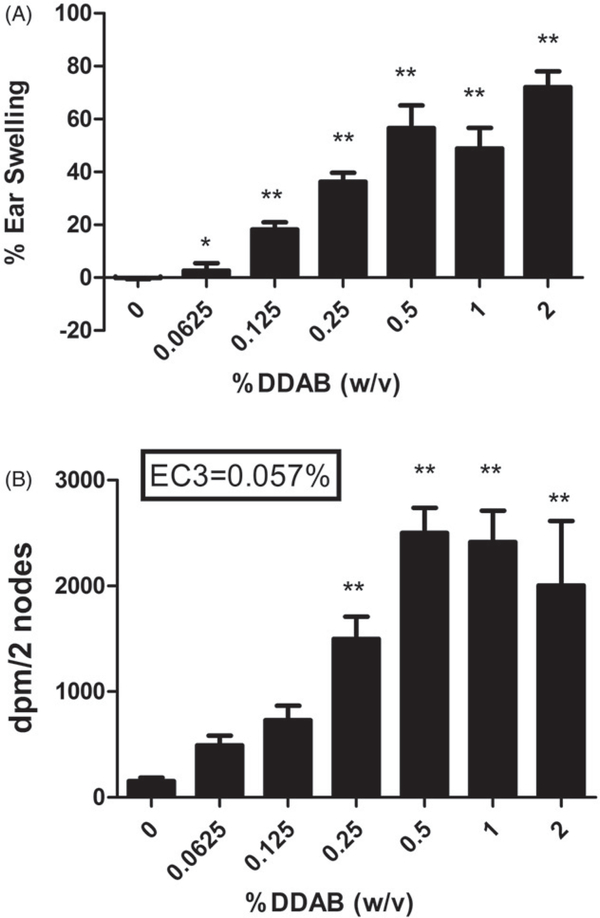
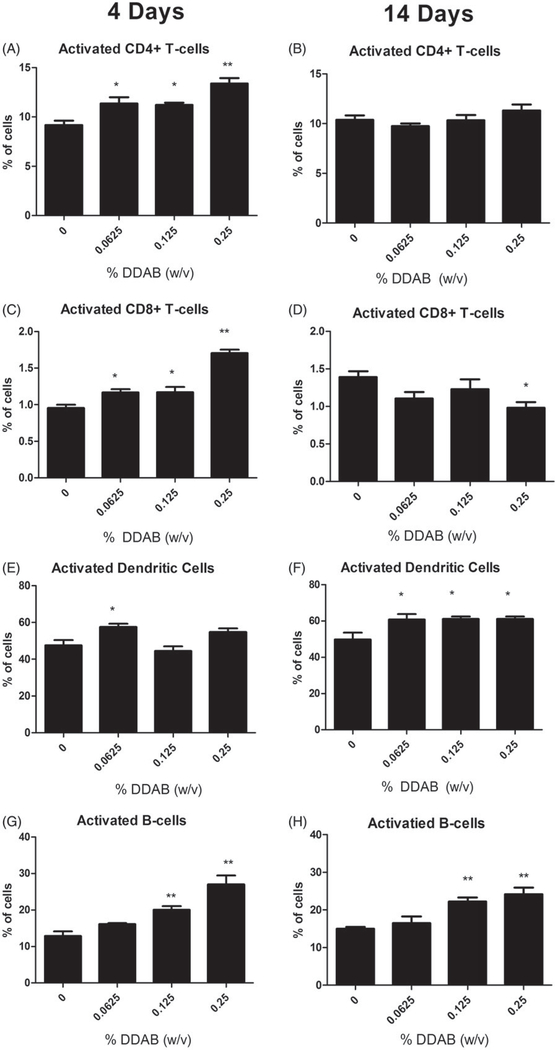
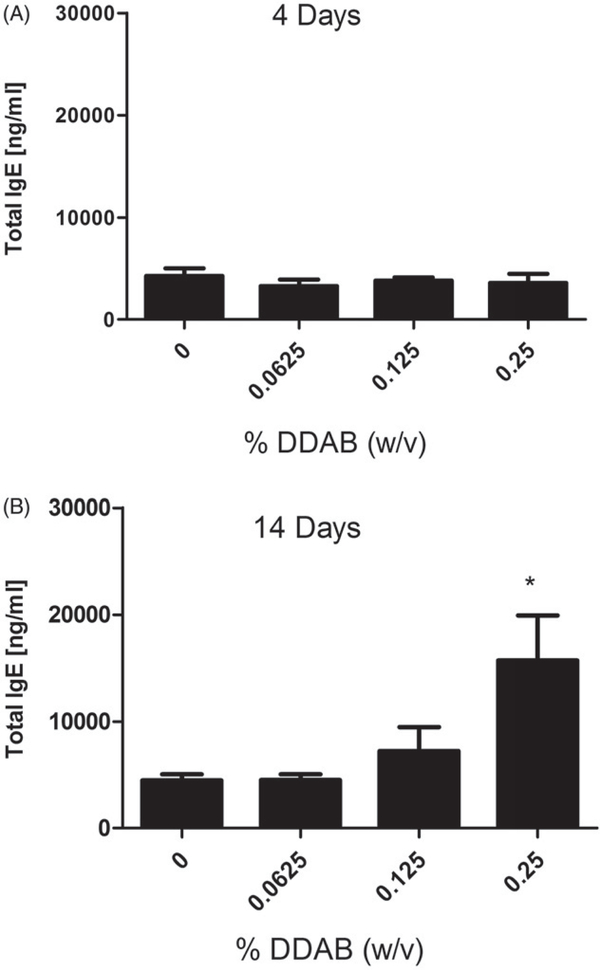
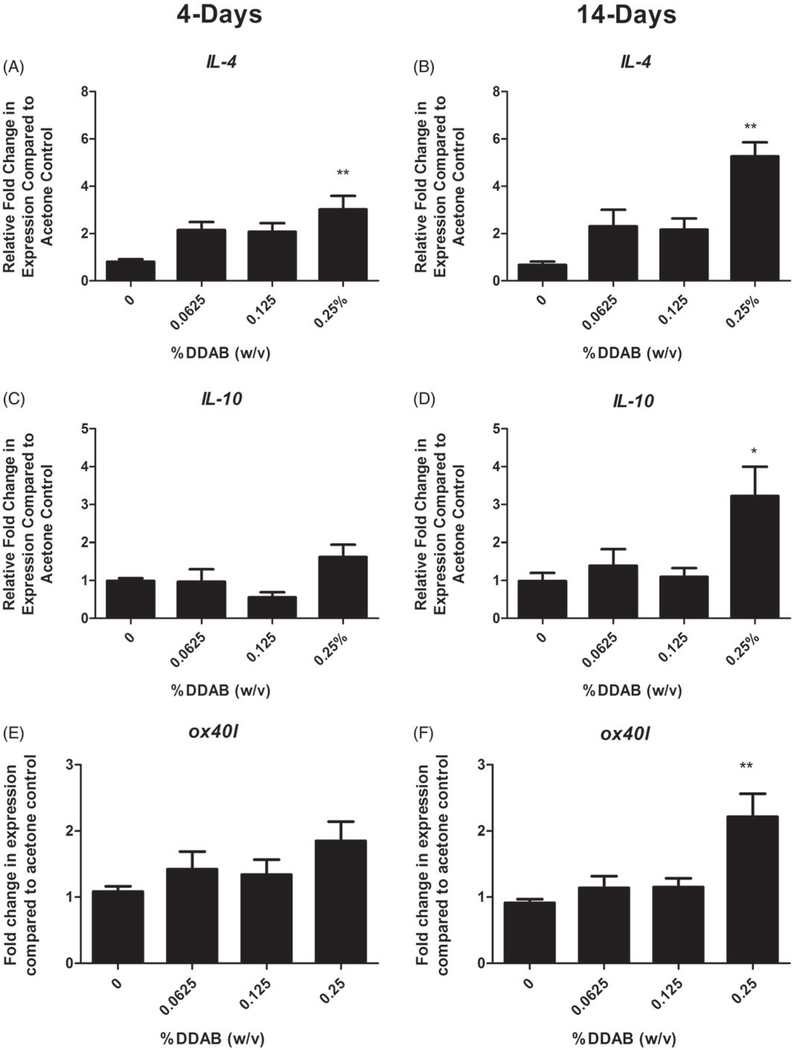
Didecyldimethylammonium bromide (DDAB) is a fourth generation dialkyl-quaternary ammonium compound (QAC) that is used in numerous products for its antimicrobial properties. While many QACs have been associated with allergic disease, the toxicity and sensitization of DDAB have not been thoroughly investigated. The purpose of these studies was to evaluate the irritancy and sensitization potential of DDAB following dermal application in a murine model. DDAB induced significant irritancy (0.0625-2%), evaluated by ear swelling in female BALB/c mice. Initial evaluation of the sensitization potential was conducted using the local lymph node assay (LLNA) at concentrations ranging from 0.0625% to 2%. A concentration-dependent increase in lymphocyte proliferation was observed with a calculated EC3 value of 0.057%. Immune cell phenotyping along with local and systemic IgE levels were evaluated following 4 and 14 days of dermal application. Phenotypic analyses revealed significant and dose-responsive increases in the absolute number of B-cells, CD4 T-cells, CD8 T-cells, and dendritic cells in the draining lymph nodes (DLNs) following 4 and 14 days of dermal exposure with significant increases in the number of activated B-cells and dendritic cells. However, increased activation of CD4 T-cell and CD8 T-cells was only observed following four days of DDAB exposure. Exposure to DDAB also induced increased production of IgE as evaluated by phenotypic analysis of DLN B-cells (IgE B-cells) and measurement of total serum IgE levels following 14 days but not four days of dermal application. Significant increases in gene expression were observed in the DLN (Il-4, Il-10, and ox40l) and ear (tslp) following 4 and 14 days of DDAB exposure. These results demonstrate the potential for development of irritation and hypersensitivity responses to DDAB following dermal exposure and raise concerns about the effects of exposure duration on hypersensitivity responses.
双十烷基二甲基溴化铵(DDAB)是一种第四代二烷基季铵化合物(QAC),因其具有抗菌特性而被广泛应用于众多产品中。虽然许多 QAC 已被证实与过敏性疾病有关,但 DDAB 的毒性和致敏性尚未得到充分研究。这些研究的目的是评估 DDAB 在小鼠模型中的皮肤应用后的刺激性和致敏性潜力。DDAB 诱导了显著的刺激性(0.0625-2%),这可以通过雌性 BALB/c 小鼠的耳部肿胀来评估。最初的致敏潜力评估是使用局部淋巴结测定法(LLNA)在 0.0625%至 2%的浓度范围内进行的。观察到淋巴细胞增殖呈浓度依赖性增加,EC3 值计算为 0.057%。在皮肤应用 4 天和 14 天后,评估了免疫细胞表型以及局部和全身 IgE 水平。表型分析显示,在皮肤暴露 4 天和 14 天后,引流淋巴结(DLN)中 B 细胞、CD4 T 细胞、CD8 T 细胞和树突状细胞的绝对数量显著且呈剂量依赖性增加,并且在 B 细胞和树突状细胞中观察到显著增加的激活。然而,仅在 DDAB 暴露 4 天后观察到 CD4 T 细胞和 CD8 T 细胞的激活增加。通过对 DLN B 细胞(IgE B 细胞)的表型分析和对 14 天但不是 4 天皮肤应用后总血清 IgE 水平的测量,DDAB 暴露还诱导了 IgE 的产生增加。在 DDAB 暴露 4 天和 14 天后,DLN(Il-4、Il-10 和 ox40l)和耳部(tslp)中观察到基因表达的显著增加。这些结果表明,在皮肤暴露后,DDAB 可能会引起刺激和过敏反应,并且对暴露持续时间对过敏反应的影响表示关注。