School of Biological Sciences, University of Tasmania, Private Bag 55, Hobart, Tasmania, 7001, Australia.
Australian Centre for Research on Separation Science, University of Tasmania, Tasmania, 7001, Australia.
Sci Rep. 2017 Nov 13;7(1):15384. doi: 10.1038/s41598-017-15507-1.
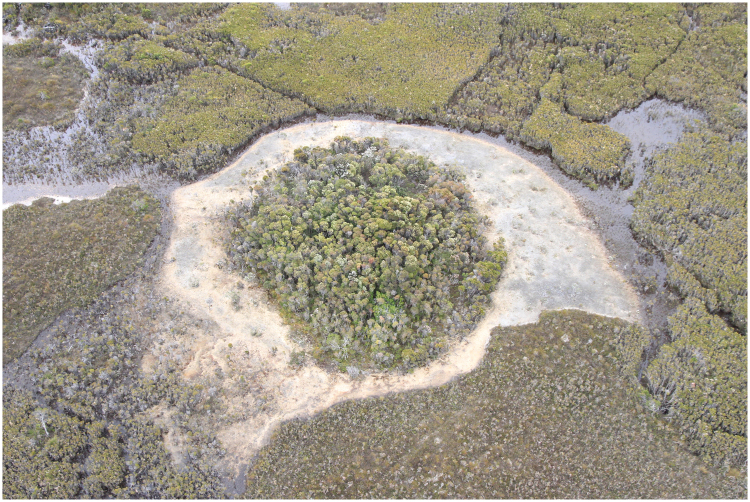
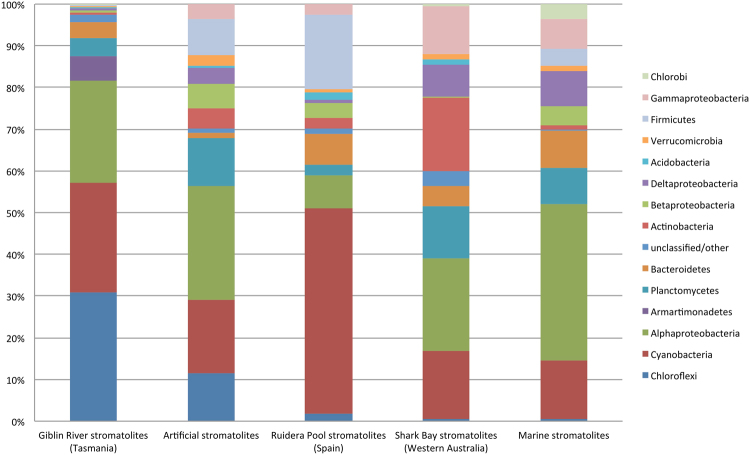
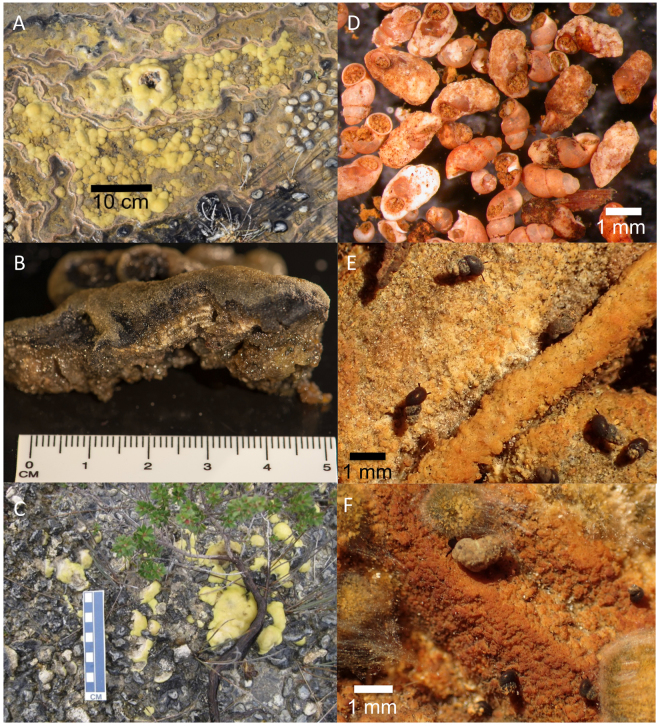
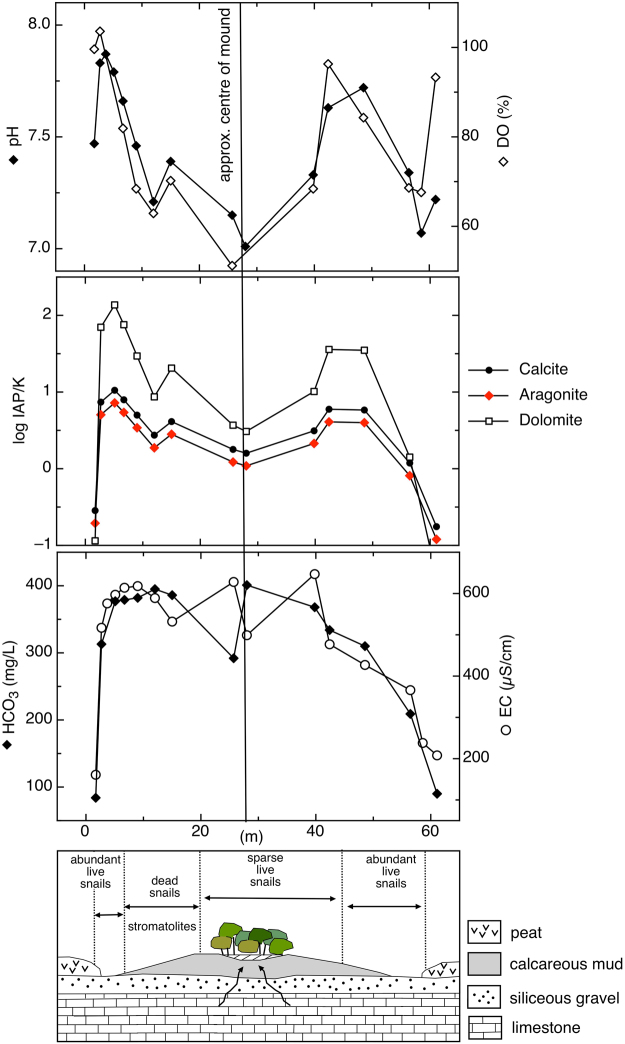
Stromatolites are the oldest evidence for life on Earth, but modern living examples are rare and predominantly occur in shallow marine or (hyper-) saline lacustrine environments, subject to exotic physico-chemical conditions. Here we report the discovery of living freshwater stromatolites in cool-temperate karstic wetlands in the Giblin River catchment of the UNESCO-listed Tasmanian Wilderness World Heritage Area, Australia. These stromatolites colonize the slopes of karstic spring mounds which create mildly alkaline (pH of 7.0-7.9) enclaves within an otherwise uniformly acidic organosol terrain. The freshwater emerging from the springs is Ca-HCO dominated and water temperatures show no evidence of geothermal heating. Using 16 S rRNA gene clone library analysis we revealed that the bacterial community is dominated by Cyanobacteria, Alphaproteobacteria and an unusually high proportion of Chloroflexi, followed by Armatimonadetes and Planctomycetes, and is therefore unique compared to other living examples. Macroinvertebrates are sparse and snails in particular are disadvantaged by the development of debilitating accumulations of carbonate on their shells, corroborating evidence that stromatolites flourish under conditions where predation by metazoans is suppressed. Our findings constitute a novel habitat for stromatolites because cool-temperate freshwater wetlands are not a conventional stromatolite niche, suggesting that stromatolites may be more common than previously thought.
叠层石是地球上最古老的生命证据,但现代活体叠层石很少见,主要存在于浅海或(超)咸水湖泊环境中,受到奇特的物理化学条件的影响。在这里,我们报告了在澳大利亚被联合国教科文组织列为塔斯马尼亚荒野世界遗产区的吉布林河集水区的凉爽温带喀斯特湿地中发现了活体淡水叠层石。这些叠层石在喀斯特泉丘的斜坡上定殖,这些泉丘形成了轻度碱性(pH 值为 7.0-7.9)的小环境,而周围则是均匀的酸性有机土地形。从泉水中流出的水主要是 Ca-HCO,水温没有地热加热的迹象。通过 16S rRNA 基因克隆文库分析,我们揭示了细菌群落主要由蓝藻、α变形菌和异常高比例的绿弯菌门组成,其次是装甲菌门和浮霉菌门,因此与其他活体叠层石相比是独特的。大型无脊椎动物稀疏,特别是蜗牛,它们的壳上会形成使人衰弱的碳酸盐积聚,这证实了在后生动物捕食受到抑制的情况下,叠层石会繁盛的证据。我们的发现构成了一个新的叠层石栖息地,因为凉爽的温带淡水湿地不是传统的叠层石栖息地,这表明叠层石可能比以前想象的更为普遍。