Nazir Rashid, Shen Ju-Pei, Wang Jun-Tao, Hu Hang-Wei, He Ji-Zheng
State Key Laboratory of Urban and Regional Ecology, Research Centre for Eco-Environmental Sciences, Chinese Academy of Sciences, Beijing, 100085, China.
Department of Environmental Sciences, COMSATS Institute of Information Technology, Abbottabad, 22060, Pakistan.
Sci Rep. 2017 Nov 13;7(1):15457. doi: 10.1038/s41598-017-15660-7.
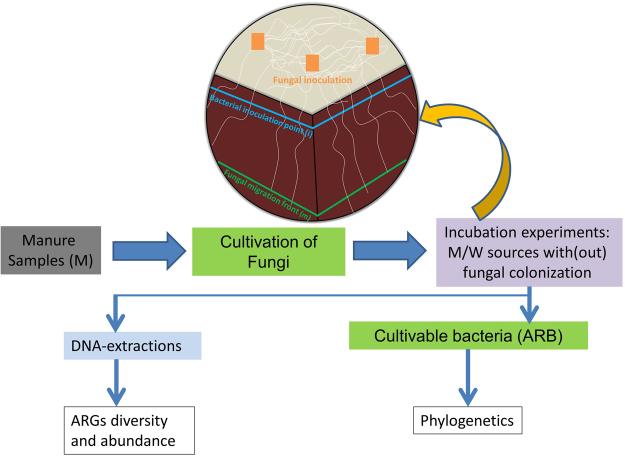
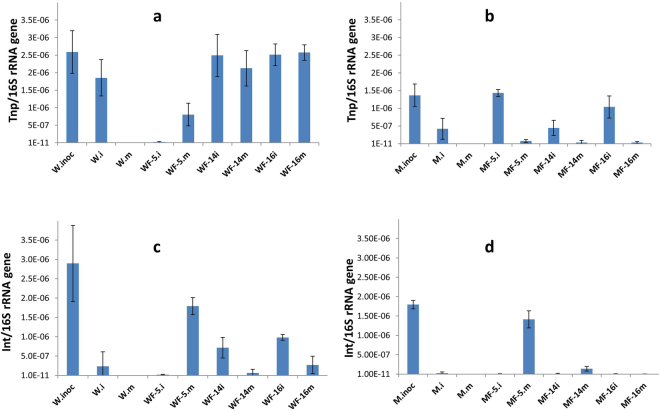
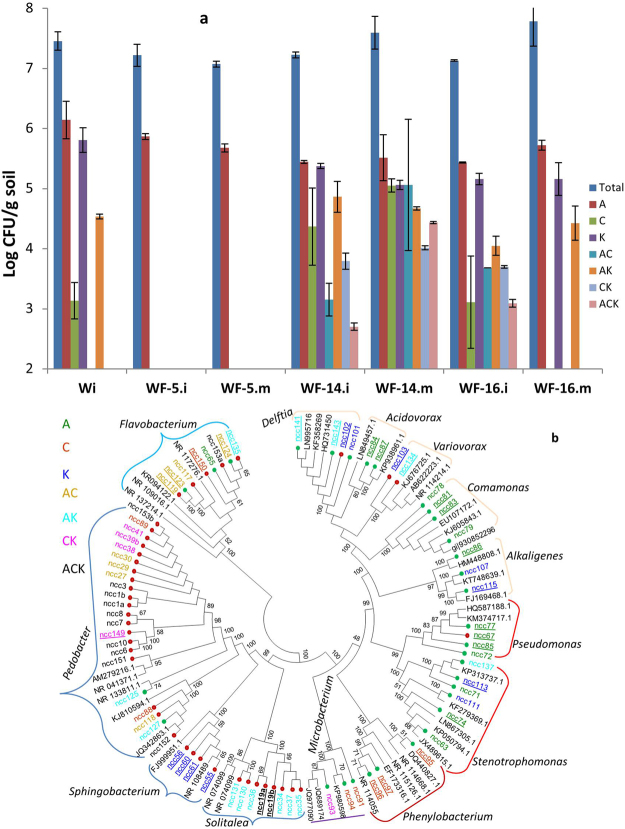
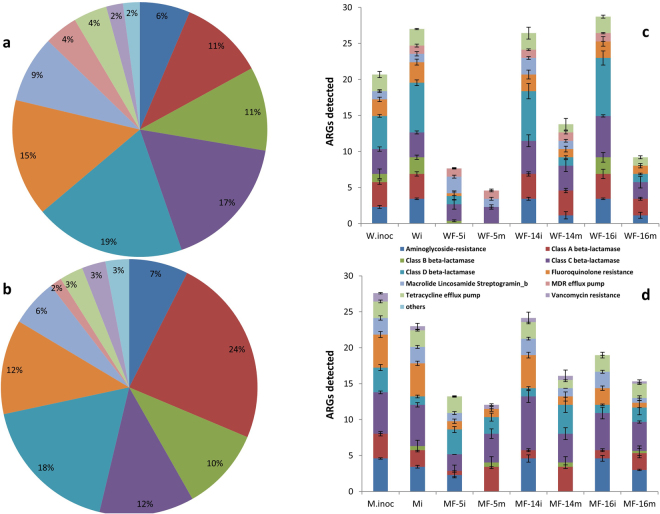
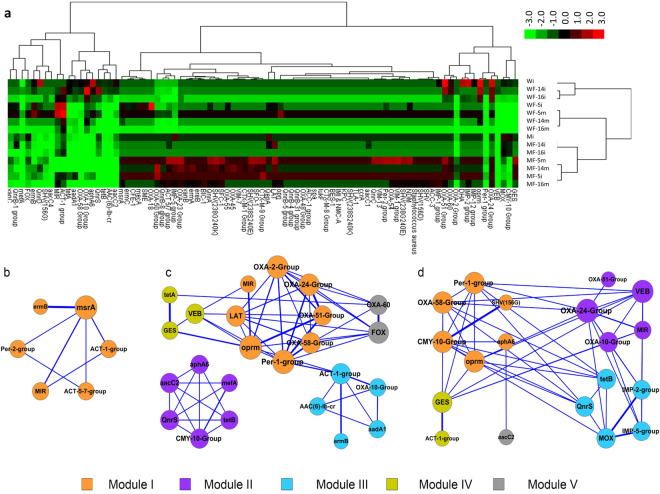
Antibiotic resistance genes (ARGs) in the environment and their subsequent acquisition by clinically important microorganisms are a serious concern. However, the spread of environmental ARGs remain largely unknown. We report, for the first time, the involvement of soil fungi in the distribution of bacteria with ARGs via soil microcosms. qPCR assay detected unique ARGs specifically found in the mycosphere of different fungi. Interestingly, the taxonomically and ecologically different fungi exerted different selection pressures on ARGs originating from the same source. Test fungi supported different antibiotic resistance bacteria enriched in the mycosphere and even transported to distant places. The relative abundance of the tnpA gene decreased, for manure, along mycelial networks of all fungi. While the fungal strain NFC-5 enriched the intI1 gene more, opposite to two other fungi at the migration front compared with the inoculation point for both sources. Such data indicate the differential effect of different fungi to facilitate horizontal gene transfer potential under fungal selection pressure. Our study provides the evidence that fungi can contribute ARGs, host bacterial diversity and abundance, and such interactive microbial consortia have the potential to disseminate the resistance determinants from one place to another, thus increasing the ARGs exposure risk to humans.
环境中的抗生素抗性基因(ARGs)以及临床上重要微生物随后对其的获取是一个严重问题。然而,环境中ARGs的传播情况仍 largely未知。我们首次报告了土壤真菌通过土壤微观世界参与携带ARGs细菌的分布情况。定量聚合酶链反应(qPCR)检测发现了在不同真菌的菌圈中特异性存在的独特ARGs。有趣的是,分类学和生态学上不同的真菌对源自同一来源的ARGs施加了不同的选择压力。受试真菌支持不同的抗生素抗性细菌在菌圈中富集,甚至将其输送到遥远的地方。对于粪便中的tnpA基因,沿着所有真菌的菌丝网络其相对丰度都降低了。而真菌菌株NFC - 5相比其他两种真菌在两个来源的迁移前沿与接种点相比,更多地富集了intI1基因。这些数据表明在真菌选择压力下不同真菌促进水平基因转移潜力的差异效应。我们的研究提供了证据表明真菌可以贡献ARGs、宿主细菌的多样性和丰度,并且这种相互作用的微生物群落有潜力将抗性决定因素从一个地方传播到另一个地方,从而增加人类接触ARGs的风险。