Institute of Health and Wellbeing, University of Glasgow, Glasgow, UK.
Institute of Infection, Immunity and Inflammation, University of Glasgow, Glasgow, UK.
Mol Psychiatry. 2018 Jan;23(1):48-58. doi: 10.1038/mp.2017.205. Epub 2017 Nov 14.
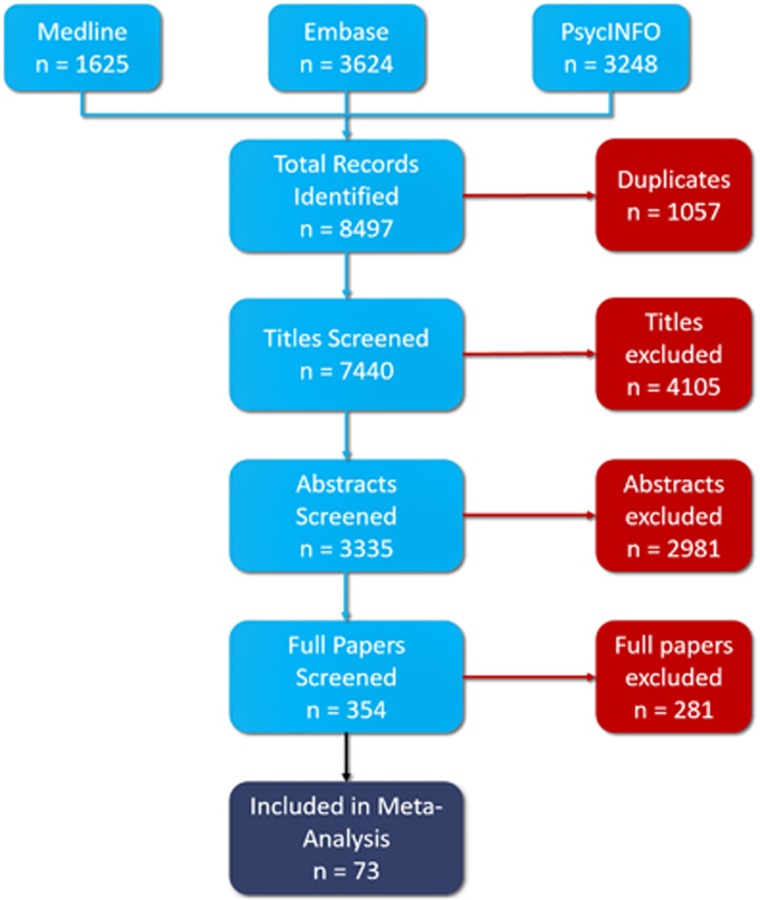
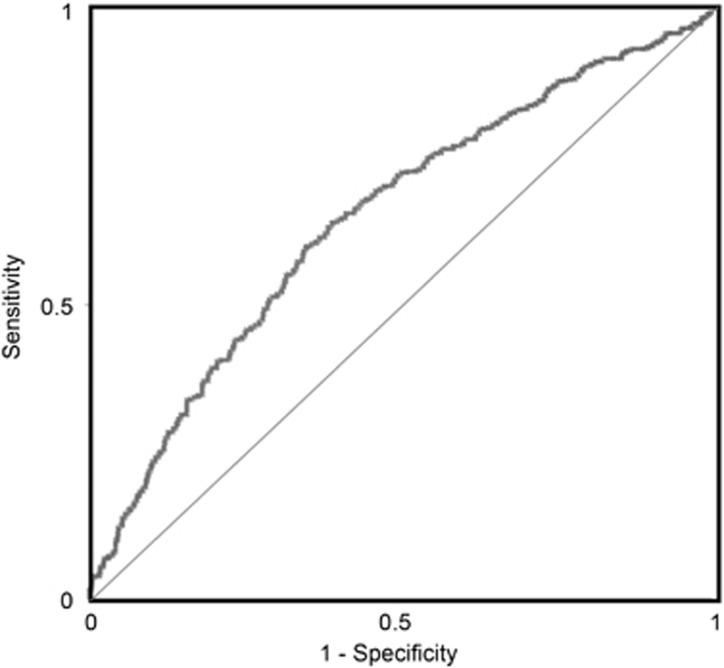
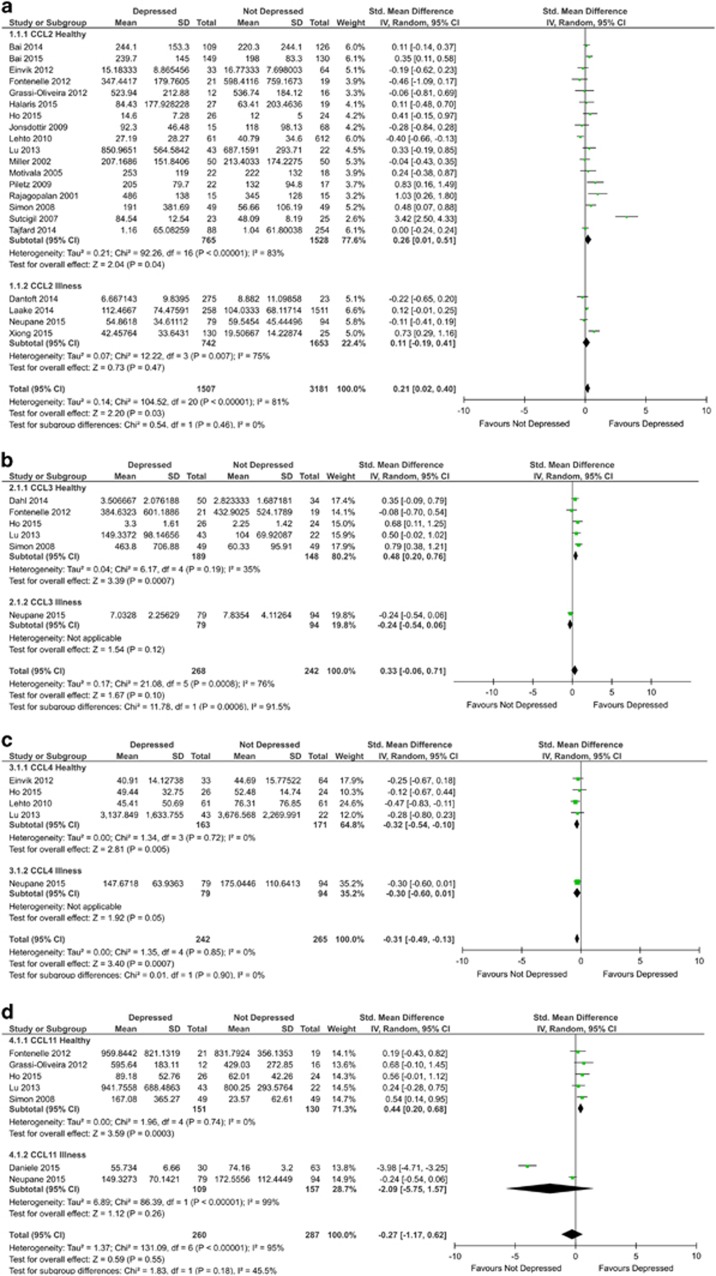
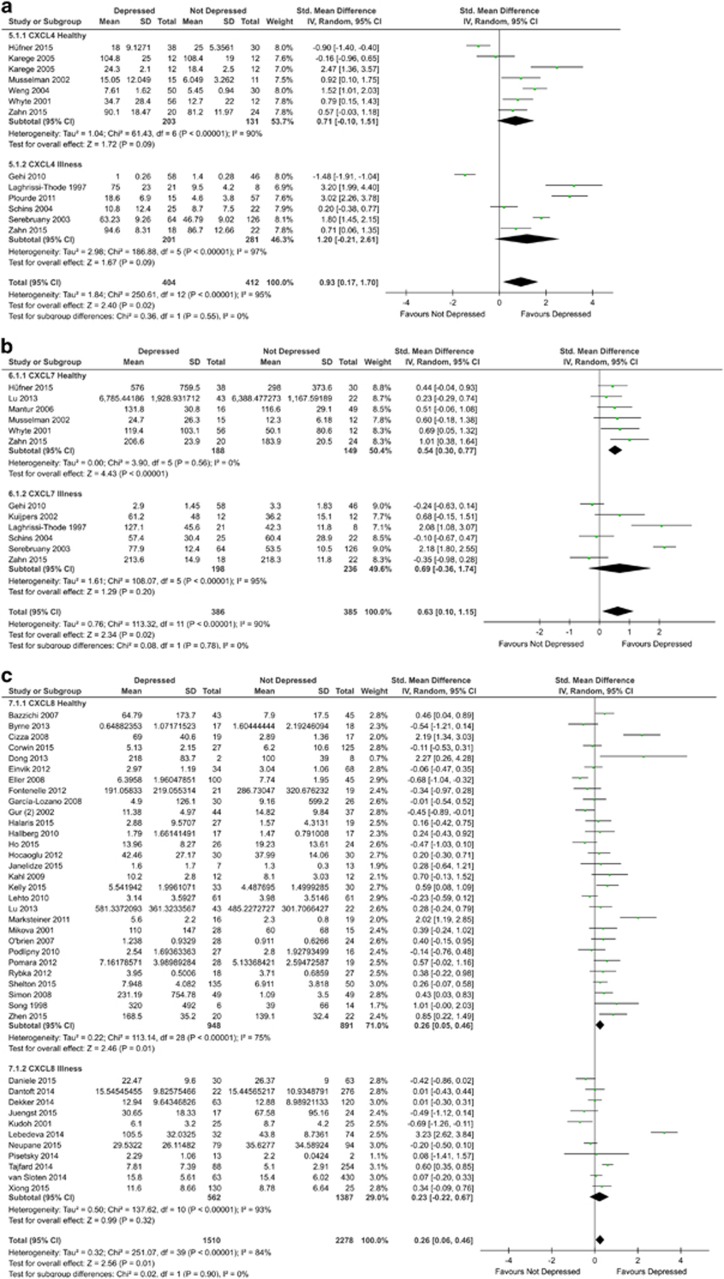
Inflammatory illness is associated with depression. Preclinical work has shown that chemokines are linked with peripheral-central crosstalk and may be important in mediating depressive behaviours. We sought to establish what evidence exists that differences in blood or cerebrospinal fluid chemokine concentration discriminate between individuals with depression and those without. Following PRISMA guidelines, we systematically searched Embase, PsycINFO and Medline databases. We included participants with physical illness for subgroup analysis, and excluded participants with comorbid psychiatric diagnoses. Seventy-three studies met the inclusion criteria for the meta-analysis. Individuals with depression had higher levels of blood CXCL4 and CXCL7 and lower levels of blood CCL4. Sensitivity analysis of studies with only physically healthy participants identified higher blood levels of CCL2, CCL3, CCL11, CXCL7 and CXCL8 and lower blood levels of CCL4. All other chemokines examined did not reveal significant differences (blood CCL5, CCL7, CXCL9, CXCL10 and cerebrospinal fluid CXCL8 and CXCL10). Analysis of the clinical utility of the effect size of plasma CXCL8 in healthy individuals found a negative predictive value 93.5%, given the population prevalence of depression of 10%. Overall, our meta-analysis finds evidence linking abnormalities of blood chemokines with depression in humans. Furthermore, we have demonstrated the possibility of classifying individuals with depression based on their inflammatory biomarker profile. Future research should explore putative mechanisms underlying this association, attempt to replicate existing findings in larger populations and aim to develop new diagnostic and therapeutic strategies.
炎性疾病与抑郁有关。临床前研究表明,趋化因子与外周-中枢的串扰有关,可能在介导抑郁行为中起重要作用。我们旨在确定是否有证据表明血液或脑脊液趋化因子浓度的差异可以区分患有和不患有抑郁症的个体。根据 PRISMA 指南,我们系统地搜索了 Embase、PsycINFO 和 Medline 数据库。我们纳入了患有躯体疾病的参与者进行亚组分析,并排除了伴有合并精神科诊断的参与者。有 73 项研究符合荟萃分析的纳入标准。患有抑郁症的个体血液中 CXCL4 和 CXCL7 的水平较高,而 CCL4 的水平较低。对仅包括身体健康参与者的研究进行敏感性分析,发现血液中 CCL2、CCL3、CCL11、CXCL7 和 CXCL8 的水平更高,而 CCL4 的水平更低。其他所有检查的趋化因子均未显示出显著差异(血液 CCL5、CCL7、CXCL9、CXCL10 和脑脊液 CXCL8 和 CXCL10)。对健康个体血浆 CXCL8 效应大小的临床实用性进行分析发现,鉴于抑郁症的人群患病率为 10%,其阴性预测值为 93.5%。总的来说,我们的荟萃分析发现了血液趋化因子异常与人类抑郁症之间存在关联的证据。此外,我们已经证明了基于个体的炎症生物标志物谱对抑郁症进行分类的可能性。未来的研究应探索这种关联的潜在机制,尝试在更大的人群中复制现有发现,并旨在开发新的诊断和治疗策略。