Scott E N, Muchmore H G
Department of Medicine, University of Oklahoma Health Sciences Center, Oklahoma City.
J Clin Microbiol. 1989 Feb;27(2):300-4. doi: 10.1128/jcm.27.2.300-304.1989.
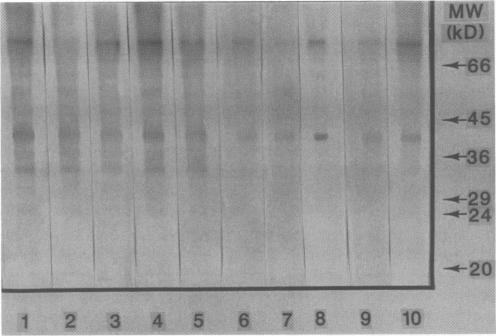
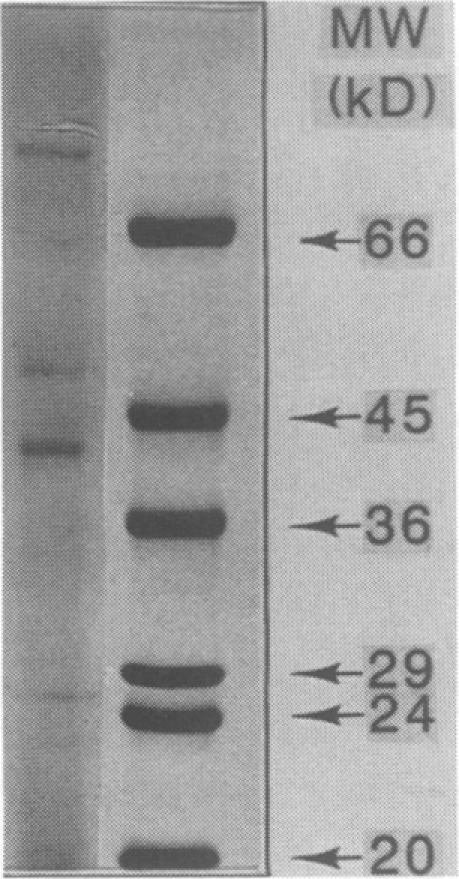
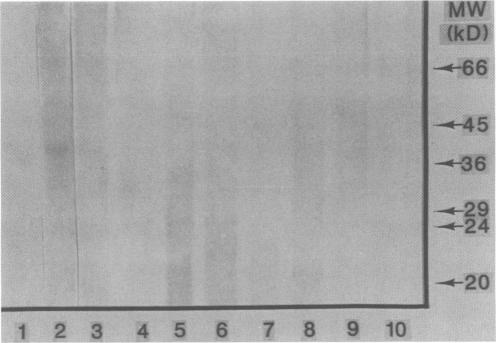
The serologic response to Sporothrix schenckii was investigated in patients with sporotrichosis by solid-phase enzyme-linked immunosorbent assays (ELISAs) and Western immunoblot techniques. A soluble antigen preparation derived from an S. schenckii isolate contained 15 protein staining components ranging in molecular size from 22 to 70 kilodaltons (kDa) by sodium dodecyl sulfate-polyacrylamide gel electrophoresis. Sera from 40 patients with sporotrichosis demonstrated Sporothrix immunoglobulin G antibody by ELISA with titers between 128 and 65,200. No sera from 300 healthy individuals or 100 patients with various systemic mycoses other than sporotrichosis had ELISA titers greater than 64. By Western immunoblotting of the antigens separated by sodium dodecyl sulfate-polyacrylamide gel electrophoresis, sera from 10 patients with cutaneous sporotrichosis reacted with 8 to 10 antigen components (range, 40 to 70 kDa), while sera from 15 patients with extracutaneous sporotrichosis reacted with a greater number of antigen components (15 to 20 bands) over a wider range of molecular sizes (22 to 70 kDa). Antibody to 40- and 70-kDa antigen components was detected by immunoblots in all sera tested from patients with sporotrichosis. Antibody to 22- to 36-kDa antigen components was present in sera from 13 of 15 patients with extracutaneous sporotrichosis, but these lower-molecular-weight components were not detected by sera from patients with cutaneous sporotrichosis. Antibody to these components was not detected by Western blotting in sera from 19 of 20 patients with other fungal diseases or from 30 healthy individuals. Purification of these specific antigen fractions could provide the basis of a sensitive and specific serodiagnostic test to indicate the presence and activity of extracutaneous sporotrichosis.
通过固相酶联免疫吸附测定(ELISA)和Western免疫印迹技术,对孢子丝菌病患者针对申克孢子丝菌的血清学反应进行了研究。一种源自申克孢子丝菌分离株的可溶性抗原制剂,经十二烷基硫酸钠-聚丙烯酰胺凝胶电泳显示,含有15种蛋白染色成分,分子大小在22至70千道尔顿(kDa)之间。40例孢子丝菌病患者的血清通过ELISA检测显示有孢子丝菌免疫球蛋白G抗体,滴度在128至65,200之间。300名健康个体或100例除孢子丝菌病外患有各种系统性真菌病的患者的血清中,ELISA滴度均未超过64。通过对经十二烷基硫酸钠-聚丙烯酰胺凝胶电泳分离的抗原进行Western免疫印迹分析,10例皮肤孢子丝菌病患者的血清与8至10种抗原成分(范围为40至70 kDa)发生反应,而15例皮肤外孢子丝菌病患者的血清与更多数量的抗原成分(15至20条带)发生反应,分子大小范围更广(22至70 kDa)。在所有检测的孢子丝菌病患者血清中,通过免疫印迹检测到针对40 kDa和70 kDa抗原成分的抗体。15例皮肤外孢子丝菌病患者中有13例的血清中存在针对22至36 kDa抗原成分的抗体,但皮肤孢子丝菌病患者的血清未检测到这些低分子量成分。在20例患有其他真菌病的患者中的19例或30名健康个体的血清中,通过Western印迹未检测到针对这些成分的抗体。纯化这些特定的抗原组分可为一种灵敏且特异的血清学诊断试验提供基础,以指示皮肤外孢子丝菌病的存在和活性。