University of Toronto, 1 King's College Circle, Medical Sciences Building, Toronto, ON, M5S 1A8, Canada.
UNDP/UNFPA/UNICEF/WHO/World Bank Special Programme of Research, Development and Research Training in Human Reproduction (HRP), Department of Reproductive Health and Research, World Health Organization, Headquarters, 20 Avenue Appia, 1211, Geneva, Switzerland.
Reprod Health. 2017 Nov 21;14(1):153. doi: 10.1186/s12978-017-0405-3.
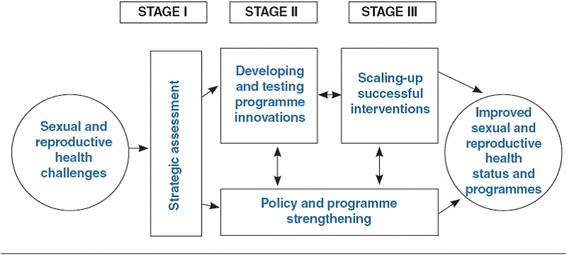
We conducted a process evaluation to assess how the World Health Organization's (WHO) Strategic Approach to strengthening sexual and reproductive health policies and programs ("the SA") was used in 15 countries that requested WHO's technical support in addressing unintended pregnancy and unsafe abortion. The SA is a three-stage planning, policy, and program implementation process. We used the social ecological model (SEM) to analyze the contextual factors that influenced SA implementation.
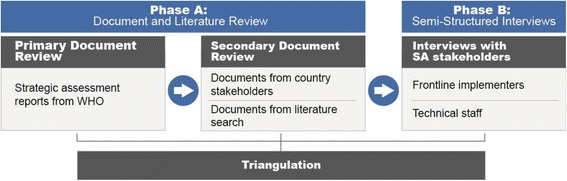
We used a two-phased sequential approach to data collection and analysis. In Phase A, we conducted a document and literature review and synthesized data thematically. In Phase B, we conducted interviews with stakeholders who used the SA in the countries of interest. We used a qualitative method triangulation technique to analyze and combine data from both phases to understand how the SA was implemented in each country.
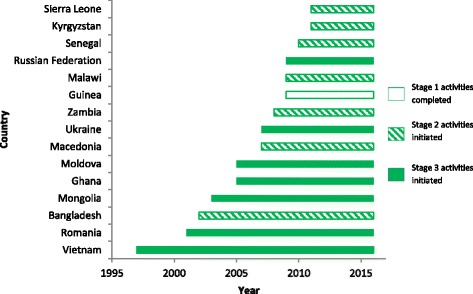
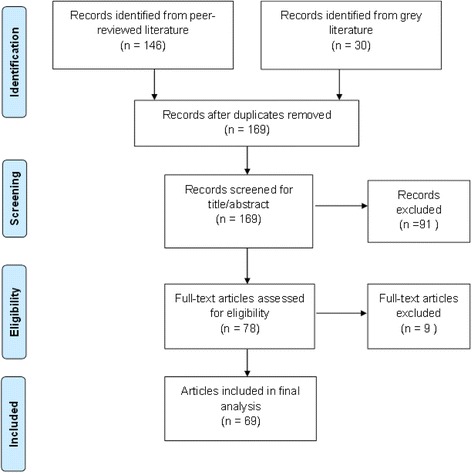
Data from 145 documents and 19 interviews described the SA process and activities in each country. All 15 countries completed Stage 1 activities. The activities of Stage 1 determined activities in subsequent stages and varied across countries. Following Stage 1, some countries focused on reforming policies to improve access to sexual and reproductive health (SRH) services whereas others focused on improving provider-level capacity to enhance SRH service quality and improving community-level SRH education. We identified factors across SEM levels that affected SA implementation, including individual- and community-level perceptions of using the SA and the recommendations that emerged from its use, organizational capacity to conduct SA activities, and how well these activities aligned with the existing political climate. Stakeholders perceived SA implementation to be country-driven and systematic in bringing attention to important SRH issues in their countries.
We identified key success factors for influencing the individual, organization, and system change required for implementing the SA. These include sustaining stakeholder engagement for all SA stages, monitoring and reporting on activities, and leveraging activities and outputs from each SA stage to obtain technical and financial support for subsequent stages. Results may be used to optimize ongoing implementation efforts to improve access to and the quality of SRH services.
我们进行了一项过程评估,以评估世界卫生组织(WHO)加强性健康和生殖健康政策和规划的战略方法(“SA”)在 15 个请求世卫组织提供技术支持以解决意外怀孕和不安全堕胎问题的国家中的使用情况。SA 是一个分三个阶段进行规划、政策和方案执行的过程。我们使用社会生态模型(SEM)来分析影响 SA 执行的背景因素。
我们采用了两阶段顺序数据收集和分析方法。在 A 阶段,我们进行了文件和文献综述,并对数据进行了主题分析。在 B 阶段,我们对在感兴趣的国家使用 SA 的利益相关者进行了访谈。我们使用定性方法三角分析技术来分析和结合两个阶段的数据,以了解 SA 在每个国家的执行情况。
来自 145 份文件和 19 次访谈的数据描述了每个国家的 SA 过程和活动。所有 15 个国家都完成了第一阶段的活动。第一阶段的活动决定了后续阶段的活动,并且在各国之间存在差异。在第一阶段之后,一些国家专注于改革政策以改善获得性和生殖健康(SRH)服务的机会,而另一些国家则专注于提高提供者一级的能力,以提高 SRH 服务质量并改善社区一级的 SRH 教育。我们确定了影响 SA 执行的 SEM 各级别的因素,包括个人和社区对使用 SA 的看法以及使用 SA 提出的建议、开展 SA 活动的组织能力以及这些活动与现有政治环境的契合程度。利益相关者认为 SA 的执行是由国家驱动的,并且系统地关注了各国的重要性健康问题。
我们确定了影响实施 SA 所需的个人、组织和系统变革的关键成功因素。这些因素包括为所有 SA 阶段保持利益相关者的参与、对活动进行监测和报告,以及利用每个 SA 阶段的活动和产出为后续阶段获得技术和资金支持。结果可用于优化正在进行的实施工作,以改善性健康和生殖健康服务的获取和质量。