Zhang Shengping, Xu Yafei, Hui Xinjie, Yang Fei, Hu Yueming, Shao Jianlin, Liang Hui, Wang Yejun
Dept. Surgical Urology, The Affiliated Longhua District People's Hospital of Southern Medical University, Shenzhen 518109, China.
Dept. Cell Biology and Genetics, Shenzhen University Health Science Center, Shenzhen 518060, China.
J Cancer. 2017 Sep 15;8(16):3261-3267. doi: 10.7150/jca.21261. eCollection 2017.
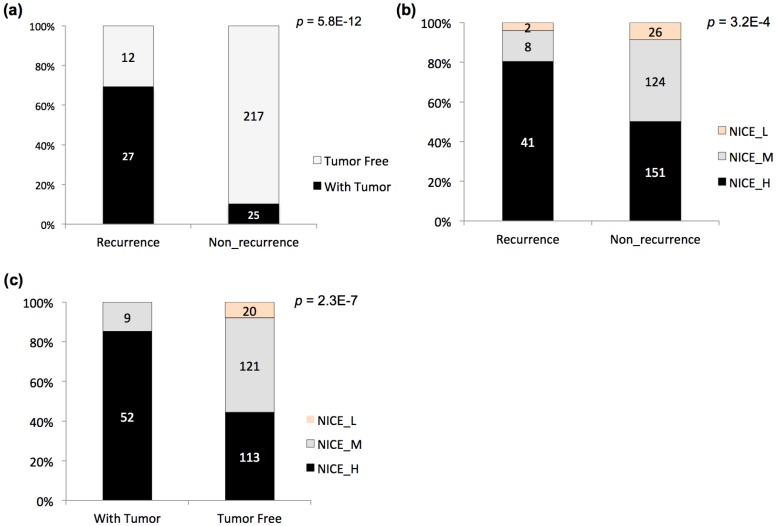
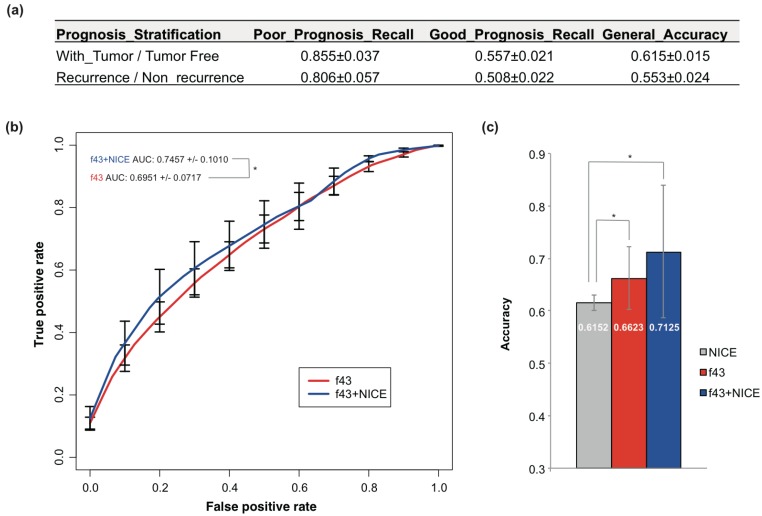
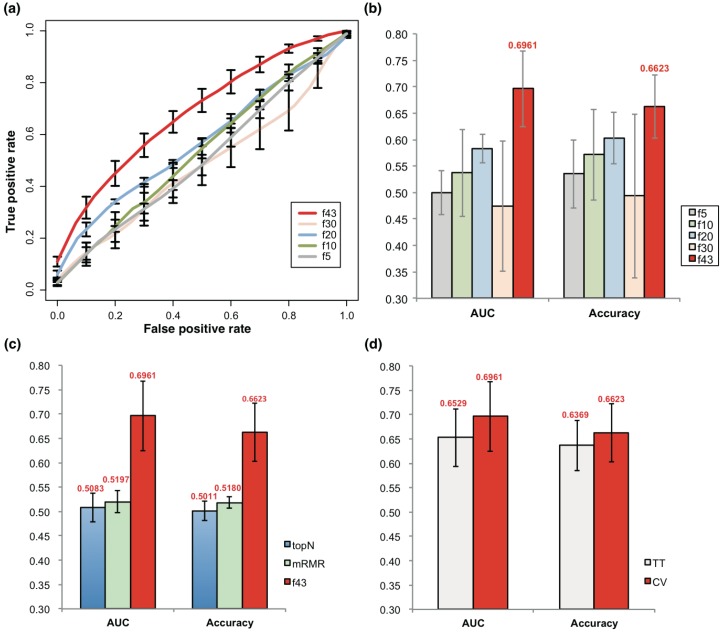
Prostate cancer is a leading male malignancy worldwide, while the prognosis prediction remains quite inaccurate. The study aimed to observe whether there was an association between the prognosis of prostate cancer and genetic mutation profile, and to build an accurate prognostic predictor based on the genetic signatures. The patients diagnosed of prostate cancer from The Cancer Genomic Atlas were used for prognostic stratification, while the somatic gene mutation profiles were compared between different prognostic groups. The genetic features were further used for training machine-learning models to predict prostate cancer prognosis. No significant gene with somatic mutation rate difference was found between prognostic groups of prostate cancer. Total 43 atypical genes were screened for building a support vector machine model to predict prostate cancer prognosis, with an average accuracy of 66% and 64% for 5-fold cross-validation or training-testing evaluation respectively. When combined with the National Institute for Health and Care Excellence (NICE) features, the model could be further improved, with the 5-fold cross-validation accuracy of ~71%, much better than NICE itself (62%). To our knowledge, for the first time, the research studied the relationship of genome-wide somatic mutations with prostate prognosis, and developed an effective prognostic prediction model with the atypical genetic signatures.
前列腺癌是全球主要的男性恶性肿瘤,但其预后预测仍然相当不准确。该研究旨在观察前列腺癌预后与基因突变谱之间是否存在关联,并基于基因特征建立准确的预后预测模型。来自癌症基因组图谱中被诊断为前列腺癌的患者用于预后分层,同时比较不同预后组之间的体细胞基因突变谱。基因特征进一步用于训练机器学习模型以预测前列腺癌预后。在前列腺癌的预后组之间未发现体细胞突变率有差异的显著基因。总共筛选出43个非典型基因用于构建支持向量机模型以预测前列腺癌预后,5折交叉验证或训练-测试评估的平均准确率分别为66%和64%。当与英国国家卫生与临床优化研究所(NICE)的特征相结合时,该模型可进一步改进,5折交叉验证准确率约为71%,远优于NICE本身(62%)。据我们所知,该研究首次研究了全基因组体细胞突变与前列腺预后的关系,并开发了具有非典型基因特征的有效预后预测模型。