Department of Pharmacology, Stony Brook University School of Medicine, Stony Brook, NY 11794-8651, USA.
Division of Infectious Diseases, Department of Medicine, Northwestern University, Chicago, IL 60611, USA.
Cells. 2019 Sep 3;8(9):1027. doi: 10.3390/cells8091027.
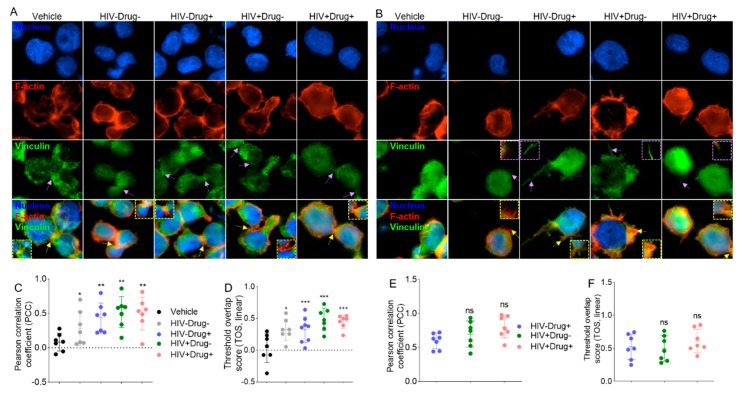
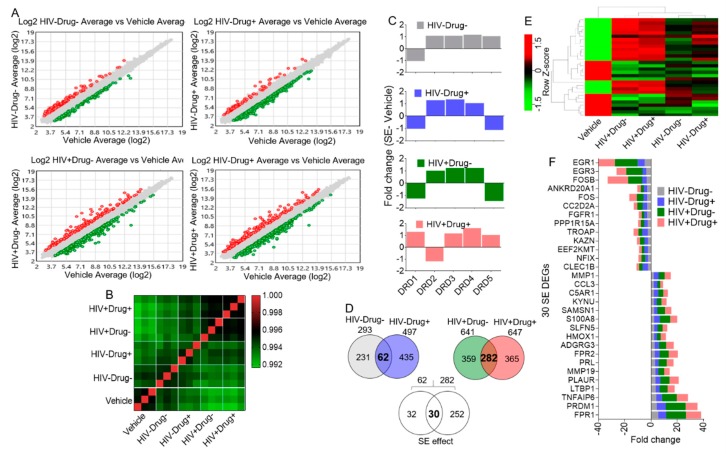
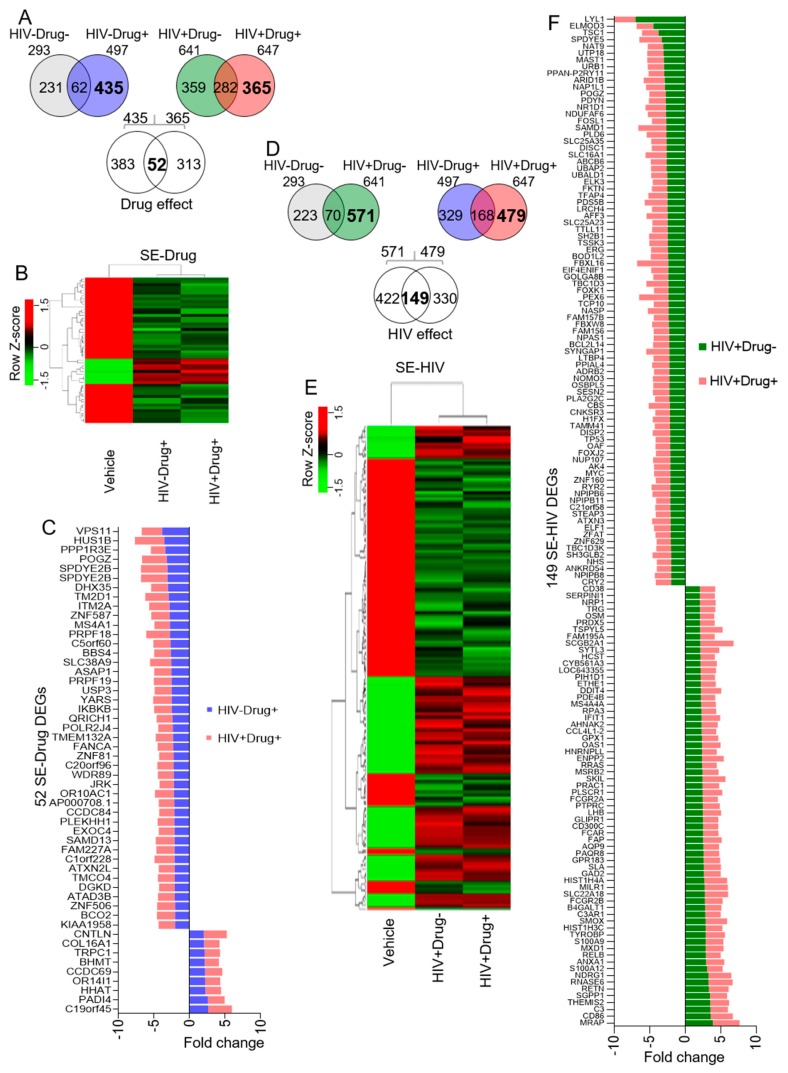
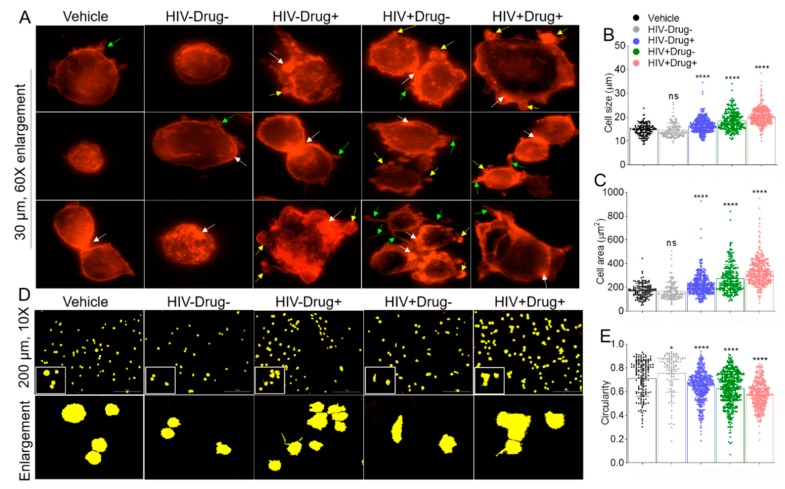
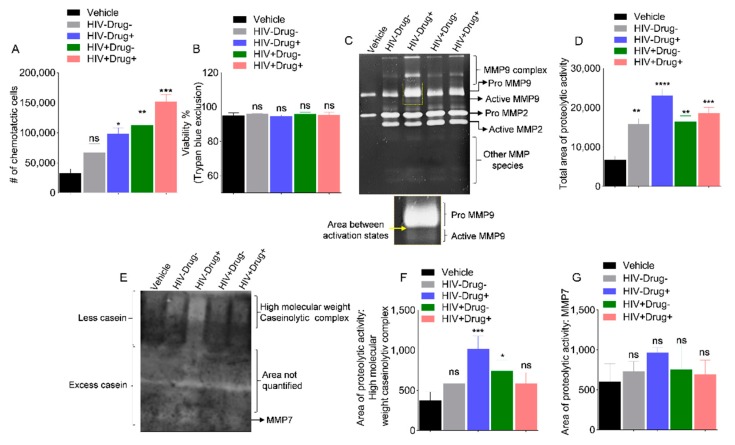
Semen exosomes (SE) from HIV-uninfected (HIV-) individuals potently inhibit HIV infection in vitro. However, morphological changes in target cells in response to SE have not been characterized or have the effect of HIV infection or the use of illicit substances, specifically psychostimulants, on the function of SE been elucidated. The objective of this study was to evaluate the effect of HIV infection, psychostimulant use, and both together on SE-mediated regulation of monocyte function. SE were isolated from semen of HIV- and HIV-infected (HIV+) antiretroviral therapy (ART)-naive participants who reported either using or not using psychostimulants. The SE samples were thus designated as HIV-Drug-, HIV-Drug+, HIV+Drug-, and HIV+Drug+. U937 monocytes were treated with different SEs and analyzed for changes in transcriptome, morphometrics, actin reorganization, adhesion, and chemotaxis. HIV infection and/or use of psychostimulants had minimal effects on the physical characteristics of SE. However, different SEs had diverse effects on the messenger RNA signature of monocytes and rapidly induced monocyte adhesion and spreading. SE from HIV infected or psychostimulants users but not HIV-Drug- SE, stimulated actin reorganization, leading to the formation of filopodia-like structures and membrane ruffles containing F-actin and vinculin that in some cases were colocalized. All SE stimulated monocyte chemotaxis to HIV secretome and activated the secretion of matrix metalloproteinases, a phenotype exacerbated by HIV infection and psychostimulant use. SE-directed regulation of cellular morphometrics and chemotaxis depended on the donor clinical status because HIV infection and psychostimulant use altered SE function. Although our inclusion criteria specified the use of cocaine, humans are poly-drug and alcohol users and our study participants used psychostimulants, marijuana, opiates, and alcohol. Thus, it is possible that the effects observed in this study may be due to one of these other substances or due to an interaction between different substances.
来自未感染 HIV(HIV-)个体的精液外泌体(SE)在体外能有效抑制 HIV 感染。然而,针对 SE 作用下靶细胞的形态变化尚未得到描述,也未阐明 HIV 感染或使用非法物质(特别是兴奋剂)对 SE 功能的影响。本研究旨在评估 HIV 感染、兴奋剂使用及其共同作用对 SE 介导的单核细胞功能调节的影响。SE 从接受抗逆转录病毒治疗(ART)的 HIV-和 HIV 感染(HIV+)的初治参与者的精液中分离,这些参与者报告称使用或未使用兴奋剂。因此,将 SE 样本指定为 HIV-Drug-、HIV-Drug+、HIV+Drug-和 HIV+Drug+。用不同的 SE 处理 U937 单核细胞,并分析其转录组、形态计量学、肌动蛋白重组、黏附和趋化的变化。HIV 感染和/或兴奋剂的使用对 SE 的物理特性几乎没有影响。然而,不同的 SE 对单核细胞的信使 RNA 特征有不同的影响,并能迅速诱导单核细胞黏附和铺展。来自 HIV 感染或兴奋剂使用者的 SE,但不是 HIV-Drug-SE,刺激肌动蛋白重组,导致形成含有 F-肌动蛋白和纽蛋白的丝状伪足样结构和膜皱褶,在某些情况下这些结构和皱褶发生共定位。所有 SE 均刺激单核细胞向 HIV 分泌组趋化,并激活基质金属蛋白酶的分泌,HIV 感染和兴奋剂使用使这种表型恶化。SE 对细胞形态计量和趋化的定向调节取决于供体的临床状况,因为 HIV 感染和兴奋剂使用改变了 SE 的功能。尽管我们的纳入标准指定使用可卡因,但人类是多种药物和酒精的使用者,并且我们的研究参与者使用了兴奋剂、大麻、阿片类药物和酒精。因此,在本研究中观察到的效果可能是由于其中一种物质或由于不同物质之间的相互作用所致。