Department of Biological Sciences, University of Toronto Scarborough, Toronto, Canada.
Department of Cell and Systems Biology, University of Toronto, Toronto, Canada.
Elife. 2017 Dec 5;6:e22901. doi: 10.7554/eLife.22901.
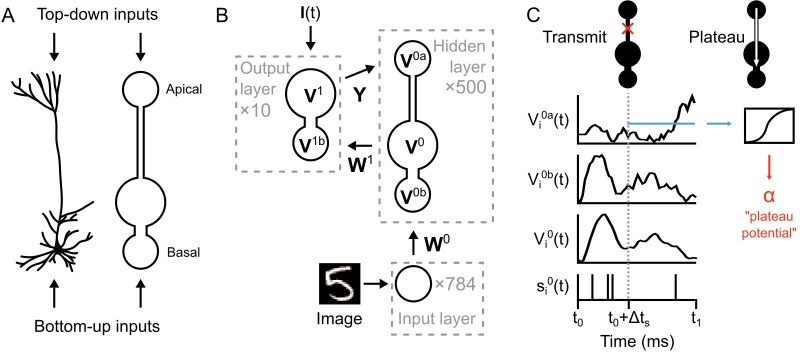
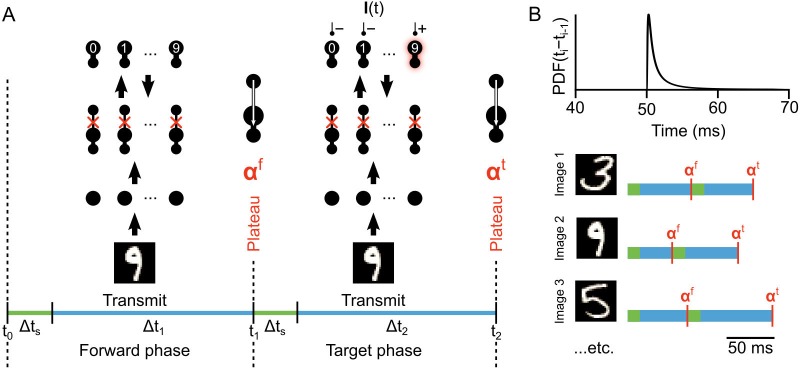
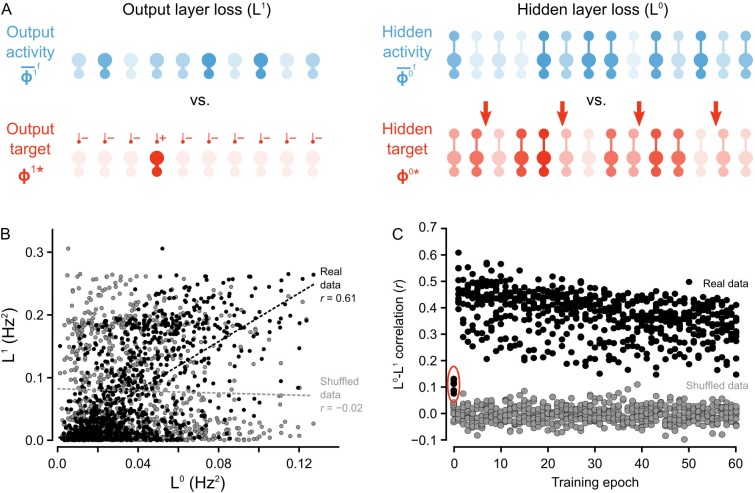
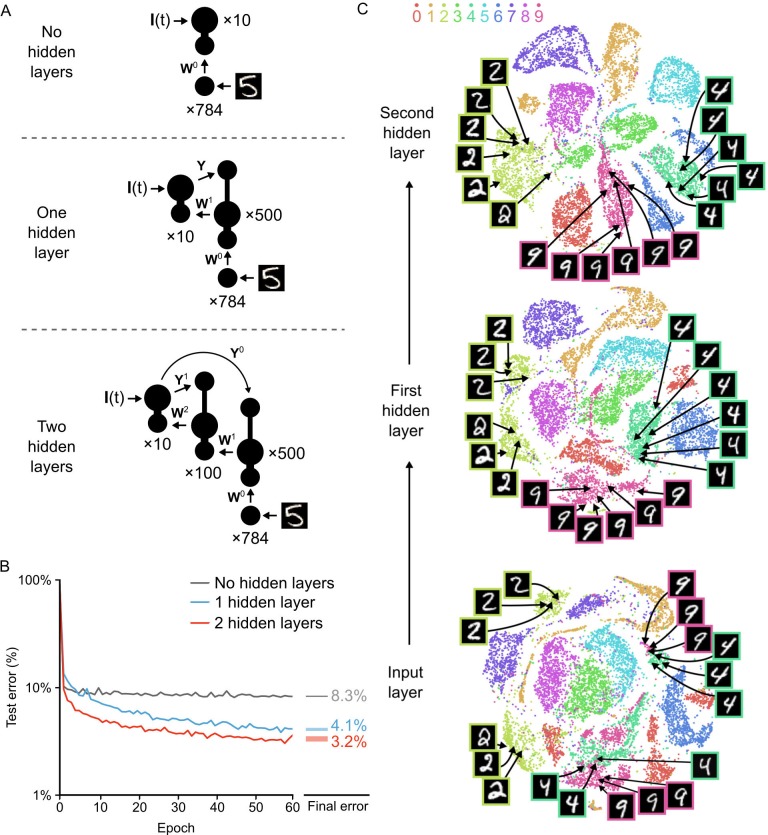
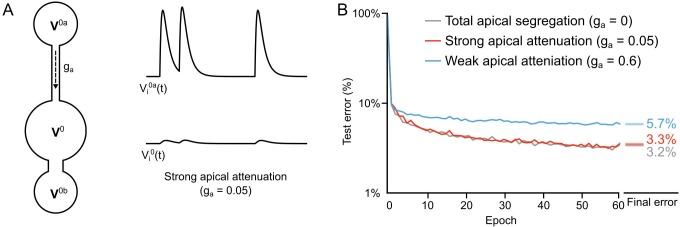
Deep learning has led to significant advances in artificial intelligence, in part, by adopting strategies motivated by neurophysiology. However, it is unclear whether deep learning could occur in the real brain. Here, we show that a deep learning algorithm that utilizes multi-compartment neurons might help us to understand how the neocortex optimizes cost functions. Like neocortical pyramidal neurons, neurons in our model receive sensory information and higher-order feedback in electrotonically segregated compartments. Thanks to this segregation, neurons in different layers of the network can coordinate synaptic weight updates. As a result, the network learns to categorize images better than a single layer network. Furthermore, we show that our algorithm takes advantage of multilayer architectures to identify useful higher-order representations-the hallmark of deep learning. This work demonstrates that deep learning can be achieved using segregated dendritic compartments, which may help to explain the morphology of neocortical pyramidal neurons.
深度学习在人工智能领域取得了重大进展,部分原因是采用了受神经生理学启发的策略。然而,目前尚不清楚深度学习是否可能在真实的大脑中发生。在这里,我们表明,一种利用多隔间神经元的深度学习算法可能有助于我们理解大脑新皮层如何优化成本函数。与大脑新皮层中的锥体细胞类似,我们模型中的神经元在电隔离的隔间中接收感觉信息和高阶反馈。由于这种隔离,网络中不同层的神经元可以协调突触权重更新。因此,该网络学会了比单层网络更好地对图像进行分类。此外,我们还表明,我们的算法利用多层架构来识别有用的高阶表示——这是深度学习的标志。这项工作表明,使用隔离的树突隔间可以实现深度学习,这可能有助于解释大脑新皮层锥体细胞的形态。