Bansal Vikas, Gassenhuber Johann, Phillips Tierney, Oliveira Glenn, Harbaugh Rebecca, Villarasa Nikki, Topol Eric J, Seufferlein Thomas, Boehm Bernhard O
Department of Pediatrics, University of California San Diego, La Jolla, CA, USA.
Sanofi-Aventis Germany GmbH, Frankfurt am Main, Germany.
BMC Med. 2017 Dec 6;15(1):213. doi: 10.1186/s12916-017-0977-3.
Diagnosis of monogenic as well as atypical forms of diabetes mellitus has important clinical implications for their specific diagnosis, prognosis, and targeted treatment. Single gene mutations that affect beta-cell function represent 1-2% of all cases of diabetes. However, phenotypic heterogeneity and lack of family history of diabetes can limit the diagnosis of monogenic forms of diabetes. Next-generation sequencing technologies provide an excellent opportunity to screen large numbers of individuals with a diagnosis of diabetes for mutations in disease-associated genes.
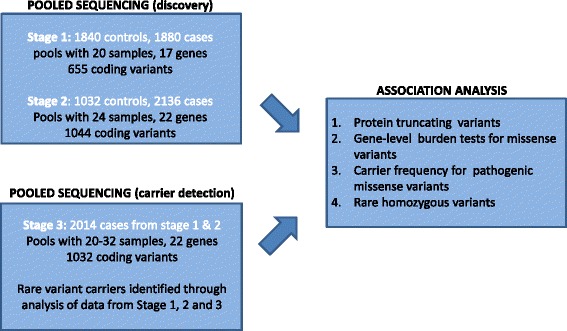
We utilized a targeted sequencing approach using the Illumina HiSeq to perform a case-control sequencing study of 22 monogenic diabetes genes in 4016 individuals with type 2 diabetes (including 1346 individuals diagnosed before the age of 40 years) and 2872 controls. We analyzed protein-coding variants identified from the sequence data and compared the frequencies of pathogenic variants (protein-truncating variants and missense variants) between the cases and controls.
A total of 40 individuals with diabetes (1.8% of early onset sub-group and 0.6% of adult onset sub-group) were carriers of known pathogenic missense variants in the GCK, HNF1A, HNF4A, ABCC8, and INS genes. In addition, heterozygous protein truncating mutations were detected in the GCK, HNF1A, and HNF1B genes in seven individuals with diabetes. Rare missense mutations in the GCK gene were significantly over-represented in individuals with diabetes (0.5% carrier frequency) compared to controls (0.035%). One individual with early onset diabetes was homozygous for a rare pathogenic missense variant in the WFS1 gene but did not have the additional phenotypes associated with Wolfram syndrome.
Targeted sequencing of genes linked with monogenic diabetes can identify disease-relevant mutations in individuals diagnosed with type 2 diabetes not suspected of having monogenic forms of the disease. Our data suggests that GCK-MODY frequently masquerades as classical type 2 diabetes. The results confirm that MODY is under-diagnosed, particularly in individuals presenting with early onset diabetes and clinically labeled as type 2 diabetes; thus, sequencing of all monogenic diabetes genes should be routinely considered in such individuals. Genetic information can provide a specific diagnosis, inform disease prognosis and may help to better stratify treatment plans.
单基因及非典型糖尿病的诊断对于其特定诊断、预后及靶向治疗具有重要临床意义。影响β细胞功能的单基因突变占所有糖尿病病例的1%-2%。然而,表型异质性及缺乏糖尿病家族史会限制单基因糖尿病的诊断。新一代测序技术为筛查大量糖尿病患者疾病相关基因的突变提供了绝佳机会。
我们采用靶向测序方法,利用Illumina HiSeq对4016例2型糖尿病患者(包括1346例40岁前确诊的患者)和2872例对照进行22个单基因糖尿病基因的病例对照测序研究。我们分析了从序列数据中鉴定出的蛋白质编码变异,并比较了病例组和对照组中致病变异(蛋白质截断变异和错义变异)的频率。
共有40例糖尿病患者(早发亚组的1.8%和成年发病亚组的0.6%)是GCK、HNF1A、HNF4A、ABCC8和INS基因中已知致病性错义变异的携带者。此外,在7例糖尿病患者的GCK、HNF1A和HNF1B基因中检测到杂合性蛋白质截断突变。与对照组(0.035%)相比,GCK基因中的罕见错义突变在糖尿病患者中显著富集(携带者频率为0.5%)。1例早发糖尿病患者在WFS1基因中为罕见致病性错义变异的纯合子,但不具有与沃夫勒姆综合征相关的其他表型。
对与单基因糖尿病相关的基因进行靶向测序可以在被诊断为2型糖尿病但未怀疑患有单基因形式疾病的个体中识别出与疾病相关的突变。我们的数据表明,GCK-MODY常伪装成经典2型糖尿病。结果证实,MODY诊断不足,尤其是在早发糖尿病且临床诊断为2型糖尿病的个体中;因此,对于此类个体应常规考虑对所有单基因糖尿病基因进行测序。遗传信息可以提供特定诊断,为疾病预后提供参考,并可能有助于更好地分层治疗方案。