Mallinger Rachel E, Gaines-Day Hannah R, Gratton Claudio
Department of Entomology, University of Wisconsin-Madison, Madison, Wisconsin, United States of America.
PLoS One. 2017 Dec 8;12(12):e0189268. doi: 10.1371/journal.pone.0189268. eCollection 2017.
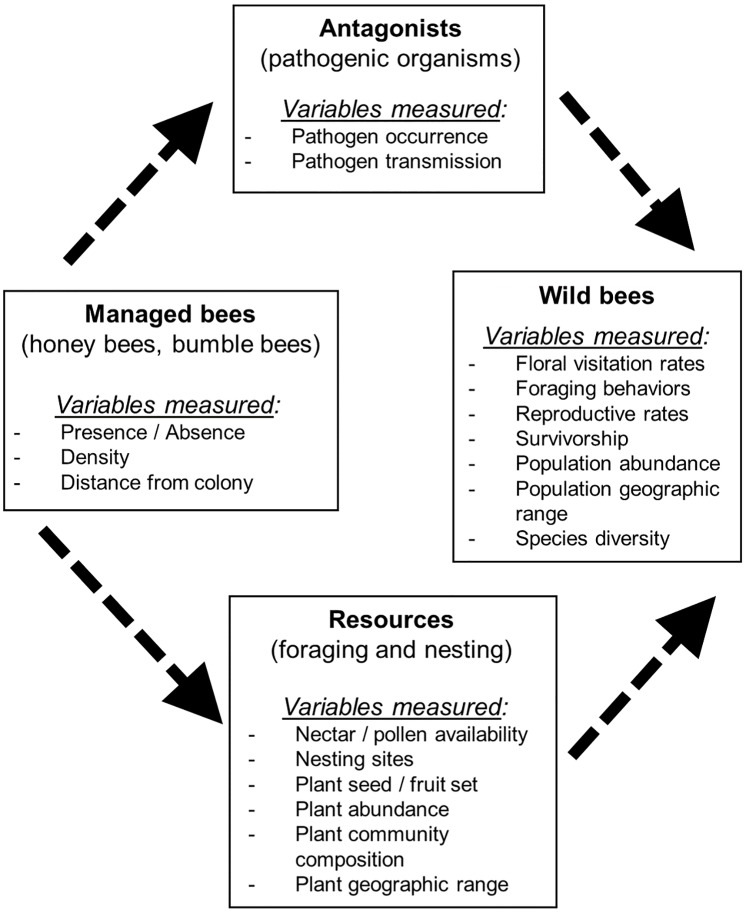
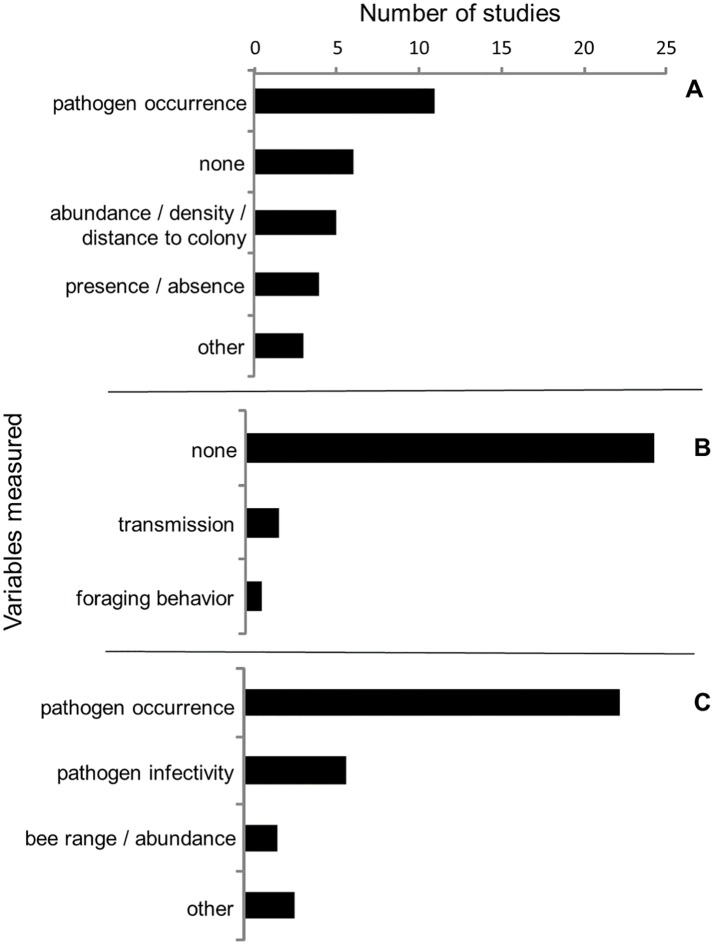
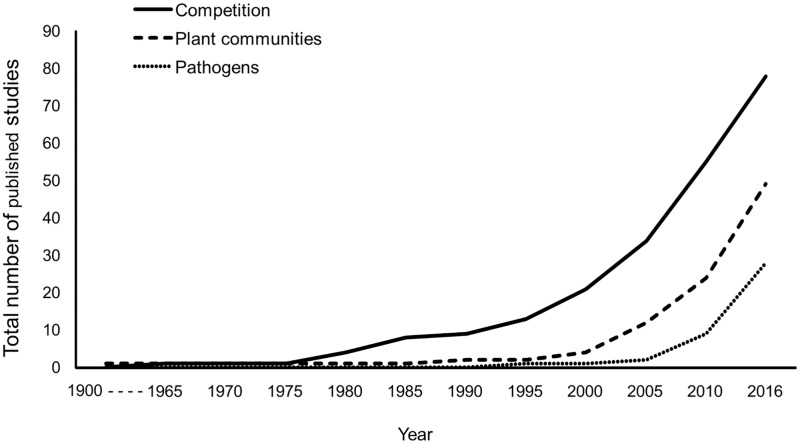
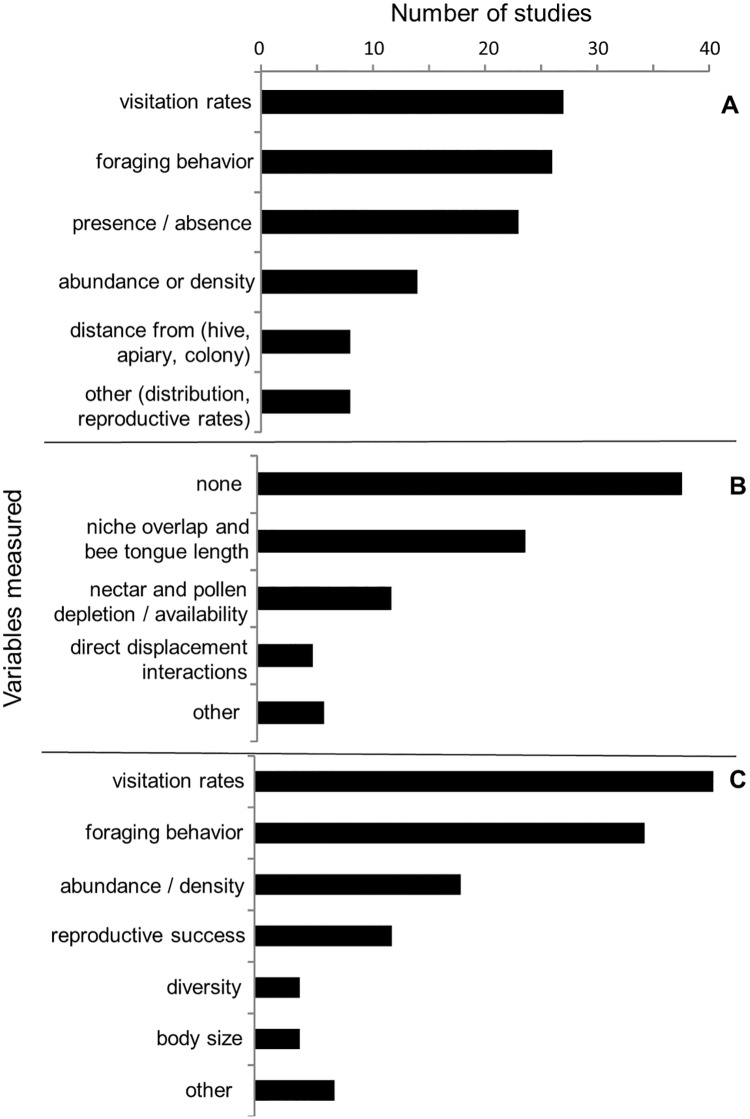
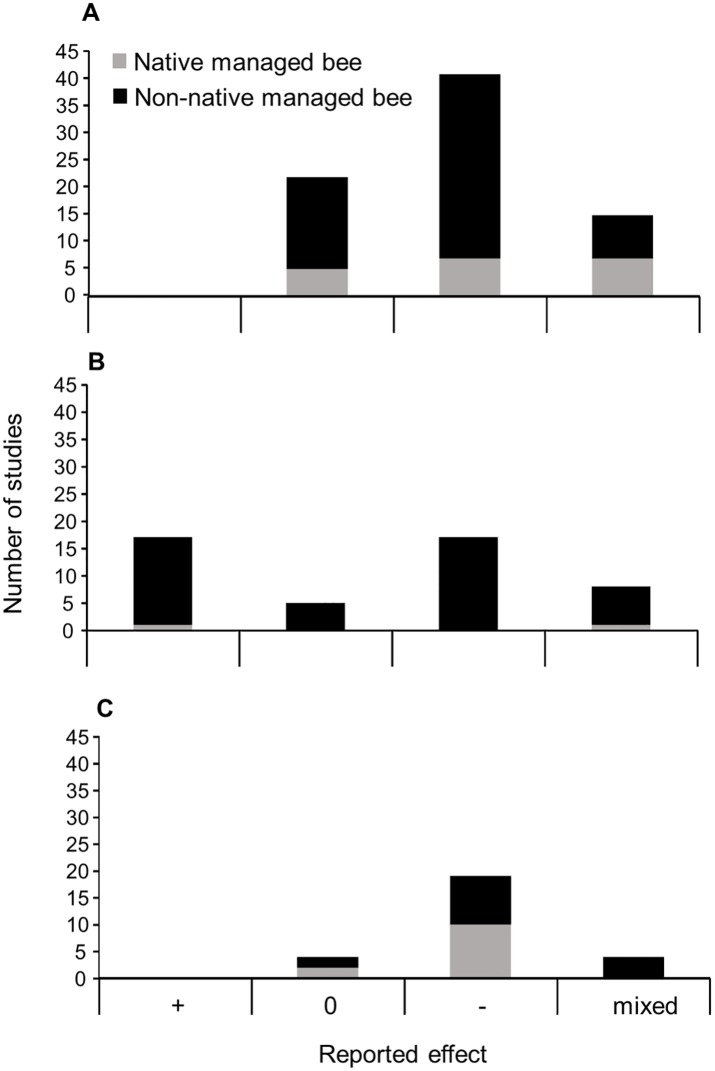
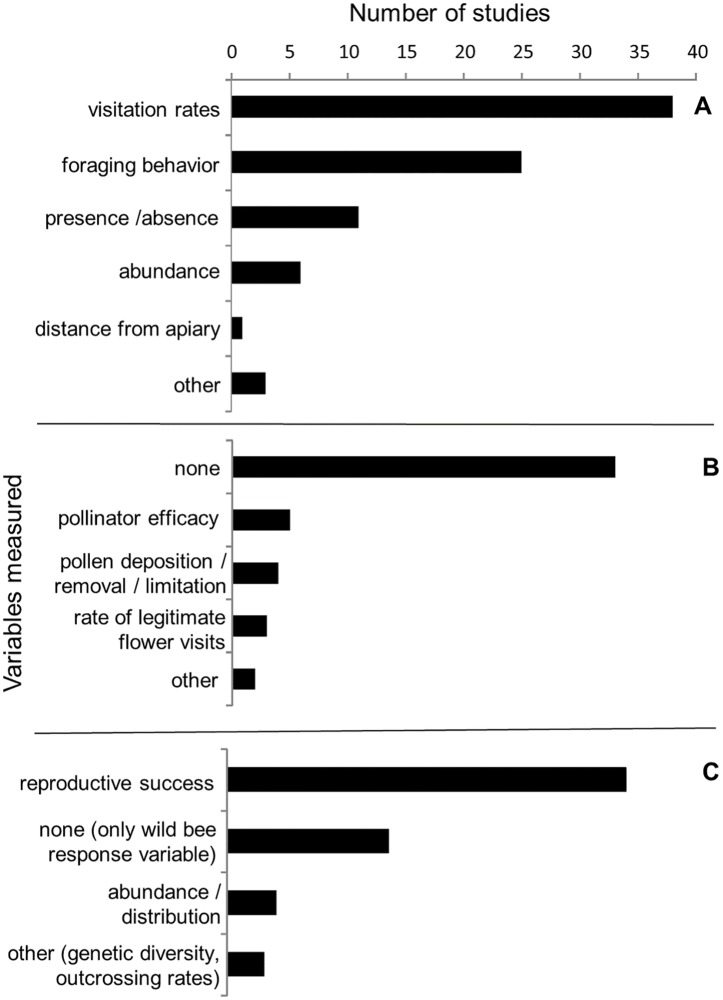
Managed bees are critical for crop pollination worldwide. As the demand for pollinator-dependent crops increases, so does the use of managed bees. Concern has arisen that managed bees may have unintended negative impacts on native wild bees, which are important pollinators in both agricultural and natural ecosystems. The goal of this study was to synthesize the literature documenting the effects of managed honey bees and bumble bees on wild bees in three areas: (1) competition for floral and nesting resources, (2) indirect effects via changes in plant communities, including the spread of exotic plants and decline of native plants, and (3) transmission of pathogens. The majority of reviewed studies reported negative effects of managed bees, but trends differed across topical areas. Of studies examining competition, results were highly variable with 53% reporting negative effects on wild bees, while 28% reported no effects and 19% reported mixed effects (varying with the bee species or variables examined). Equal numbers of studies examining plant communities reported positive (36%) and negative (36%) effects, with the remainder reporting no or mixed effects. Finally, the majority of studies on pathogen transmission (70%) reported potential negative effects of managed bees on wild bees. However, most studies across all topical areas documented the potential for impact (e.g. reporting the occurrence of competition or pathogens), but did not measure direct effects on wild bee fitness, abundance, or diversity. Furthermore, we found that results varied depending on whether managed bees were in their native or non-native range; managed bees within their native range had lesser competitive effects, but potentially greater effects on wild bees via pathogen transmission. We conclude that while this field has expanded considerably in recent decades, additional research measuring direct, long-term, and population-level effects of managed bees is needed to understand their potential impact on wild bees.
在全球范围内,人工饲养的蜜蜂对农作物授粉至关重要。随着对依赖传粉者的作物需求增加,人工饲养蜜蜂的使用也在增加。人们担心人工饲养的蜜蜂可能会对本地野生蜜蜂产生意想不到的负面影响,而本地野生蜜蜂在农业和自然生态系统中都是重要的传粉者。本研究的目的是综合文献,记录人工饲养的蜜蜂和熊蜂在三个方面对野生蜜蜂的影响:(1)对花蜜和筑巢资源的竞争;(2)通过植物群落变化产生的间接影响,包括外来植物的传播和本地植物的减少;(3)病原体的传播。大多数综述研究报告了人工饲养蜜蜂的负面影响,但不同主题领域的趋势有所不同。在研究竞争的研究中,结果差异很大,53%的研究报告对野生蜜蜂有负面影响,而28%的研究报告没有影响,19%的研究报告有混合影响(因所研究的蜜蜂种类或变量而异)。研究植物群落的研究中,报告积极影响(36%)和消极影响(36%)的数量相等,其余报告没有影响或有混合影响。最后,大多数关于病原体传播的研究(70%)报告了人工饲养蜜蜂对野生蜜蜂可能产生的负面影响。然而,所有主题领域的大多数研究都记录了影响的可能性(例如报告竞争或病原体的发生),但没有测量对野生蜜蜂健康、数量或多样性的直接影响。此外,我们发现结果因人工饲养的蜜蜂是在其原生范围还是非原生范围而异;在其原生范围内的人工饲养蜜蜂竞争影响较小,但通过病原体传播对野生蜜蜂的潜在影响可能更大。我们得出结论,虽然近几十年来这个领域有了很大的扩展,但仍需要更多研究来测量人工饲养蜜蜂的直接、长期和种群水平的影响,以了解它们对野生蜜蜂的潜在影响。