Rocha Valeria, Ladas Elena J, Lin Meiko, Cacciavillano Walter, Ginn Elizabeth, Kelly Kara M, Chantada Guillermo, Castillo Luis
Valeria Rocha and Luis Castillo, Centro Hospitalario Pereira Rossell, Montevideo, Uruguay; Elena J. Ladas, Meiko Lin, and Elizabeth Ginn, Columbia University Medical Center, New York; Kara M. Kelly, Roswell Park Cancer Center, Buffalo, NY; and Walter Cacciavillano and Guillermo Chantada, Hospital J.P. Garrahan, Buenos Aires, Argentina.
J Glob Oncol. 2017 Dec;3(6):701-710. doi: 10.1200/JGO.2016.006809. Epub 2017 Feb 8.
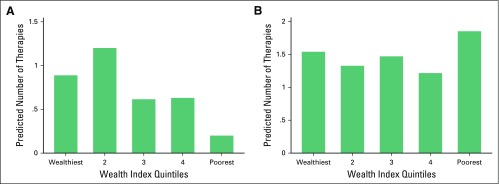
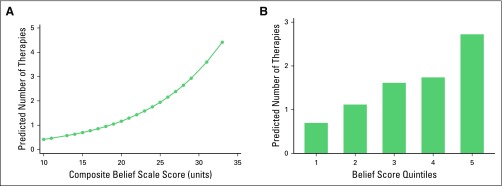
Purpose The use of traditional complementary/alternative medicine (TCAM) among children with cancer has been well documented. South America has a rich history of traditional healers and medicinal resources; however, little is known about the use of TCAM among children with cancer. We sought to investigate patterns, beliefs, and determinants of TCAM use among South American children with cancer. Methods A cross-sectional survey was administered to 199 children treated for cancer at institutions located in Buenos Aires, Argentina, and Montevideo, Uruguay. Participants were queried about the type of TCAM and strength of beliefs associated with its use. Logistic regression analysis was used to estimate the odds ratios with 95% CIs. Results We found that the use of TCAM was common in both Argentina (47%) and Uruguay (76%). Variations in the forms of TCAM used were observed between the countries; however, both countries used TCAM primarily for supportive care. Mother's education, wealth index, and TCAM belief system were significant predictors of TCAM. Conclusion To our knowledge, this study is the first to report on the use of TCAM in pediatric oncology in South America. The study identifies several predictors of TCAM use, which may serve as target variables for educational and research initiatives. The finding that most families use TCAM for supportive care suggests that future efforts could evaluate the role of TCAM to enhance existing supportive care regimens, particularly in settings where access to conventional medications are limited.
目的 癌症患儿使用传统补充/替代医学(TCAM)的情况已有充分记录。南美洲有着丰富的传统治疗师和药用资源历史;然而,对于癌症患儿使用TCAM的情况却知之甚少。我们试图调查南美洲癌症患儿使用TCAM的模式、信念及决定因素。方法 对阿根廷布宜诺斯艾利斯和乌拉圭蒙得维的亚各机构中接受癌症治疗的199名儿童进行了横断面调查。询问参与者关于TCAM的类型及其使用相关信念的强度。采用逻辑回归分析来估计比值比及95%置信区间。结果 我们发现,在阿根廷(47%)和乌拉圭(76%),TCAM的使用都很普遍。两国在使用的TCAM形式上存在差异;然而,两国使用TCAM主要是用于支持性护理。母亲的教育程度、财富指数和TCAM信念体系是TCAM使用的重要预测因素。结论 据我们所知,本研究是首次报道南美洲儿科肿瘤学中TCAM的使用情况。该研究确定了TCAM使用的几个预测因素,这些因素可作为教育和研究举措的目标变量。大多数家庭将TCAM用于支持性护理这一发现表明,未来的努力可以评估TCAM在加强现有支持性护理方案中的作用,特别是在获得常规药物有限的环境中。