Institute of Family Medicine, University of Fribourg, Route des Arsenaux 41, 1700, Fribourg, Switzerland.
Center for Primary Care and Public Health (Unisanté), University of Lausanne, Lausanne, Switzerland.
BMC Complement Med Ther. 2021 Mar 18;21(1):96. doi: 10.1186/s12906-021-03271-9.
The prevalence of complementary and alternative medicine (CAM) use and the modalities used by pediatric oncology patients vary widely across studies. In addition, the changes in the use of CAM over the course of treatment are understudied. Thus, this study aimed to explore (1) CAM use by pediatric oncology patients in relation to specific time intervals and (2) communication about CAM use between parents and oncologists.
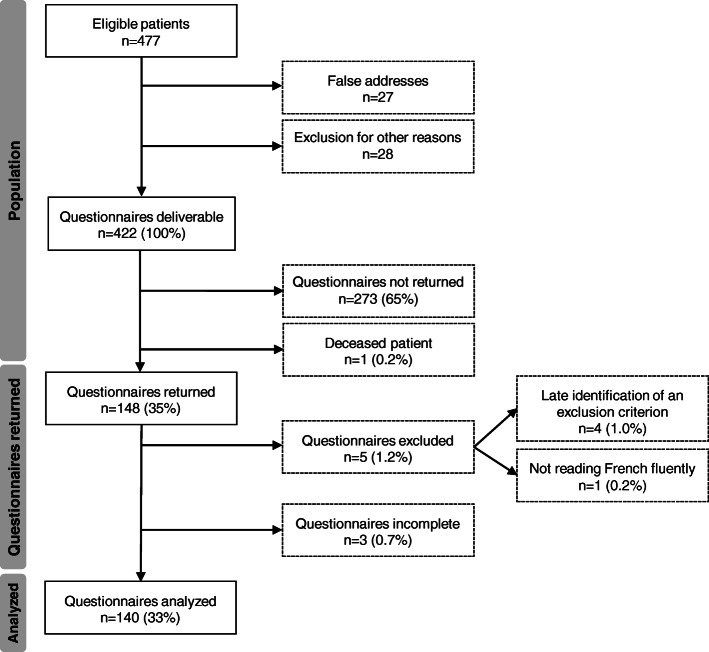
This retrospective cross-sectional study was conducted among parents of children diagnosed with cancer at a Swiss pediatric hematology-oncology center by means of an online questionnaire. Questions were related to their child's CAM use over different time intervals, sources of information about CAM use, and communication with the oncologists.
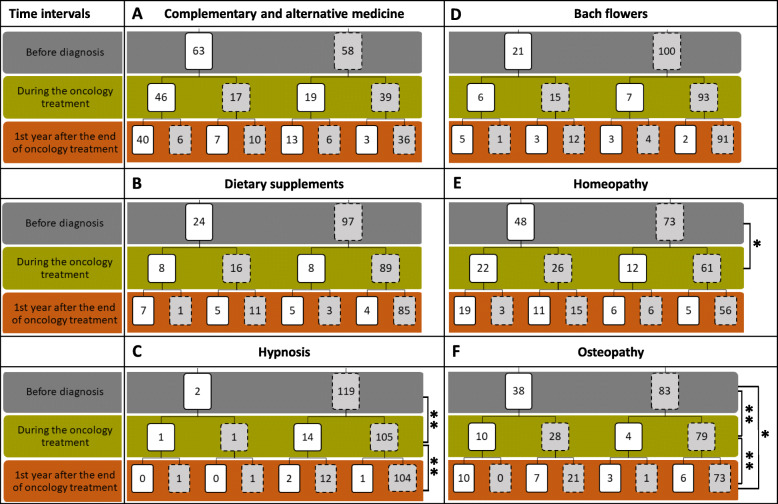
Among 140 respondents, CAM was used by 54.3% of patients before diagnosis and 69.3% of patients after diagnosis. During each defined time interval, between 50 and 58.8% of the patients used at least one CAM. Homeopathy was the most popular CAM modality used during oncology treatment, during the first year after treatment, and between 1 and 5 years after the end of treatment. Osteopathy was the most popular CAM ≥5 years after the end of oncology treatment. Forty percent of respondents did not discuss CAM with their oncologist.
The high prevalence of CAM use and the different trends of use during the oncology care pathway and afterward underline the need to increase communication about CAM in the pediatric oncology setting, notably regarding benefits and risks of interaction with oncology treatment.
在不同的研究中,儿童肿瘤患者使用补充和替代医学(CAM)的流行程度和使用方式差异很大。此外,CAM 的使用在治疗过程中的变化也研究不足。因此,本研究旨在探讨(1)儿科肿瘤患者在特定时间间隔内使用 CAM 的情况,以及(2)父母与肿瘤医生之间关于 CAM 使用的沟通情况。
本回顾性横断面研究通过在线问卷对瑞士一家儿科血液肿瘤中心的癌症患儿的父母进行。问题涉及他们的孩子在不同时间间隔内的 CAM 使用情况、CAM 使用信息来源以及与肿瘤医生的沟通情况。
在 140 名受访者中,54.3%的患者在诊断前和 69.3%的患者在诊断后使用了 CAM。在每个定义的时间间隔内,至少有 50-58.8%的患者使用了至少一种 CAM。顺势疗法是肿瘤治疗期间、治疗结束后第一年以及治疗结束后 1-5 年期间最受欢迎的 CAM 方式。在肿瘤治疗结束后≥5 年,整骨疗法是最受欢迎的 CAM。40%的受访者没有与肿瘤医生讨论过 CAM。
CAM 使用的高流行率以及在肿瘤治疗过程中和之后使用的不同趋势,突显了在儿科肿瘤环境中增加关于 CAM 的沟通的必要性,尤其是关于与肿瘤治疗相互作用的益处和风险的沟通。