Department of Psychiatry and Behavioral Sciences, Emory University, Atlanta, GA, United States.
Department of Biomedical Engineering, Case Western Reserve University, Cleveland, OH, United States.
Brain Stimul. 2018 Mar-Apr;11(2):445-453. doi: 10.1016/j.brs.2017.12.001. Epub 2017 Dec 6.
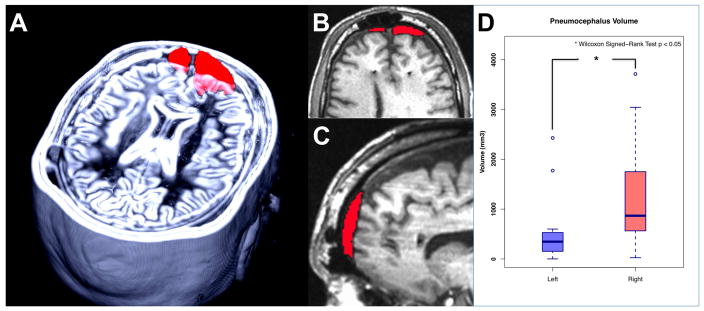
Deep brain stimulation (DBS) of the subcallosal cingulate (SCC) is an emerging experimental therapy for treatment-resistant depression. New developments in SCC DBS surgical targeting are focused on identifying specific axonal pathways for stimulation that are estimated from preoperatively collected diffusion-weighted imaging (DWI) data. However, brain shift induced by opening burr holes in the skull may alter the position of the target pathways.
Quantify the effect of electrode location deviations on tractographic representations for stimulating the target pathways using longitudinal clinical imaging datasets.
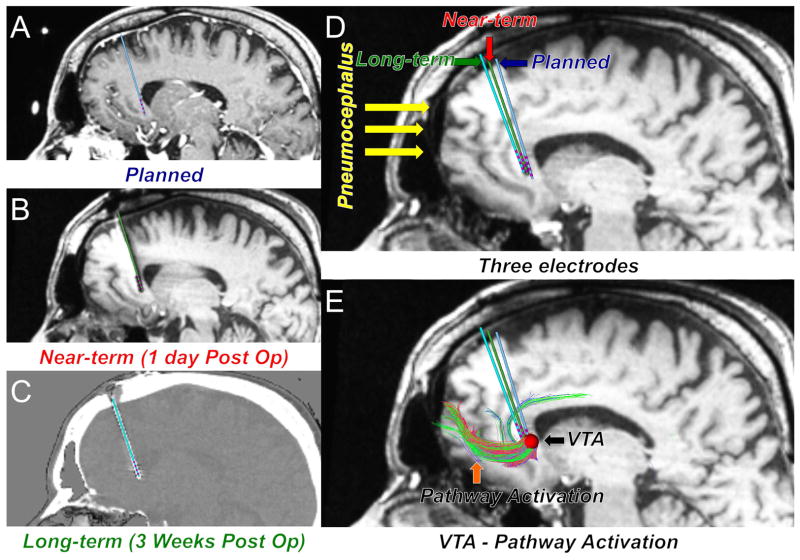
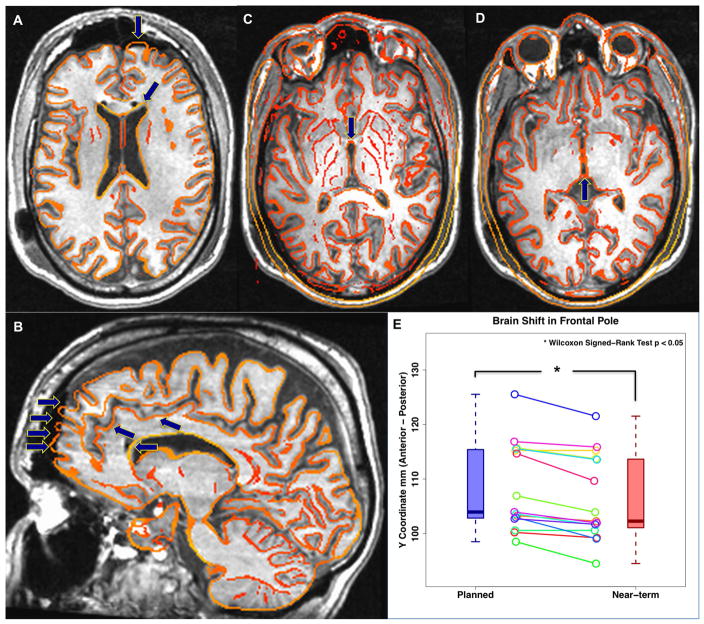
Preoperative MRI and DWI data (planned) were coregistered with postoperative MRI (1 day, near-term) and CT (3 weeks, long-term) data. Brain shift was measured with anatomical control points. Electrode models corresponding to the planned, near-term, and long-term locations were defined in each hemisphere of 15 patients. Tractography analyses were performed using estimated stimulation volumes as seeds centered on the different electrode positions.
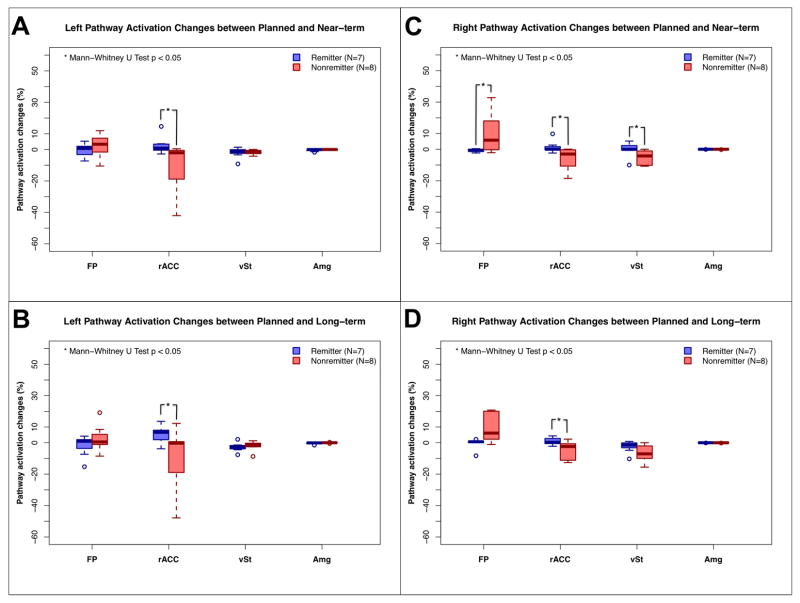
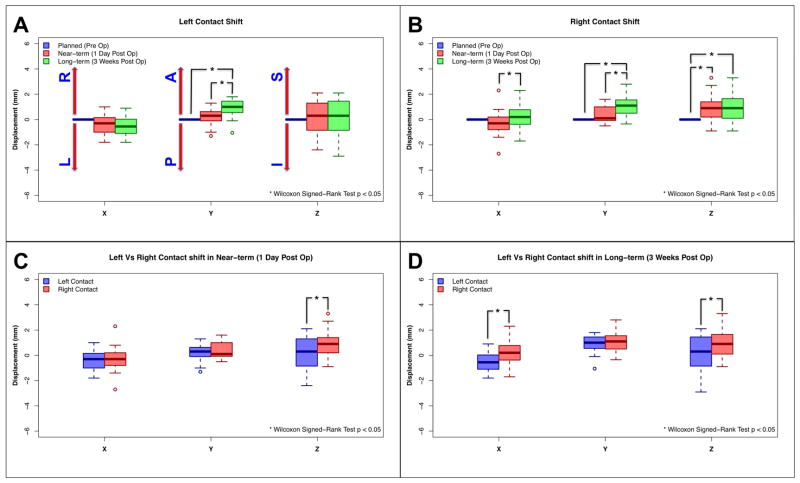
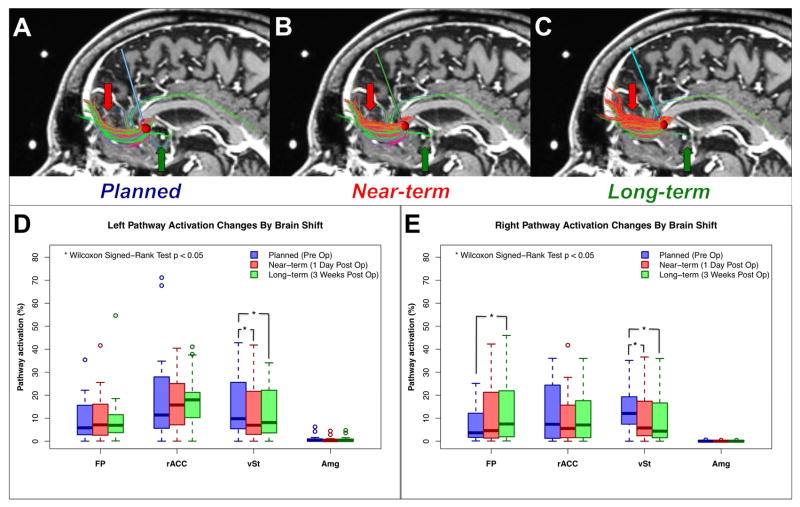
Mean brain shift of 2.2 mm was observed in the near-term for the frontal pole, which resolved in the long-term. However, electrode displacements from the planned stereotactic target location were observed in the anterior-superior direction in both the near-term (mean left electrode shift: 0.43 mm, mean right electrode shift: 0.99 mm) and long-term (mean left electrode shift: 1.02 mm, mean right electrode shift: 1.47 mm). DBS electrodes implanted in the right hemisphere (second-side operated) were more displaced from the plan than those in the left hemisphere. These displacements resulted in 3.6% decrease in pathway activation between the electrode and the ventral striatum, but 2.7% increase in the frontal pole connection, compared to the plan. Remitters from six-month chronic stimulation had less variance in pathway activation patterns than the non-remitters.
Brain shift is an important concern for SCC DBS surgical targeting and can impact connectomic analyses.
对于治疗抵抗性抑郁症,采用立体定向手术刺激扣带下回(SCC)是一种新兴的实验性治疗方法。SCC-DBS 手术靶向的新发展侧重于识别用于刺激的特定轴突通路,这些通路是根据术前收集的弥散加权成像(DWI)数据估计的。然而,颅骨上开颅钻空引起的脑移位可能会改变目标通路的位置。
使用纵向临床成像数据集来量化电极位置偏差对刺激目标通路的轨迹表示的影响。
将术前 MRI 和 DWI 数据(计划)与术后 MRI(第 1 天,近期)和 CT(第 3 周,长期)数据配准。使用解剖学控制点测量脑移位。在 15 名患者的每个半球中,定义了与计划、近期和长期位置相对应的电极模型。使用以不同电极位置为中心的估计刺激体积作为种子进行轨迹分析。
在前额极,近中期观察到平均 2.2mm 的脑移位,该移位在长期内得到解决。然而,在近中期(左侧电极移位平均为 0.43mm,右侧电极移位平均为 0.99mm)和长期(左侧电极移位平均为 1.02mm,右侧电极移位平均为 1.47mm)均观察到电极从计划立体定向目标位置向前后上方的位移。与左侧相比,植入右侧半球(双侧手术)的 DBS 电极更偏离计划。与计划相比,这些位移导致电极与腹侧纹状体之间的通路激活减少了 3.6%,但与前额极的连接增加了 2.7%。与非缓解者相比,接受六个月慢性刺激的缓解者在通路激活模式方面的差异较小。
脑移位是 SCC-DBS 手术靶向的一个重要关注点,可能会影响连接组学分析。