Epilepsy Center, Cleveland Clinic Neurological Institute, Cleveland OH, USA.
Signal and Image Processing Institute, University of Southern California, Los Angeles CA, USA.
Brain. 2018 Jan 1;141(1):117-131. doi: 10.1093/brain/awx306.
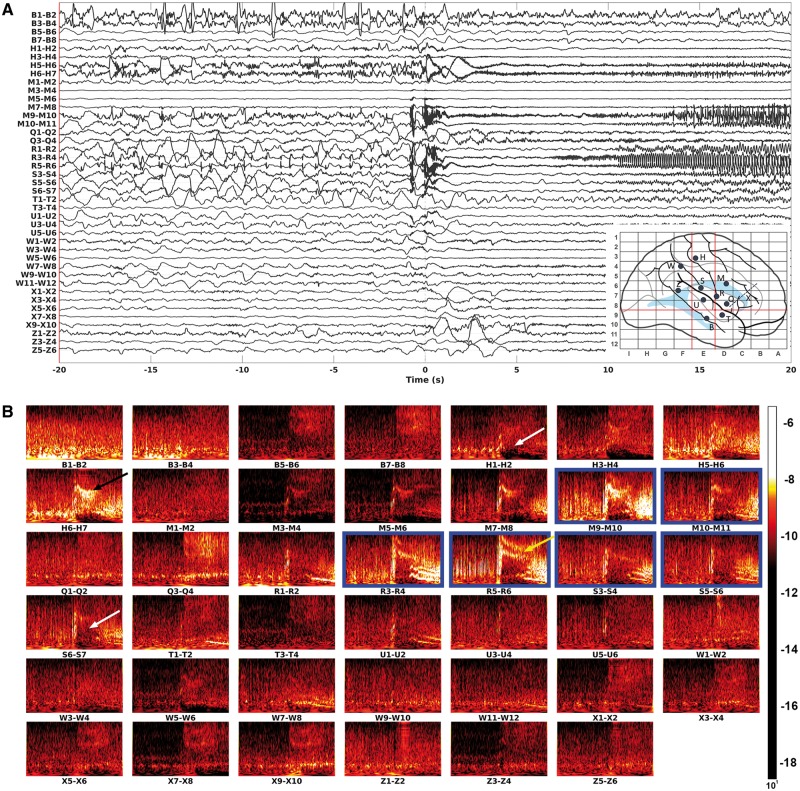
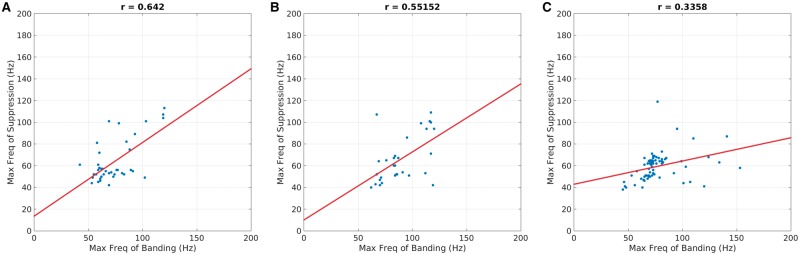
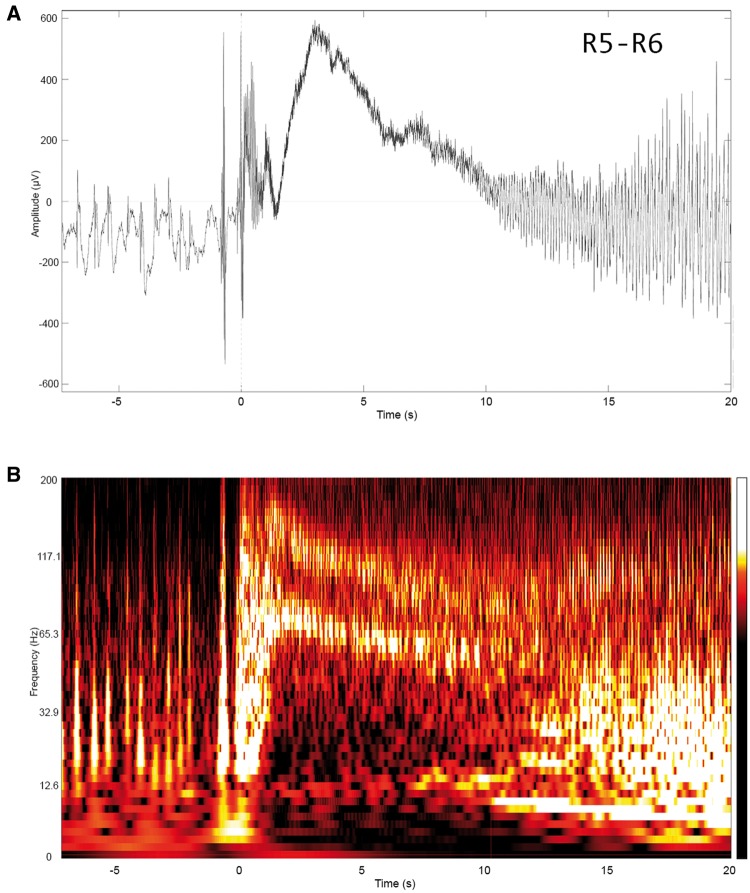
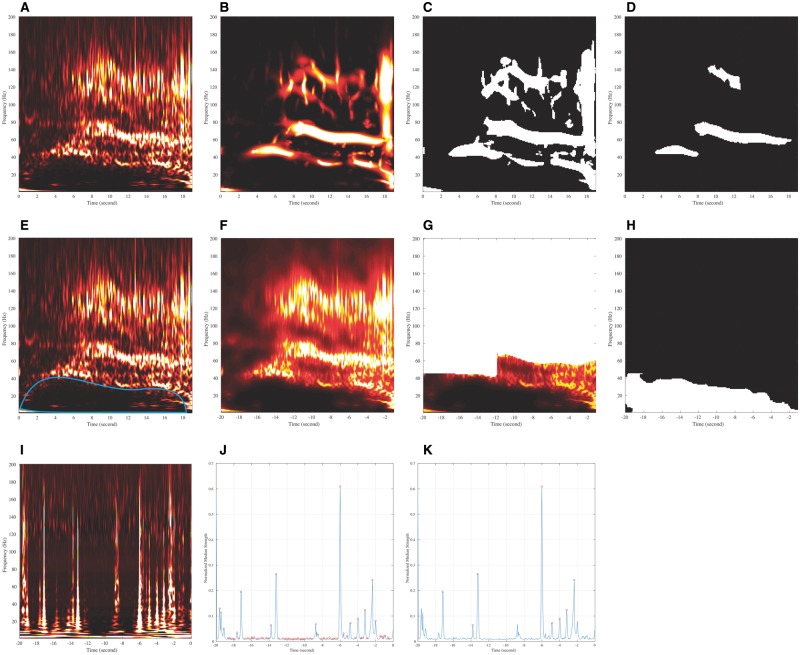
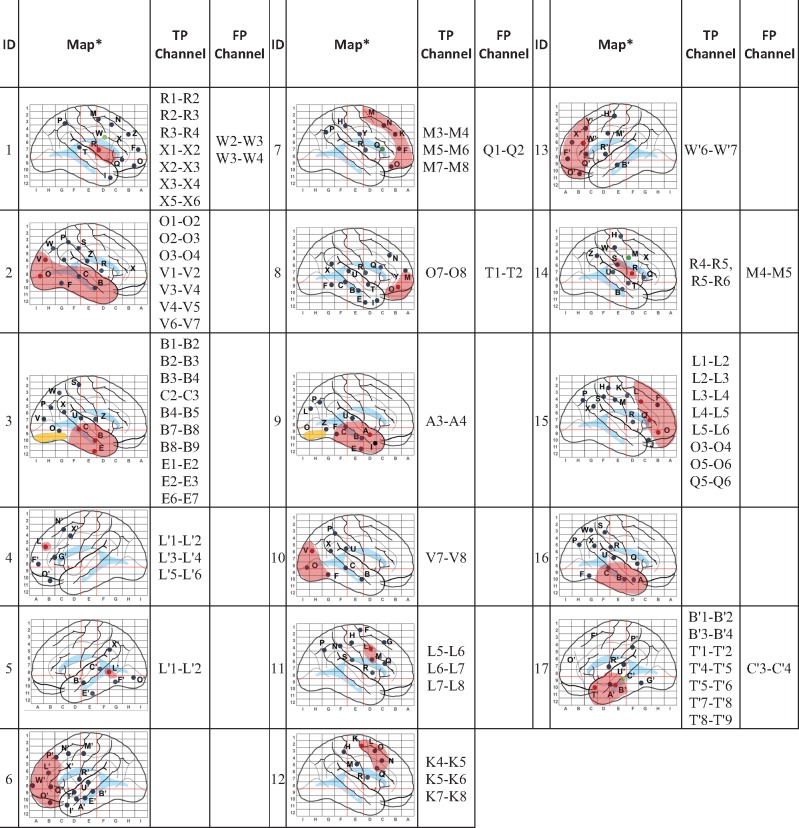
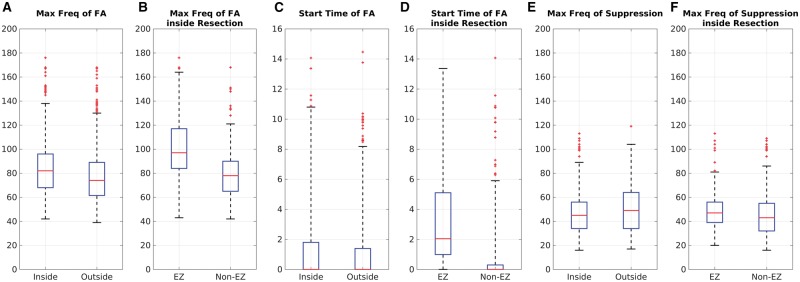
Defining a bio-electrical marker for the brain area responsible for initiating a seizure remains an unsolved problem. Fast gamma activity has been identified as the most specific marker for seizure onset, but conflicting results have been reported. In this study, we describe an alternative marker, based on an objective description of interictal to ictal transition, with the aim of identifying a time-frequency pattern or 'fingerprint' that can differentiate the epileptogenic zone from areas of propagation. Seventeen patients who underwent stereoelectroencephalography were included in the study. Each had seizure onset characterized by sustained gamma activity and were seizure-free after tailored resection or laser ablation. We postulated that the epileptogenic zone was always located inside the resection region based on seizure freedom following surgery. To characterize the ictal frequency pattern, we applied the Morlet wavelet transform to data from each pair of adjacent intracerebral electrode contacts. Based on a visual assessment of the time-frequency plots, we hypothesized that a specific time-frequency pattern in the epileptogenic zone should include a combination of (i) sharp transients or spikes; preceding (ii) multiband fast activity concurrent; with (iii) suppression of lower frequencies. To test this hypothesis, we developed software that automatically extracted each of these features from the time-frequency data. We then used a support vector machine to classify each contact-pair as being within epileptogenic zone or not, based on these features. Our machine learning system identified this pattern in 15 of 17 patients. The total number of identified contacts across all patients was 64, with 58 localized inside the resected area. Subsequent quantitative analysis showed strong correlation between maximum frequency of fast activity and suppression inside the resection but not outside. We did not observe significant discrimination power using only the maximum frequency or the timing of fast activity to differentiate contacts either between resected and non-resected regions or between contacts identified as epileptogenic versus non-epileptogenic. Instead of identifying a single frequency or a single timing trait, we observed the more complex pattern described above that distinguishes the epileptogenic zone. This pattern encompasses interictal to ictal transition and may extend until seizure end. Its time-frequency characteristics can be explained in light of recent models emphasizing the role of fast inhibitory interneurons acting on pyramidal cells as a prominent mechanism in seizure triggering. The pattern clearly differentiates the epileptogenic zone from areas of propagation and, as such, represents an epileptogenic zone 'fingerprint'.awx306media15687076823001.
定义负责引发癫痫发作的大脑区域的生物电标志物仍然是一个未解决的问题。快 gamma 活动已被确定为发作起始最特异的标志物,但已有相互矛盾的结果报道。在这项研究中,我们描述了一种替代标志物,该标志物基于对发作间期到发作期过渡的客观描述,旨在识别一种可区分致痫区和传播区的时频模式或“指纹”。 17 名接受立体脑电图检查的患者被纳入研究。每个患者的癫痫发作起始都伴有持续的 gamma 活动,并且在经过针对性切除或激光消融后无癫痫发作。我们假设,基于手术后癫痫发作的消除,致痫区始终位于切除区域内。为了描述发作期的频率模式,我们对来自每对相邻颅内电极接触的信号应用了 Morlet 小波变换。基于时频图的视觉评估,我们假设在致痫区中,特定的时频模式应该包括以下特征的组合:(i) 先出现的锐波或尖波;(ii) 多频段快活动同时出现;以及 (iii) 低频活动的抑制。为了验证该假设,我们开发了一种软件,可自动从时频数据中提取这些特征中的每一个。然后,我们基于这些特征,使用支持向量机对每个接触对进行分类,判断其是否位于致痫区。我们的机器学习系统在 17 名患者中的 15 名患者中识别到了这种模式。所有患者的识别接触点总数为 64 个,其中 58 个位于切除区域内。随后的定量分析显示,在切除区域内快速活动的最大频率与抑制之间存在很强的相关性,但在切除区域外则没有。仅使用最大频率或快活动的时间来区分切除区域与未切除区域之间或识别为致痫区与非致痫区之间的接触点,我们没有观察到显著的区分能力。相反,我们观察到了更复杂的模式,该模式描述了上面提到的可以区分致痫区的模式。这种模式包含发作间期到发作期的过渡,并且可能会持续到癫痫发作结束。其时频特征可以用强调快抑制性中间神经元作用于锥体细胞的作用作为癫痫发作触发主要机制的最新模型来解释。该模式可清楚地区分致痫区和传播区,因此代表了致痫区的“指纹”。