Audibert Céline, Perlaky Anna, Stuntz Mark, Glass Daniel
Deerfield Institute, Epalinges, Switzerland.
Deerfield Institute, New York, NY, USA.
Drug Des Devel Ther. 2017 Dec 6;11:3471-3479. doi: 10.2147/DDDT.S151420. eCollection 2017.
Advanced ovarian cancer patients have a poor prognosis, mainly because the disease is diagnosed at a late stage. A number of therapeutic approaches, such as neoadjuvant and maintenance therapies, have been developed to try to improve treatment outcome. In parallel, the targeted therapies bevacizumab and olaparib have recently been approved for ovarian cancer treatment. The goal of our survey was to provide a comprehensive, global depiction of advanced ovarian cancer treatments across different regions.
Oncologists from France, Italy, Germany, the UK, and the USA were invited to participate in an online survey. Participants were eligible if they personally managed at least 15 ovarian cancer patients. Quantitative questions addressed the proportion of patients in neoadjuvant, treatment, and maintenance settings; proportion of -positive patients; and the type of treatment prescribed per setting and per line of therapy, depending on the patient's status.
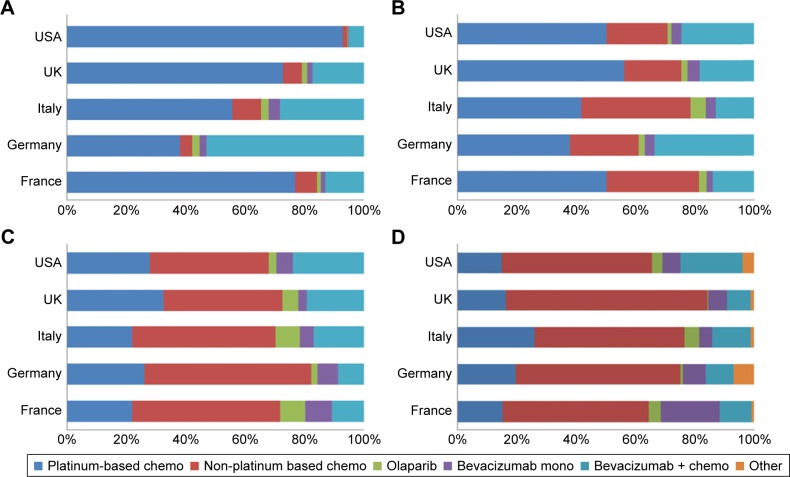
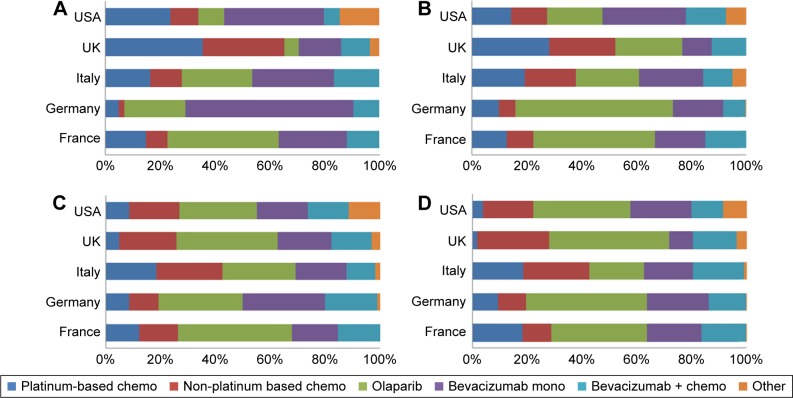
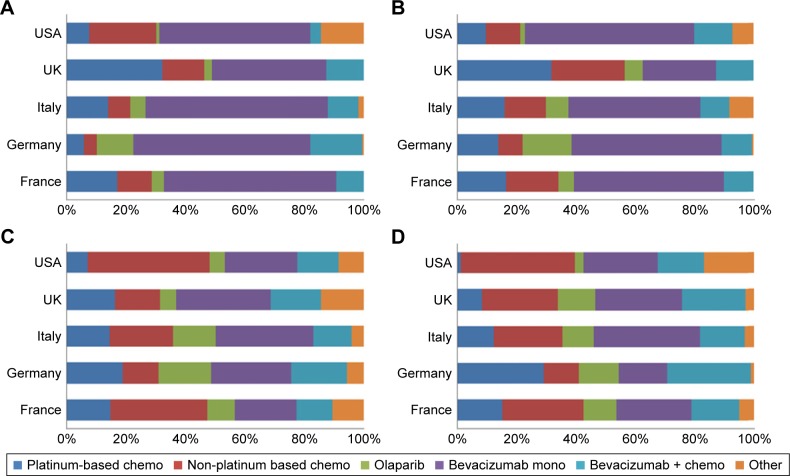
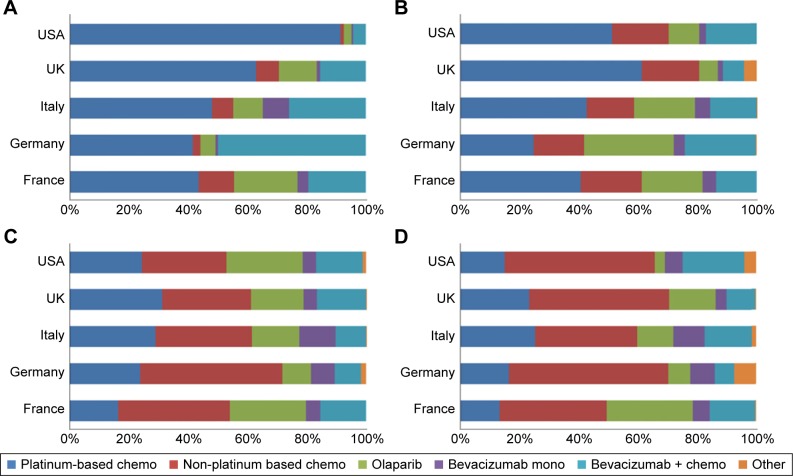
A total of 138 respondents completed our survey in Europe and 132 in the USA. The proportions of patients in treatment, maintenance, and remission were identical across each country and line of treatment at 60%, 20%, and 20%, respectively. The proportion of -tested patients ranged from 45% in Italy to 73% in the USA, with 10% (UK)-21% (Italy) of tested patients having a positive status. Levels of bevacizumab and olaparib prescriptions differed based on the country, line of treatment, and setting, with a significant share of patients receiving both drugs outside of their approved indications for ovarian cancer treatment.
This survey provides real-world data on how advanced ovarian cancer patients are currently treated: 1) testing was not performed systematically, which raises concerns regarding access to treatment and 2) absence of consensus regarding which chemotherapeutic regimens or targeted therapy to use in different stages of the disease.
晚期卵巢癌患者预后较差,主要原因是疾病在晚期才被诊断出来。已经开发了多种治疗方法,如新辅助治疗和维持治疗,试图改善治疗效果。同时,靶向治疗药物贝伐单抗和奥拉帕尼最近已被批准用于卵巢癌治疗。我们调查的目的是全面、全球地描述不同地区晚期卵巢癌的治疗情况。
邀请来自法国、意大利、德国、英国和美国的肿瘤学家参加在线调查。如果参与者个人管理至少15例卵巢癌患者,则符合资格。定量问题涉及新辅助治疗、治疗和维持治疗环境中的患者比例;阳性患者比例;以及根据患者状况在每个治疗环境和每线治疗中规定的治疗类型。
欧洲共有138名受访者完成了我们的调查,美国有132名。每个国家和治疗线中处于治疗、维持和缓解状态的患者比例分别为60%、20%和20%。接受检测的患者比例从意大利的45%到美国的73%不等,10%(英国)-21%(意大利)的检测患者呈阳性。贝伐单抗和奥拉帕尼的处方水平因国家、治疗线和治疗环境而异,相当一部分患者在卵巢癌治疗的批准适应症之外同时接受这两种药物治疗。
这项调查提供了关于晚期卵巢癌患者当前如何接受治疗的真实世界数据:1)检测未系统进行,这引发了对治疗可及性的担忧;2)对于在疾病不同阶段使用哪种化疗方案或靶向治疗缺乏共识。