College of Animal Sciences, Zhejiang University, Hangzhou, 310058, China.
BMC Genomics. 2017 Dec 19;18(1):974. doi: 10.1186/s12864-017-4355-5.
Heat tolerance is a key parameter that affects insect distribution and abundance. Glyphodes pyloalis Walker (Lepidoptera: Pyralidae) is a devastating pest of mulberry in the main mulberry-growing regions and can cause tremendous losses to sericulture by directly feeding on mulberry leaves and transmitting viruses to Bombyx mori. Moreover, G. pyloalis shows a prominent capacity for adaptation to daily and seasonal temperature fluctuations and can survive several hours under high temperature. To date, the molecular mechanism underlying the outstanding adaptability of this pest to high temperature remains unclear.
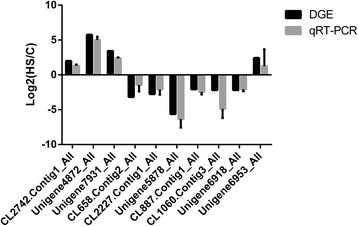
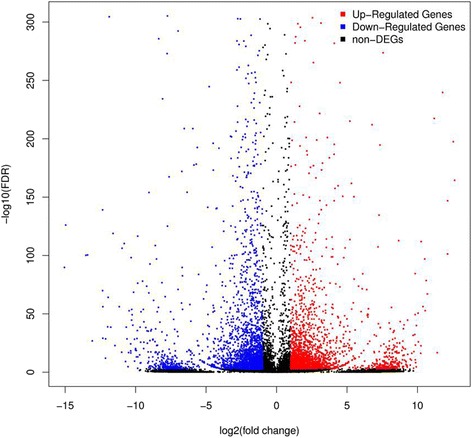
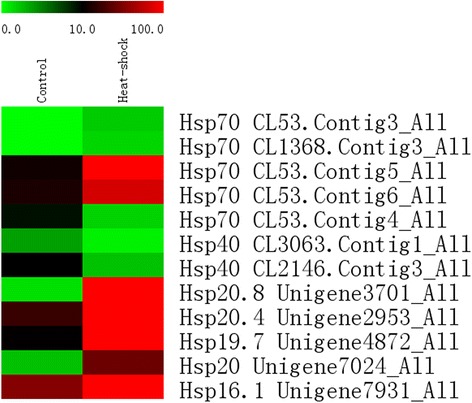
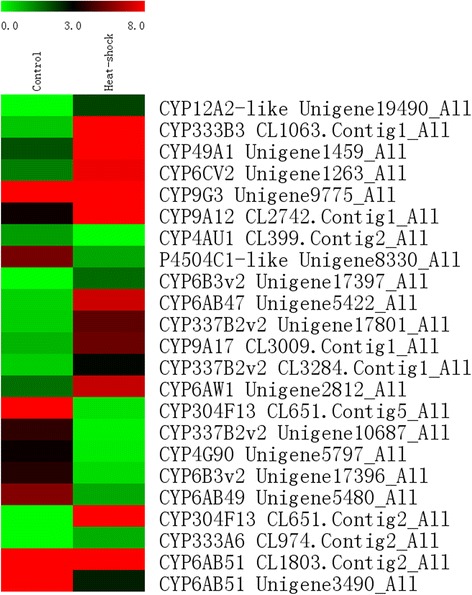
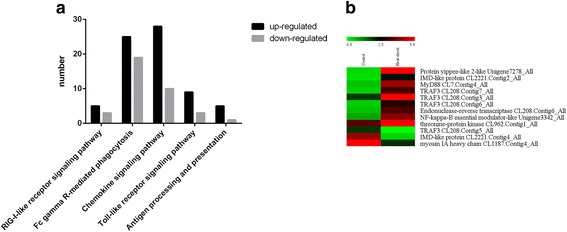
In this study, we performed comparative transcriptome analyses on G. pyloalis exposed to 25 and 40 °C for 4 h. We obtained 34,034 unigenes and identified 1275 and 1222 genes significantly upregulated or downregulated, respectively, by heat stress. Data from the transcriptome analyses indicated that some processes involved in heat tolerance are conserved, such as high expression of heat shock protein (HSP) genes and partial repression of metabolism progress. In addition, vitamin digestion and absorption pathways and detoxification pathways identified here provided new insights for the investigation of the molecular mechanisms of heat stress tolerance. Furthermore, transcriptome analysis indicated that immune and phosphatidylinositol signaling system have a close relationship with heat tolerance. In addition, the expression patterns of ten randomly selected genes, such as HSP and cytochrome P450, were consistent with the transcriptome results obtained through quantitative real-time PCR.
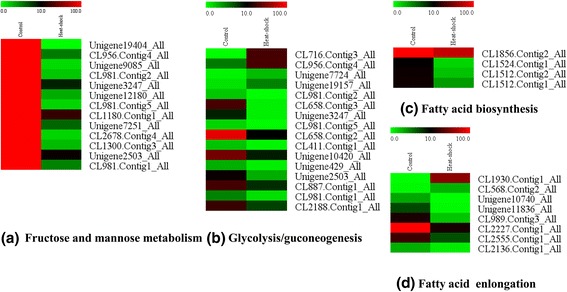
Comparisons among transcriptome results revealed the upregulation of HSPs and genes involved in redox homeostasis, detoxication, and immune progress. However, many metabolism progresses, such as glycolysis/gluconeogenesis and fatty acid biosynthesis, were partially repressed. The results reflected that the heat tolerance of G. pyloalis is a fairly complicated process and related to a broad range of physiological regulations. Our study can improve understanding on the mechanisms of insect thermal tolerance.
耐热性是影响昆虫分布和丰度的关键参数。舞毒蛾(鳞翅目:夜蛾科)是主要桑蚕养殖区桑树上的毁灭性害虫,它直接取食桑叶并向家蚕传播病毒,对蚕桑业造成了巨大损失。此外,舞毒蛾对每日和季节性温度波动具有明显的适应能力,在高温下能存活数小时。迄今为止,这种害虫对高温的卓越适应能力的分子机制尚不清楚。
本研究对 25℃和 40℃暴露 4 h 的舞毒蛾进行了比较转录组分析。我们获得了 34034 条 unigenes,并分别鉴定出 1275 条和 1222 条基因显著上调或下调。转录组分析数据表明,一些与耐热性相关的过程是保守的,如热休克蛋白(HSP)基因的高表达和部分代谢进程的抑制。此外,这里鉴定的维生素消化和吸收途径以及解毒途径为研究耐热性的分子机制提供了新的思路。此外,转录组分析表明,免疫和磷脂酰肌醇信号系统与耐热性密切相关。此外,HSP 和细胞色素 P450 等十个随机选择基因的表达模式与定量实时 PCR 获得的转录组结果一致。
转录组结果的比较揭示了 HSPs 和参与氧化还原稳态、解毒和免疫进程的基因的上调。然而,许多代谢进程,如糖酵解/糖异生和脂肪酸生物合成,被部分抑制。结果表明,舞毒蛾的耐热性是一个相当复杂的过程,与广泛的生理调节有关。我们的研究可以提高对昆虫热耐受性机制的理解。