Department of Agricultural, Food and Nutritional Sciences, University of Alberta, 416 F Agr/For, Edmonton, AB, T6G2P5, Canada.
College of Food Engineering and Nutritional Science, Shaanxi Normal University, Xi'an, Shaanxi, 710119, China.
BMC Genomics. 2017 Dec 19;18(1):976. doi: 10.1186/s12864-017-4317-y.
The transition from a high forage to a highly fermentable diet can induce digestive disorders in the rumen. To date, the host mechanisms that regulate the adaption to such dietary transition are largely unknown. To understand the molecular mechanisms involved in such phenomena, RNA-sequencing was performed to identify the changes in the transcriptome of ruminal epithelia during gradual transition from a diet containing 0% to 89% grain.
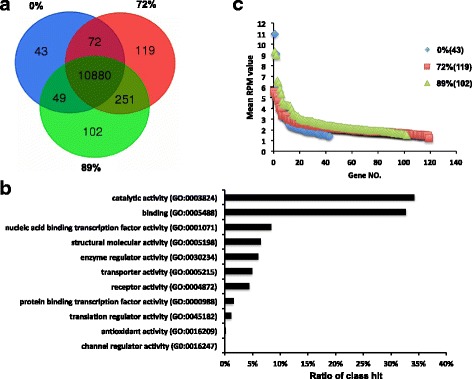
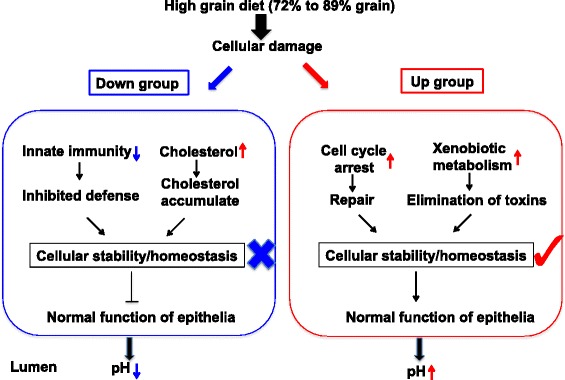
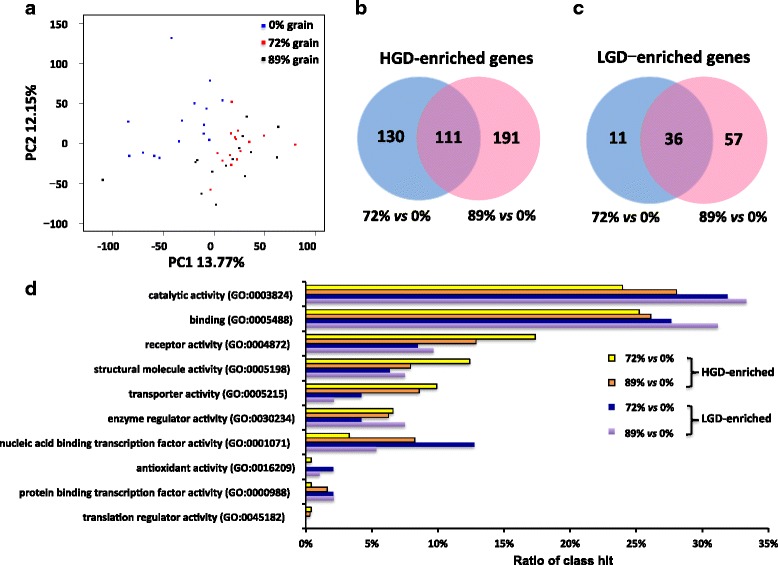
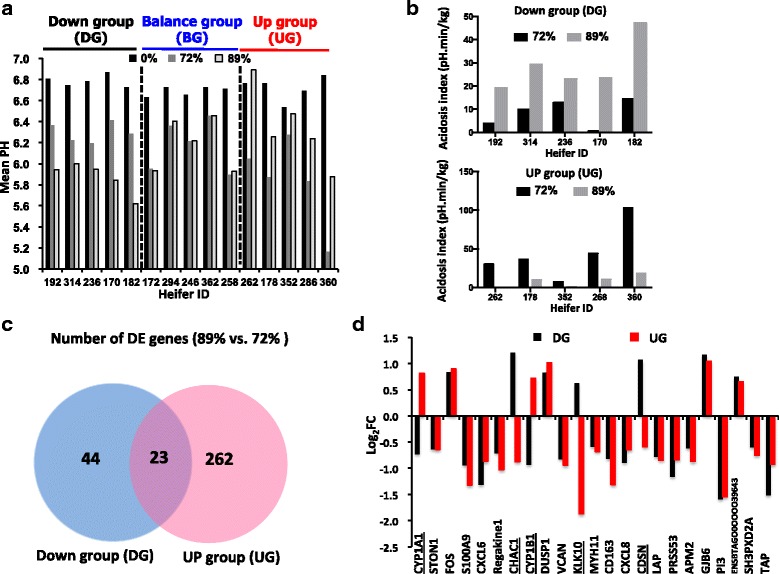
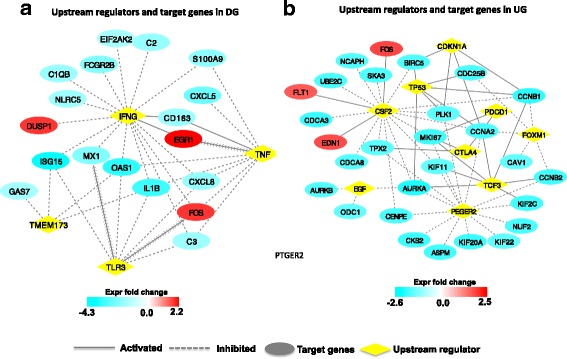
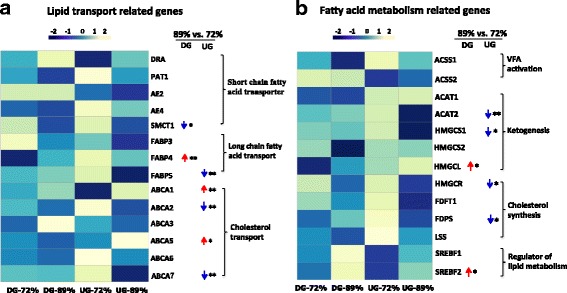
In total, the expression of 11,044, 11,322 and 11,282 genes were detected in ruminal epithelia of beef heifers (n = 15) fed 0%, 72% and 89% barley grain diet, respectively. The transcriptome profiles of rumen epithelia differed between low grain diet (LGD) (0% grain) and high grain diet (HGD) (72% and 89%), and HGD tended to reduce the expression of genes involved in epithelial catalytic and binding activities. When diet was changed from 72% to 89% grain, the mean ruminal pH change was significantly different among individual heifers with five of them decreased (down group (DG); from 6.30±0.09 to 5.87±0.15, P < 0.01) and five of them increased (up group (UG); from 5.84±0.42 to 6.35±0.37, P < 0.05). The functional analysis of differentially expressed (DE) genes revealed inhibited "Immune response of leukocytes", "Attraction of phagocytes", and "Cell movement of leukocytes" (P < 0.05) functions (Z-score = -2.2, -2.2 and -2.0, respectively) in DG, and inhibited "Concentration of lipid" and "Proliferation of epithelial cells" functions in UG (Z-score = -2.0, and -1.8, respectively). In addition, the expression of genes involved in ketogenesis (HMGCL) and lipid synthesis (SREBF2, FABP4) was increased in DG, while the expression of ketogenesis (ACAT2, HMGCS) and cholesterol synthesis related genes (HMGC and FDPS) were deceased in UG. Furthermore, the upstream regulators were found to be involved in the regulation of immune response and cell cycle progress, and SNP (g.46834311A > G) in FABP4 was identified between two groups of animals (P < 0.1).
The identified genes, upstream regulators, and SNP could be potential genetic markers that may account for the varied individual ruminal pH responses to the dietary transition stress.
从高纤维饲料向高发酵饲料的转变会引起瘤胃消化紊乱。迄今为止,调节这种饮食转变适应的宿主机制在很大程度上尚不清楚。为了了解涉及这种现象的分子机制,我们进行了 RNA 测序,以鉴定在从 0%到 89%谷物的逐渐过渡过程中瘤胃上皮转录组的变化。
在分别饲喂 0%、72%和 89%大麦日粮的肉牛(n=15)的瘤胃上皮中,共检测到 11044、11322 和 11282 个基因的表达。低谷物日粮(LGD)(0%谷物)和高谷物日粮(HGD)(72%和 89%)之间的瘤胃上皮转录组图谱不同,HGD 倾向于降低参与上皮催化和结合活性的基因表达。当日粮从 72%变为 89%时,个体中瘤胃 pH 的平均变化在 5 只下降(下降组(DG);从 6.30±0.09 到 5.87±0.15,P<0.01)和 5 只增加(上升组(UG);从 5.84±0.42 到 6.35±0.37,P<0.05)之间存在显著差异。差异表达(DE)基因的功能分析显示,在 DG 中,抑制了“白细胞的免疫反应”、“吞噬细胞的吸引”和“白细胞的细胞运动”(P<0.05)功能(Z 评分分别为-2.2、-2.2 和-2.0),在 UG 中抑制了“脂质浓度”和“上皮细胞增殖”功能(Z 评分分别为-2.0 和-1.8)。此外,DG 中酮体生成(HMGCL)和脂质合成(SREBF2、FABP4)相关基因的表达增加,而 UG 中酮体生成(ACAT2、HMGCS)和胆固醇合成相关基因(HMGC 和 FDPS)的表达减少。此外,还发现上游调节剂参与免疫反应和细胞周期进程的调节,并且在两组动物之间鉴定到 FABP4 中的 SNP(g.46834311A> G)(P<0.1)。
所鉴定的基因、上游调节剂和 SNP 可能是潜在的遗传标记,可解释个体对饮食转变应激的不同瘤胃 pH 反应。