Key Laboratory of Nutrition and Metabolism, Institute for Nutritional Sciences, Shanghai Institutes for Biological Sciences, University of Chinese Academy of Sciences, Chinese Academy of Sciences, 320 Yueyang Road, New Life Science Building, Room A1926, Shanghai 200031, China.
Nutrients. 2017 Dec 28;10(1):25. doi: 10.3390/nu10010025.
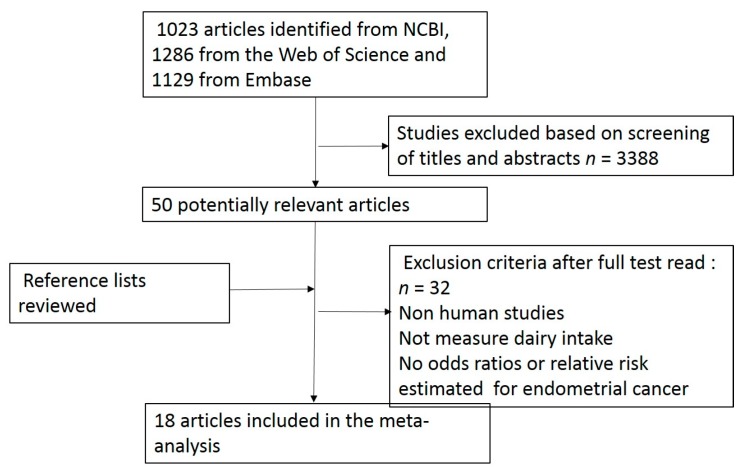
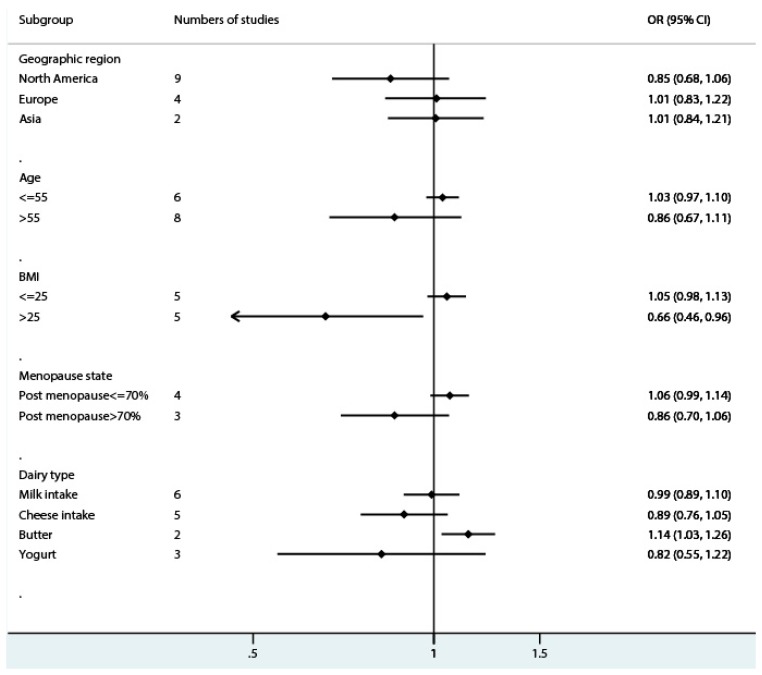
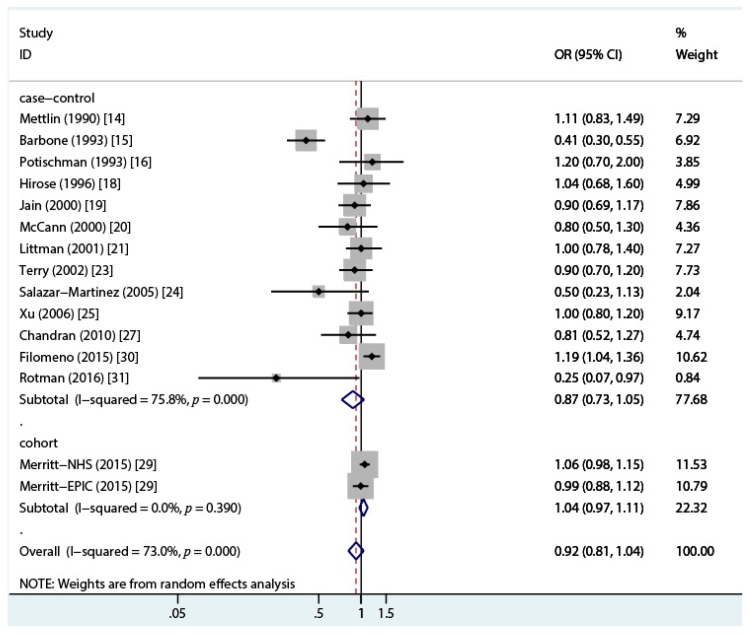
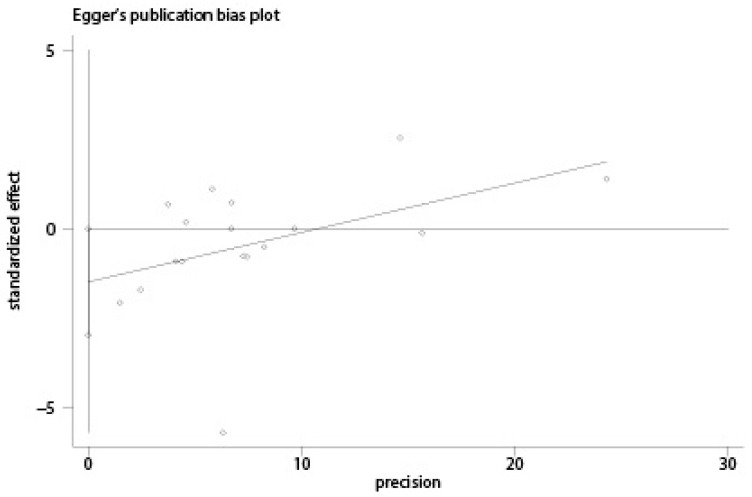
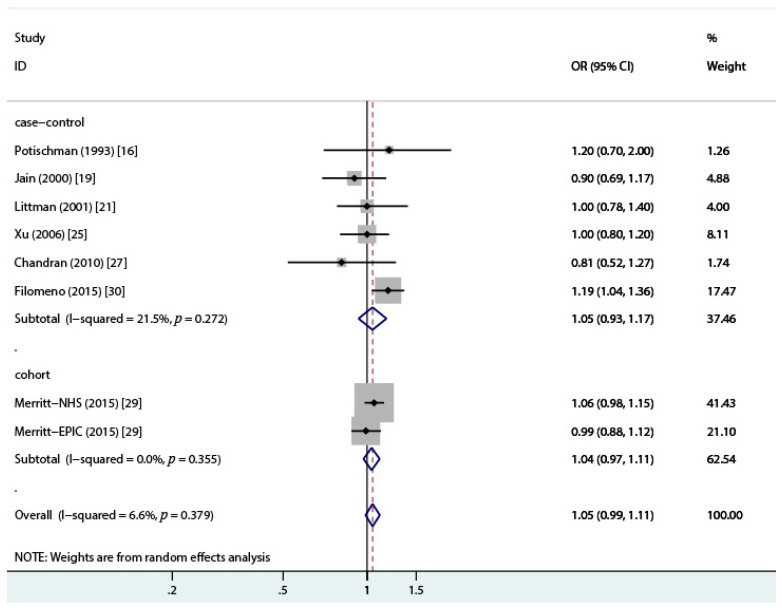
Observational studies have suggested inconsistent findings on the relationship between dairy products intake and endometrial cancer risk. This study aimed to conduct a meta-analysis to evaluate this correlation; moreover, databases including PubMed, ISI Web of Science, and Embase were screened for relevant studies up to 26 February 2017. The inverse variance weighting method and random effects models were used to calculate the overall OR (odds ratio) values and 95% confidence interval (CI). A total of 2 cohort study and 16 case-control studies were included in the current analysis. No significant association was observed between endometrial cancer risk and the intake of total dairy products, milk, or cheese for the highest versus the lowest exposure category (total dairy products (14 studies): OR 1.04, 95% CI: 0.97-1.11, ² = 73%, = 0.000; milk (6 studies): 0.99, 95% CI: 0.89-1.10, ² = 0.0%, = 0.43; cheese (5 studies): 0.89, 95% CI: 0.76-1.05, ² = 39%, = 0.16). The only cohort study with a total of 456,513 participants reported a positive association of butter intake with endometrial cancer risk (OR = 1.14; 95% CI = 1.03-1.26, ² = 2.6%, = 0.31). There was a significant negative association of dairy products intake and endometrial cancer risk among women with a higher body mass index (BMI) (5 studies, OR 0.66, 95% CI = 0.46-0.96, ² = 75.8%, = 0.002). Stratifying the analyses by risk factors including BMI should be taken into account when exploring the association of dairy products intake with endometrial cancer risk. Further well-designed studies are needed.
观察性研究对乳制品摄入与子宫内膜癌风险之间的关系得出了不一致的结论。本研究旨在进行荟萃分析以评估这种相关性;此外,截至 2017 年 2 月 26 日,我们对包括 PubMed、ISI Web of Science 和 Embase 在内的数据库进行了筛选,以查找相关研究。我们使用逆方差加权法和随机效应模型计算了总体比值比(OR)值和 95%置信区间(CI)。当前分析共纳入了 2 项队列研究和 16 项病例对照研究。对于最高与最低暴露类别,子宫内膜癌风险与总乳制品、牛奶或奶酪的摄入量之间无显著相关性(总乳制品(14 项研究):OR 1.04,95%CI:0.97-1.11,² = 73%, = 0.000;牛奶(6 项研究):0.99,95%CI:0.89-1.10,² = 0.0%, = 0.43;奶酪(5 项研究):0.89,95%CI:0.76-1.05,² = 39%, = 0.16)。唯一一项纳入了 456513 名参与者的队列研究报告称,黄油摄入与子宫内膜癌风险呈正相关(OR = 1.14;95%CI = 1.03-1.26,² = 2.6%, = 0.31)。在 BMI 较高的女性中,乳制品摄入与子宫内膜癌风险呈显著负相关(5 项研究,OR 0.66,95%CI = 0.46-0.96,² = 75.8%, = 0.002)。在探讨乳制品摄入与子宫内膜癌风险之间的关系时,应考虑根据 BMI 等危险因素进行分层分析。还需要进一步设计良好的研究。