School of STEM, University of Washington Bothell, Bothell, WA 98011, USA.
School of Medicine, University of Washington, Seattle, WA 98109, USA.
Sensors (Basel). 2017 Dec 28;18(1):61. doi: 10.3390/s18010061.
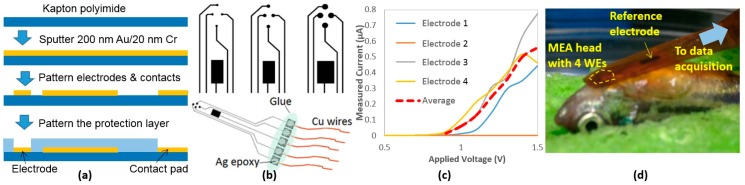
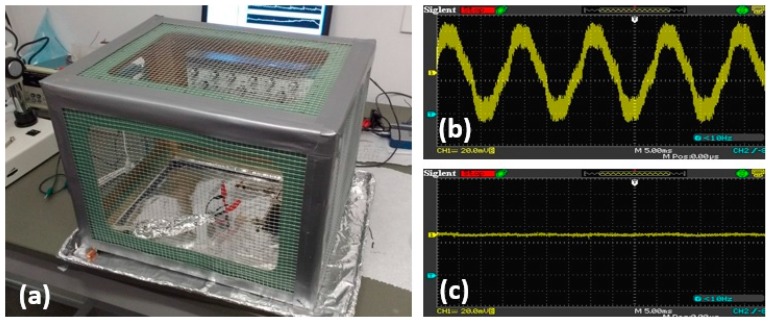
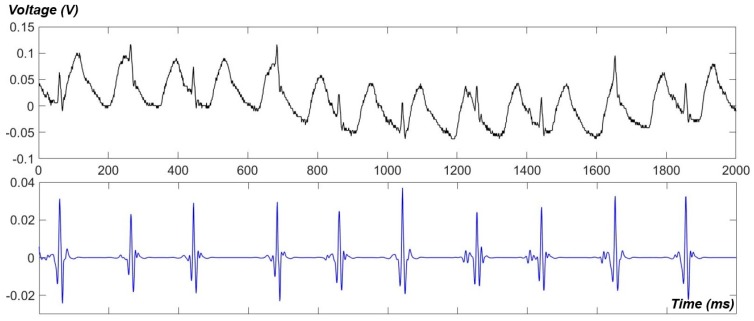
Heart disease is the leading cause of mortality in the U.S. with approximately 610,000 people dying every year. Effective therapies for many cardiac diseases are lacking, largely due to an incomplete understanding of their genetic basis and underlying molecular mechanisms. Zebrafish () are an excellent model system for studying heart disease as they enable a forward genetic approach to tackle this unmet medical need. In recent years, our team has been employing electrocardiogram (ECG) as an efficient tool to study the zebrafish heart along with conventional approaches, such as immunohistochemistry, DNA and protein analyses. We have overcome various challenges in the small size and aquatic environment of zebrafish in order to obtain ECG signals with favorable signal-to-noise ratio (SNR), and high spatial and temporal resolution. In this paper, we highlight our recent efforts in zebrafish ECG acquisition with a cost-effective simplified microelectrode array (MEA) membrane providing multi-channel recording, a novel multi-chamber apparatus for simultaneous screening, and a LabVIEW program to facilitate recording and processing. We also demonstrate the use of machine learning-based programs to recognize specific ECG patterns, yielding promising results with our current limited amount of zebrafish data. Our solutions hold promise to carry out numerous studies of heart diseases, drug screening, stem cell-based therapy validation, and regenerative medicine.
心脏病是美国的主要死亡原因,每年约有 61 万人因此死亡。由于对许多心脏疾病的遗传基础和潜在分子机制缺乏充分了解,有效的治疗方法仍然匮乏。斑马鱼(Danio rerio)是研究心脏病的理想模型系统,因为它们可以通过正向遗传学方法来满足这一未满足的医学需求。近年来,我们团队一直在将心电图(ECG)作为一种有效的工具,与传统方法(如免疫组织化学、DNA 和蛋白质分析)一起用于研究斑马鱼心脏。我们克服了斑马鱼体积小和水生环境的各种挑战,以便获得具有良好信噪比(SNR)、高空间和时间分辨率的 ECG 信号。在本文中,我们重点介绍了我们最近在斑马鱼 ECG 采集方面的努力,包括提供多通道记录的具有成本效益的简化微电极阵列(MEA)膜、用于同时筛选的新型多腔室仪器,以及用于记录和处理的 LabVIEW 程序。我们还展示了使用基于机器学习的程序来识别特定的 ECG 模式,我们目前有限数量的斑马鱼数据取得了有前景的结果。我们的解决方案有望开展大量的心脏病研究、药物筛选、基于干细胞的治疗验证和再生医学研究。