Kengkoom Kanchana, Tirawanchai Napatara, Angkhasirisap Wannee, Ampawong Sumate
Research and Academic Support Office, National Laboratory Animal Center, Mahidol University, Puttamonthon, Nakorn Pathom 73170, Thailand.
Department of Biochemistry, Faculty of Medicine Siriraj Hospital, Mahidol University, Bangkok Noi, Bangkok 10700, Thailand.
Exp Ther Med. 2017 Dec;14(6):5871-5880. doi: 10.3892/etm.2017.5270. Epub 2017 Oct 9.
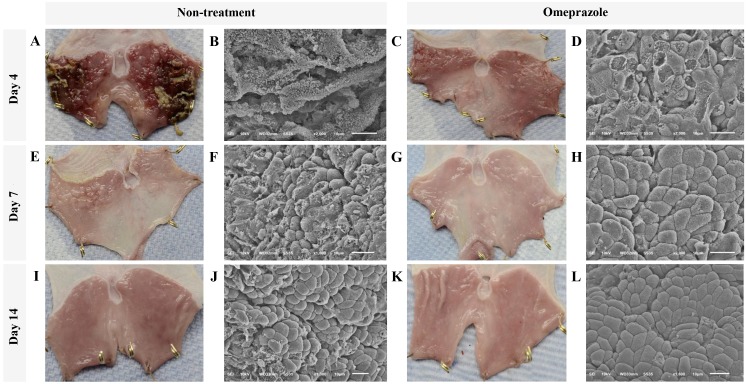
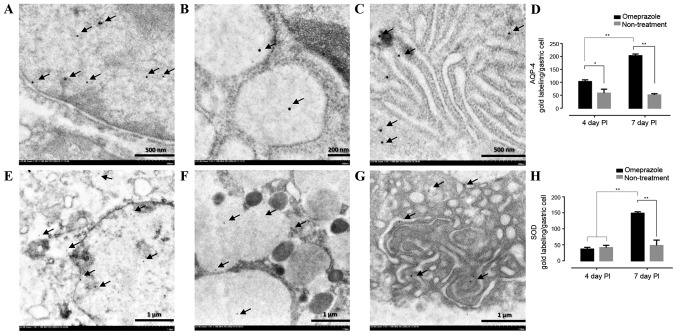
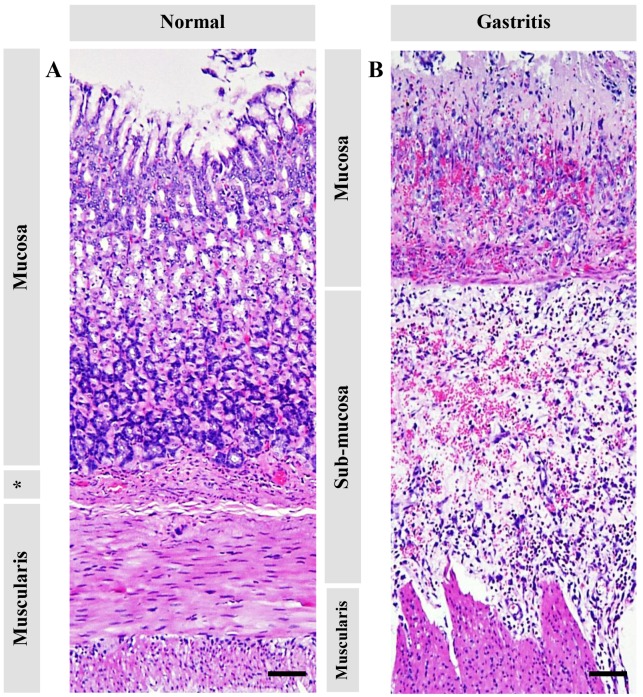
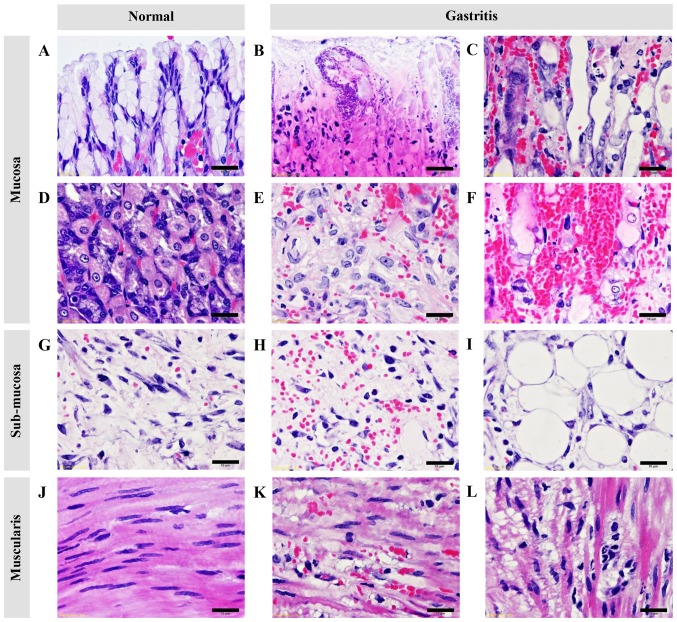
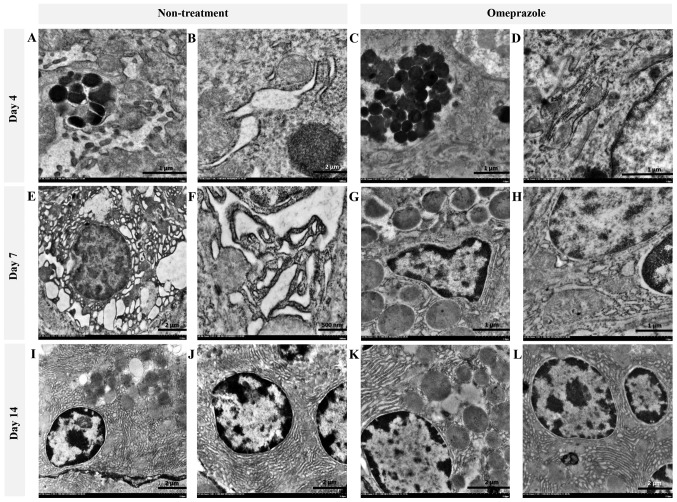
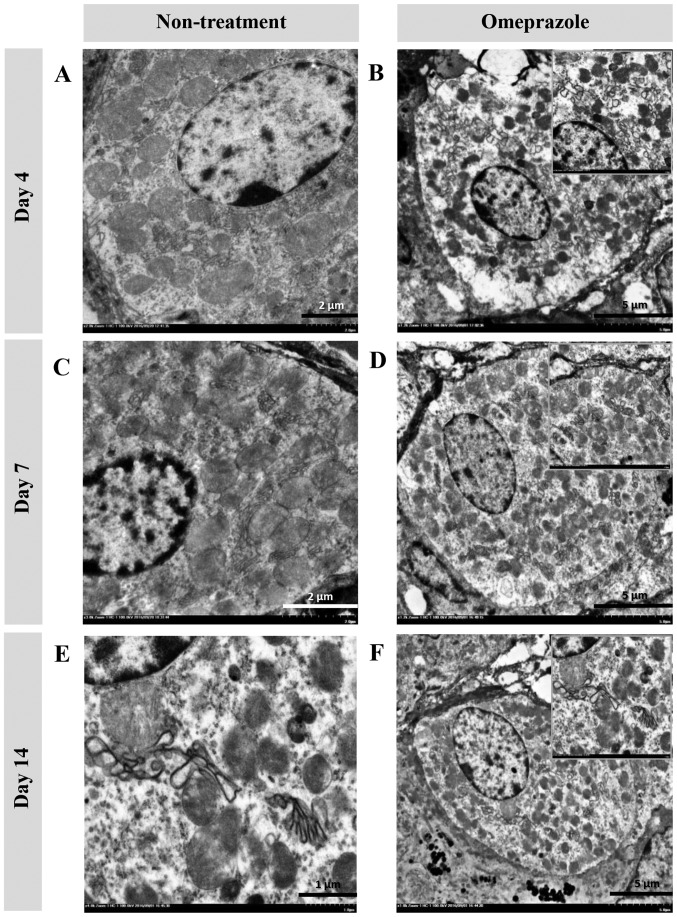
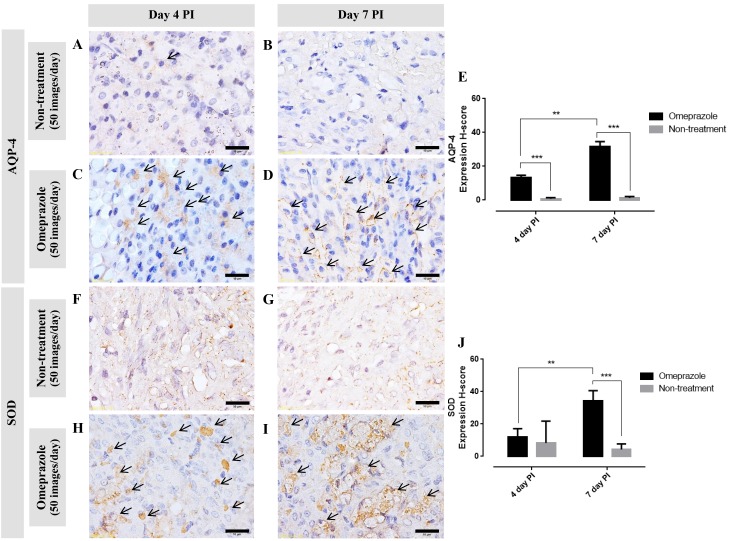
Gastric mucosal cells, particularly parietal and chief cells, are usually affected by exogenous, and endogenous stimuli-induced gastritis. The integrity of these cells and their alterations are involved in the pathogenesis of numerous gastric disorders. Omeprazole, a gastric acid secretion blocker, is commonly used for gastrointestinal diseases due to its antioxidative stress and anti-inflammatory properties. Little is known regarding how omeprazole modulates the re-epithelialized effect on gastric mucosal cells associated with gastrointestinal disorders. The present study aimed to determine whether omeprazole attenuates parietal and chief cell damage in association with its antioxidative property. An ethanol-induced gastritis rat model was used. Histopathological, scanning and transmission electron microscopic, and immunohistochemical studies were performed. The results revealed that omeprazole improved the gastric mucosal surface, and reduced the severity of mucosal inflammation and hemorrhaging. Notably, ethanol-induced gastritis caused dysmorphic rough endoplasmic reticulum (RER) in chief cells, which was accompanied by mitochondrial swelling. This alteration was modulated by omeprazole due to its antioxidant effect characterized by upregulation of superoxide dismutase in gastric mucosal cells. In addition, expression of aquaporin-4 was increased in the omeprazole treatment group, which may be due to the expansion of regenerative parietal cells and acid suppression. The results of the present study suggest that omeprazole preserves the RER in chief cells and enhances parietal cell regeneration through its antioxidative property by exerting anti-inflammatory effects.
胃黏膜细胞,尤其是壁细胞和主细胞,通常会受到外源性和内源性刺激诱导的胃炎影响。这些细胞的完整性及其改变参与了多种胃部疾病的发病机制。奥美拉唑是一种胃酸分泌阻滞剂,因其具有抗氧化应激和抗炎特性,常用于治疗胃肠道疾病。关于奥美拉唑如何调节与胃肠道疾病相关的胃黏膜细胞再上皮化作用,目前知之甚少。本研究旨在确定奥美拉唑是否与其抗氧化特性相关联,减轻壁细胞和主细胞损伤。使用乙醇诱导的胃炎大鼠模型。进行了组织病理学、扫描和透射电子显微镜以及免疫组织化学研究。结果显示,奥美拉唑改善了胃黏膜表面,减轻了黏膜炎症和出血的严重程度。值得注意的是,乙醇诱导的胃炎导致主细胞中粗面内质网(RER)形态异常,并伴有线粒体肿胀。由于奥美拉唑的抗氧化作用,其可通过上调胃黏膜细胞中的超氧化物歧化酶来调节这种改变。此外,奥美拉唑治疗组中水通道蛋白4的表达增加,这可能是由于再生壁细胞的扩增和胃酸抑制所致。本研究结果表明,奥美拉唑通过发挥抗炎作用,凭借其抗氧化特性保护主细胞中的RER,并增强壁细胞再生。