Graduate School of Biostudies, Kyoto University, Kitashirakawa, Sakyo, Kyoto, 606-8502 Japan.
National Institute for Genetics, 1111 Yata, Mishima, Shizuoka, 411-8540 Japan.
Plant Cell Physiol. 2018 Feb 1;59(2):222-233. doi: 10.1093/pcp/pcx210.
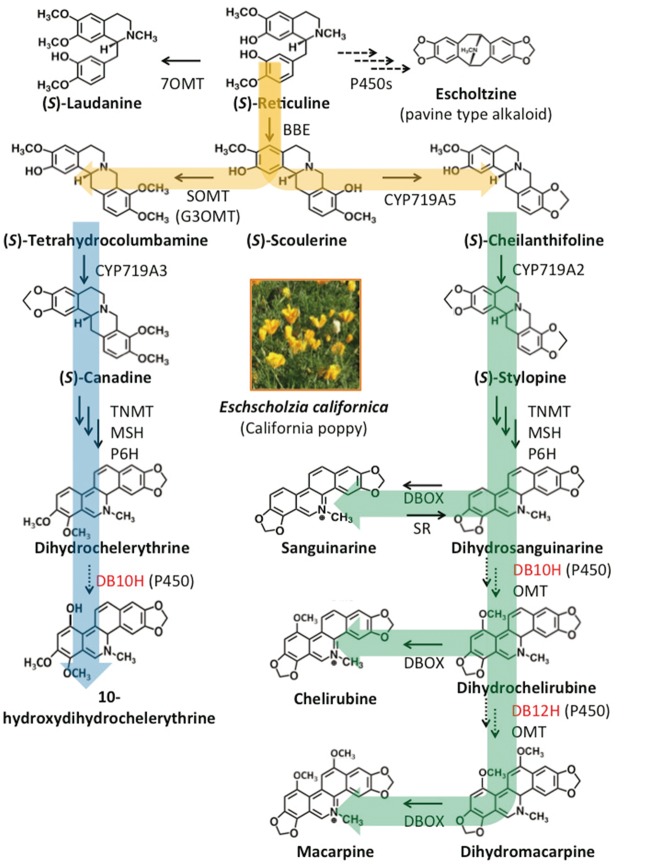
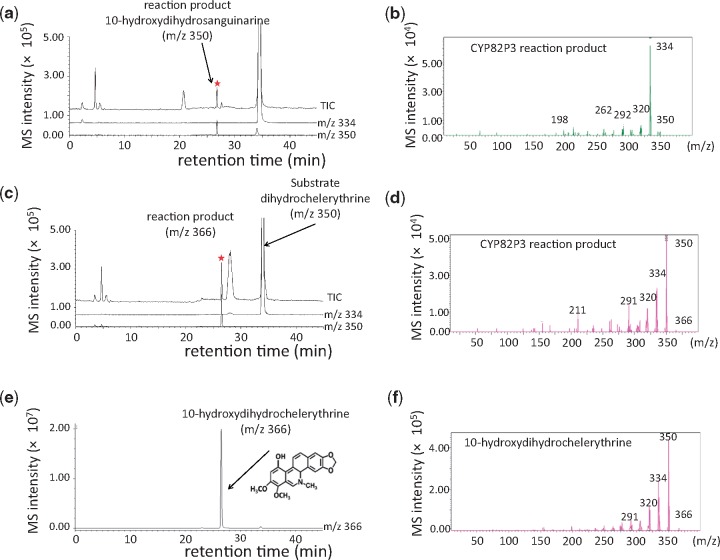
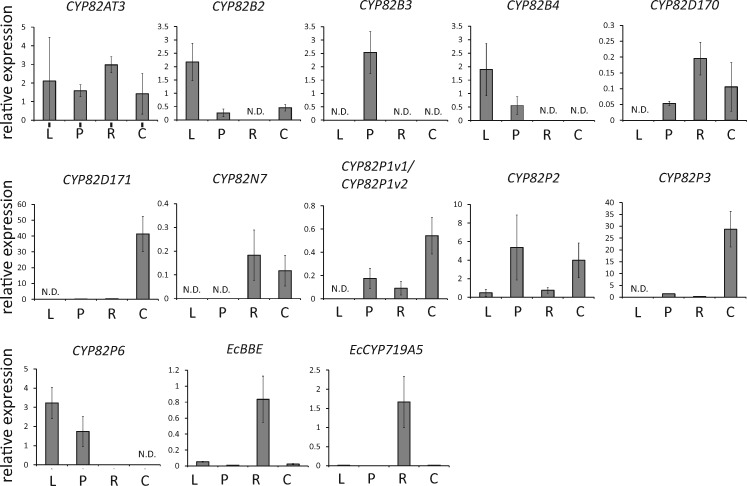
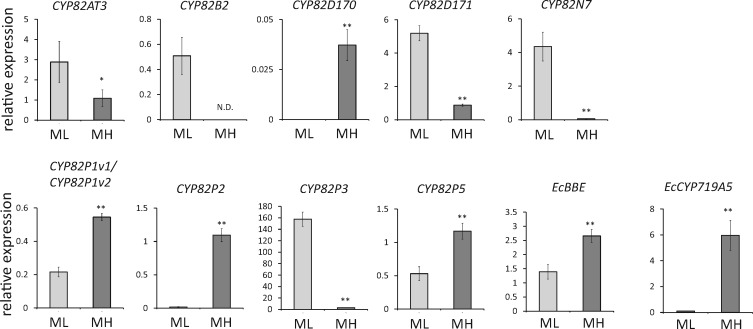
Land plants produce specialized low molecular weight metabolites to adapt to various environmental stressors, such as UV radiation, pathogen infection, wounding and animal feeding damage. Due to the large variety of stresses, plants produce various chemicals, particularly plant species-specific alkaloids, through specialized biosynthetic pathways. In this study, using a draft genome sequence and querying known biosynthetic cytochrome P450 (P450) enzyme-encoding genes, we characterized the P450 genes involved in benzylisoquinoline alkaloid (BIA) biosynthesis in California poppy (Eschscholzia californica), as P450s are key enzymes involved in the diversification of specialized metabolism. Our in silico studies showed that all identified enzyme-encoding genes involved in BIA biosynthesis were found in the draft genome sequence of approximately 489 Mb, which covered approximately 97% of the whole genome (502 Mb). Further analyses showed that some P450 families involved in BIA biosynthesis, i.e. the CYP80, CYP82 and CYP719 families, were more enriched in the genome of E. californica than in the genome of Arabidopsis thaliana, a plant that does not produce BIAs. CYP82 family genes were highly abundant, so we measured the expression of CYP82 genes with respect to alkaloid accumulation in different plant tissues and two cell lines whose BIA production differs to estimate the functions of the genes. Further characterization revealed two highly homologous P450s (CYP82P2 and CYP82P3) that exhibited 10-hydroxylase activities with different substrate specificities. Here, we discuss the evolution of the P450 genes and the potential for further genome mining of the genes encoding the enzymes involved in BIA biosynthesis.
陆地植物产生专门的低分子量代谢物,以适应各种环境胁迫,如紫外线辐射、病原体感染、创伤和动物取食损伤。由于胁迫的种类繁多,植物通过专门的生物合成途径产生各种化学物质,特别是植物特异性生物碱。在这项研究中,我们利用草案基因组序列和查询已知的生物合成细胞色素 P450(P450)酶编码基因,对加利福尼亚罂粟(Eschscholzia californica)中苯并异喹啉生物碱(BIA)生物合成涉及的 P450 基因进行了表征,因为 P450 是参与专门代谢多样化的关键酶。我们的计算机研究表明,BIA 生物合成中涉及的所有鉴定酶编码基因都在大约 489 Mb 的草案基因组序列中发现,该序列约占整个基因组(502 Mb)的 97%。进一步的分析表明,一些参与 BIA 生物合成的 P450 家族,即 CYP80、CYP82 和 CYP719 家族,在加利福尼亚罂粟的基因组中比在不产生 BIAs 的拟南芥的基因组中更为丰富。CYP82 家族基因高度丰富,因此我们测量了 CYP82 基因在不同植物组织和两个细胞系中生物碱积累方面的表达,以估计基因的功能。进一步的表征揭示了两个高度同源的 P450(CYP82P2 和 CYP82P3),它们具有不同底物特异性的 10-羟化酶活性。在这里,我们讨论了 P450 基因的进化以及进一步挖掘 BIA 生物合成酶编码基因的潜力。